

by Anouk Ride
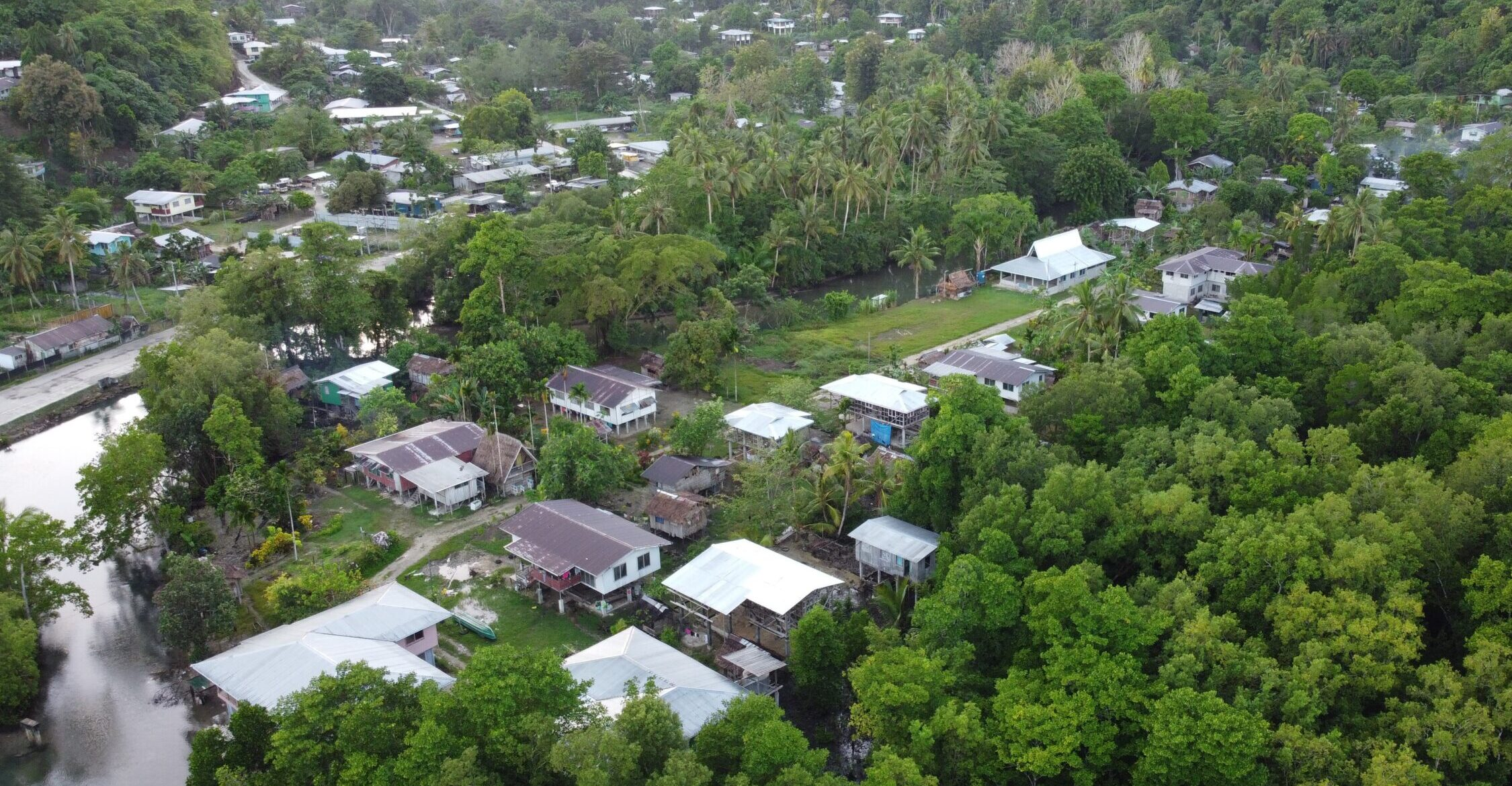
I write this amidst the thunder of a tropical storm in a village in Malaita, recalling the storm that was this province’s foray into geopolitical struggles after the national government switched diplomatic recognition from Taiwan to China in 2019.
Malaita’s Premier Daniel Suidani opposed the move, and his executive signed the Auki Communiqué which banned all Chinese aid and investments on the island and ignited a provincial-national argument, as well as interpersonal conflicts between Malaitan leaders, while overseas Malaita became front-page news in US, Australian and Asian news outlets.
At that time, the dreams and promises were frenzied — Members of Parliament siding with the ruling pro-China political coalition argued that relations with China would bring infrastructure and economic opportunities to the Malaitan people: the network of muddy roads would be paved, local hospitals would be built, the whole island would have 4G internet access.
Malaitan Opposition MPs were equally adamant that establishing relations with China was a slippery slope, opening up the province to political interference and Chinese control over Malaitan natural resources and citizens’ ability to speak and debate freely.
Yet, so little has changed in Malaita.
In Auki town, Chinese corporation CCECC is in the process of building paved roads, with messy piles of rubble and thundering trucks about.
The provincial hospital in Kilu’ufi has its dispensary closed due to lack of stock from the national government, the provincial government is inert in responding to rubbish and there are no new services — for example, just the one bank and ATM for the whole province, and a scattering of Chinese-run retail stores.
The road network across the rest of the island has improved in some areas (thanks in part to a World Bank project to improve the notoriously hazardous East Road), but in other areas to travel 50 kilometres takes three hours as three-ton trucks with trays full of people traverse potholes on dirt tracks.
In the village where I stayed, the clinic has no malaria tests and no medicine (including basics like Panadol) in stock, meaning people have to self-medicate, and in an emergency try and traverse the road to get to hospital in time.
Plans to build a mini hospital in East Malaita faltered, though Japan is working on building new facilities at the provincial hospital.
Older people and infants regularly die preventable deaths as a result of these challenges.
With no government vision or program to address malaria, the disease runs rampant in the rainy environment, leaving people weak for days, and endangering pregnant mothers and their babies.
An improvement is the building of telecommunication towers with Chinese sovereign loan financing, bridging gaps in services to many villages and at least enabling a phone call during an emergency.
Yet, at the time of writing, the service was not connected, and in some cases equipment was disabled by disgruntled landowners.
Furthermore, there has been little forethought about the consequences of connecting rural people to the internet.
In Solomon Islands, despite advocacy from women’s groups, the state-owned telecommunications services exercise no control over content such as pornography, depictions of violence or other potentially harmful content.
Digital literacy programs to help rural people use the internet safely and responsibly are emerging but have limited reach.
Thinking about these challenges — the tragedy of rural medical access, the lack of paved roads, the potential and pitfalls of technology — it strikes me that so little has changed since 2019.
For an island that was once the centre of geopolitical tussles, with so many Malaitan leaders also leading the pro- and anti-China sides, it might have been reasonable to expect development impacts from the eventual capitulation to the national government’s pro-China stance.
But from the viewpoint of the village, rural people’s challenges have not lessened in any significant way. So what was the point? Or, as they say in Pidjin: “Geopolitics fo wat?”
The realities of rural development belie the hype and hoopla of geopolitics, and points again to the divide between the priorities of political elites at the centre of this storm and the needs of the rural population that elects them.
Amidst this, glimmers of self-reliance in the village can be seen: the fishers organise their activities, the farmers barter produce with others in the village, village clean-ups and meetings go ahead to organise local affairs, and chiefs are called upon to solve all manner of disputes ranging from marital infidelities to reconciling tribes after a murder.
Perhaps the biggest lesson from Malaita’s geopolitical storm is that political aid deals are no substitute for genuine rural development.
Both before and after 2019, when a village resident needs something, the most reliable sources are the sea, the forest, the garden and the people around them.
* This article appeared first on Devpolicy Blog (devpolicy.org), from the Development Policy Centre at The Australian National University. Anouk Ride is a peace and conflict researcher with the Department of Pacific Affairs at the Australian National University and an adjunct at the Solomon Islands National University.
You must be logged in to post a comment.