
Reflections on your country, one year on…

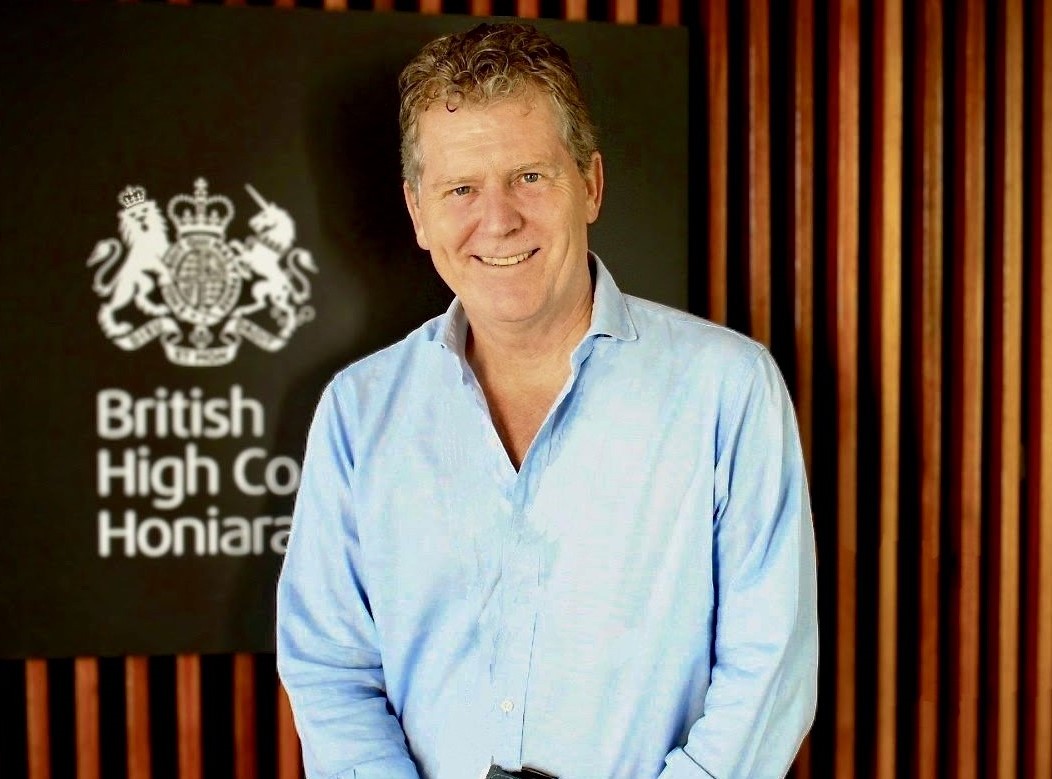
by Paul Turner
British High Commissioner to Solomon Islands and Nauru
“Nothing’s gonna harm you in these golden years…”
David Bowie ‘Golden Years’ (1975)
The lyrics of the Bowie song, ‘Golden Years’, jockeys back and forth between the dark realities that confront us and promises of a future bright.
Many of us – of a certain age anyway – look back with longing for a period passed, a golden era. I believe this to be the case in most cultures; it becomes part of a country’s national narrative. A reference in time and mind when we think things were better – even if they weren’t.
In British popular folklore, the Golden Years are often seen as the 1960s with a newfound confidence and optimism. England led the world in media, arts and music with ‘Swinging London’, The Beatles, The Stones and a 1966 World Cup to boot. The high was hit a decade later by power cuts, industrial unrest and economic malaise (- a malaise mirrored by a decline in our national football team!)
In France – au contraire to England, of course – the 1970s is seen as the decade of stability and hope, following a decade of civil unrest; wars in North Africa; and messy decolonisation. I think of other countries where I have lived: in Zimbabwe, the 1980s was the decade of hope, the first years of independence. In Uganda, it was the 1990s, after years of Idi Amin and civil wars. Even Afghanistan seems to have a Golden Era: the 1970s, pre-Soviet invasion with secular government and economic development.
So, what were the Golden Years for Solomon Islands? It is a question I have asked myself in my first year here. Was it the 1980s, the heady, optimistic days of Independence? I am yet to get a sense, and I have asked many of you. Some of you have even told me the days of the British Protectorate which I confess surprised me. (Though there was less traffic in Honiara, for sure…!)
National consciousness
But whilst I am yet to discover your Golden Years, what I have found is a deep consciousness and sense of history amongst Solomon Islanders. The impact of World War II left its mark on you as a people, more than anywhere else in the Pacific. And it is this history that marks you as a people.
I have been touched by your war memorials; your Coastwatcher tales; your pride in heroes like Jacob Vouza. Your history is front and centre of who you are and rightly so. It gives you a pride and sense of who you are.
Two moments from this year will stay with me. The first was watching local villagers standing silently and stoically in the pouring rain at the remembrance ceremony at Bloody Ridge. The second was one early morning in Tulagi, with school children on the beach singing the national anthem at the site of the US Marines’ landing over 80 years earlier. Both events were moving; they showed me how deeply etched these memories are in the national psyche of Solomons.
In his book, The Happy Isles of Oceania, Paul Theroux travels around the Pacific Islands in the early 1990s, at the time of the first Gulf War. He notes that of all the Pacific Islands, Solomon Islanders were the most informed about current affairs and most worried about war. Whilst Fijians and Samoans found their ‘entertainment’ watching counterfeit videos of American B-52s dropping bombs on the Iraqi army, Solomon Islanders asked pertinent questions about whether war in the Middle East could spread to the Pacific. A real concern from a people who knew what war was.
Free spirit
In terms of national traits, I have also found that Solomon Islanders have similarities to us Brits. Your journalists have a healthy British disrespect for authority and don’t take the official line as gospel. Your newspapers investigate, lifting stones to discover stories and challenge the official version. Indeed, a journalist friend visiting from Suva was surprised at how vibrant and inquisitive the press was here compared to Fiji.
Democracies work when those in power know scrutiny is real and close by. For that reason, the UK will continue to support Solomons media through our BBC Media Action programme. Of course, the media gets it wrong at times – be that in Solomons or the UK – but that should not dampen free spirit. And I see a lot of that spirit amongst Solomon Islanders.
Highlights – football and climate action
I was recently asked by a Solomon Islander friend what had been the highlight of my first year. It’s a difficult question as being completely new to a country and region, you are bombarded by so much that is impactful, personally and professionally. But a couple of memories have stood out.
One highlight was hosting your Women’s Football Team at the British Residence after their epic victory in July – it was an honour to be a part of that great national celebration, and the timing was sublime: the English Lionesses won the European Championship the same week. Double celebration! Football is a means of empowerment for young women and girls in Solomons and the national euphoria in winning the Oceania Cup was an important symbolic moment in a society where women are still asserting themselves in most areas of life.
Another highlight was meeting some of your young people who are actively campaigning on climate issues, joining forces with other young folk across the Pacific to get the International Court of Justice to hold to account those who are polluting our planet with impunity.
I am proud to say that of all the diplomatic missions in this country, the UK is the greatest advocate for Pacific Islands on climate action, and we will continue to champion your cause in the UN and other international organisations.
At the recent COP in Brazil, for example, which was attended by the Prince of Wales, the UK was a major voice for Small Islands States. We pledged a further £40 million (AU$ 80m) for real-time financing to be made available to help countries recover from the irreversible impacts of climate change—impacts already felt across the Solomon Islands and other low-lying atolls in the Pacific through sea-level rise, storm surges, and the erosion of coastal communities.
We will continue to be a voice for you internationally and will try to make other richer countries step up and take climate change seriously.
Democracy and optimism
I’ll finish where I started: Solomons and its Golden Years. In a sense, it really doesn’t matter if there isn’t a golden era to look back on. More important is where you are going and on this, I remain optimistic – cautiously optimistic, but nonetheless optimistic. Why? Because people in Solomons have a voice and an opinion; your media challenges and holds to account; democracy, whilst not perfect (nowhere is), works here.
When I arrived in Honiara, I had an interview with two young SIBC journalists. One week into my new posting, I expected easy questions – on the Royals; Premier League; the Great British Bake-off…How unprepared I was! Questions flew in: would the UK be continuing support for a new energy regulator? Would we help in improving oversight of the mining sector? The questioning was focused and forensic, and right on the money in raising issues that concern people. (I should say, the UK continues to help with both).
As I walked out of the SIBC studios that morning, I pondered the importance of the media in Solomons and the public space there is in this country for debate on political issues. That is a great asset and not one all countries have.
Democracy the world over is under threat but here in Solomons I find it alive and kicking. Just look at the levels of voter participation in national elections in recent years, amongst the highest of any democracy in the world.
So, as I pack my bags to travel back to family for Christmas, I raise a glass to Solomons, its people and your democracy. Treasure it and use it!
Thank you for a memorable first year and see you for more in 2026!
You must be logged in to post a comment.