
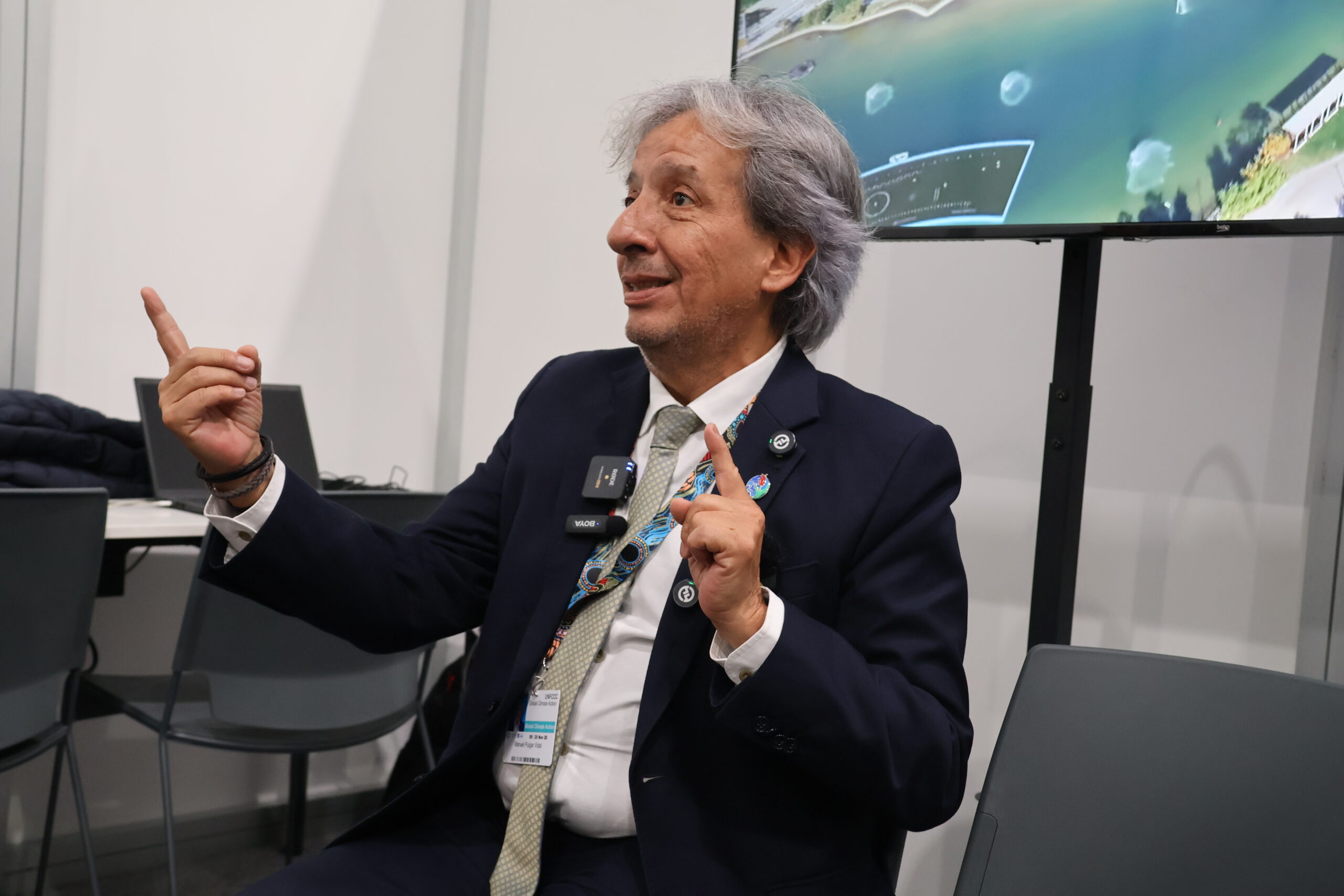
by Charley Piringi in Antalya, Türkiye
More than a decade after the Paris Agreement, global emissions have still surpassed the critical 1.5°C threshold, known as an overshoot.
Warning of the consequences, the COP20 President Manuel Pulgar–Vidal and former Environment Minister for Peru said it’s no longer time for “Urgency, or Emergency” rather it’s time for “Responsibility.”
“Now it’s 2026, it’s the most dramatic and extreme year for the climate crisis. It’s a time for responsibility. We are in the middle of the crisis. We are now suffering the consequences of our lack of responsibility. Accountability is more important now than ever,” Manuel said.
“El Nino, that it is now in the Pacific, the Atlantic Ocean circulation above the polar vortex that it’s starting to create problems, typhoons in China, heatwaves in Europe, so around the world, even in the most developed countries of the world. So, if that is the reality, if climate extremism is hitting us. What can we do?”
As co-host of the COP31 climate summit, Australia faces intense pressure to lead by example.
The nation aims for 82% renewable electricity by 2030, but still foresees taking up to 10 years to phase out coal production and export.

Addressing global leaders, Australian Prime Minister Anthony Albanese said, “The world’s goal, of course, is 1.5. But while we will likely overshoot 1.5 degrees, every fraction of a degree of warming we prevent will count. We have a solemn responsibility to this and to future generations to act. This is the critical decade. We must take that action now.”
Albanese acknowledged that Pacific Island nations continue to champion ocean protection and rapid emissions cuts, demanding that global decisions safeguard their livelihoods, land, and heritage.
However, climate advocates argue Australia’s domestic actions fall short. Dr. Amiera Sawas of the Fossil Fuel Treaty Initiative criticized the country’s stance as insufficient for frontline communities.
“For a huge country like Australia, leadership is action. We keep being told this is the implementation year. But we’re hearing a lot of words, and not seeing action domestically.”
She added, “Australia has a massive responsibility, and knowing they are not doing enough for just transition is, frankly, insulting to those countries, communities, and others who are suffering the adverse impact of climate crises now.”
Anabella Rosemberg, a global expert on the social justice dimension of environmental and climate policies, and senior Advisor for a Just Transition at the Climate ACtion Network International said, its hypocrite of global emitters to just talking without concrete actions.

“I mean, the fact that they keep announcing the opening of coal production in their country while at the same time calling themselves an ally to the Pacific, I think it’s just pure hypocrisy.”
COP31 Negotiations President Chris Bowen announced the initial presidency-led draft decision text, incorporating key Pacific priorities, including adaptation finance and ocean concerns, as formal negotiations commence.
