
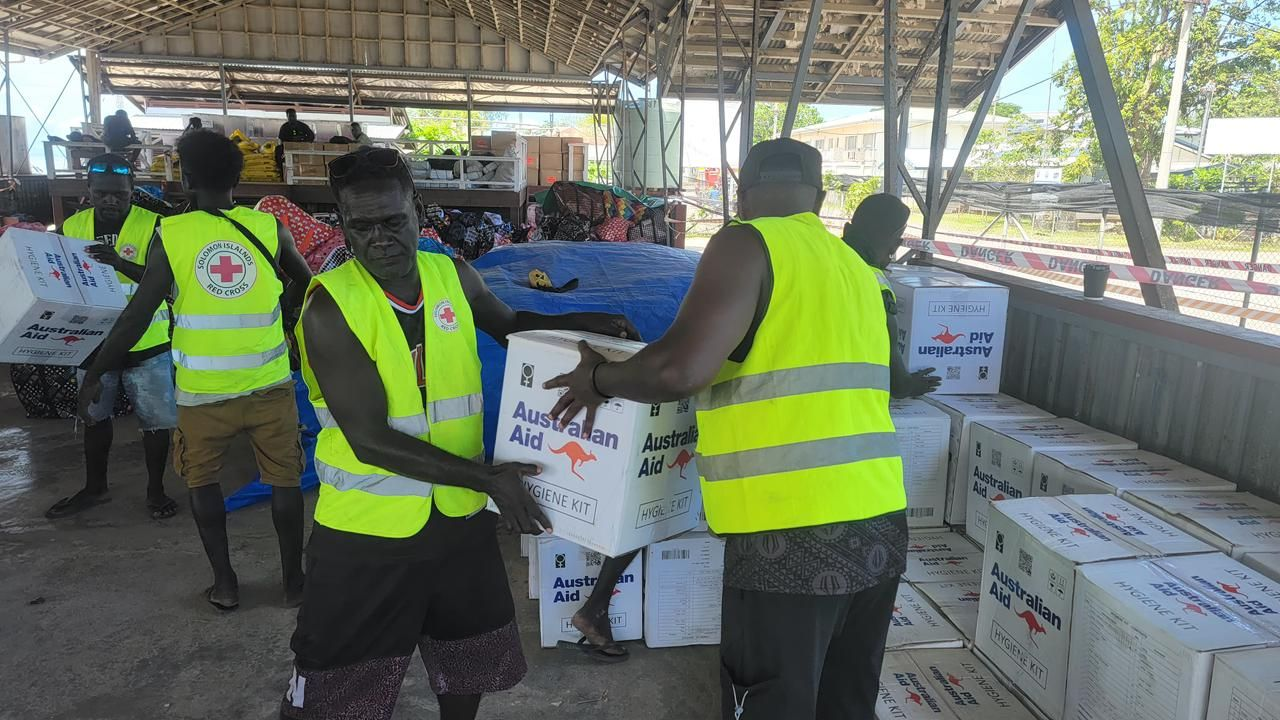
Australia has provided SBD2.2 million to the Solomon Islands Red Cross Society to support their Tropical Cyclone Maila response and recovery work.
The Solomon Islands Red Cross is using the funds to distribute relief items to remote communities and re-establish access to clean drinking water.
The support brings Australia’s contribution to the Solomon Islands Government’s cyclone response to SBD12.1 million.
Australia’s High Commissioner to Solomon Islands, Jeff Roach, joined Prime Minister Wale’s reassurance visit to Choiseul and Western Provinces last week where he saw the severe impacts in communities firsthand.
“In times of crisis, Australia stands shoulder to shoulder with the people of Solomon Islands,” said High Commissioner Roach.
“I commend the volunteers of the Solomon Islands Red Cross Society for their tireless efforts, compassion and support.
“The Red Cross volunteers have reminded impacted communities that they are not alone in their time of need.”
Secretary General of the Solomon Islands Red Cross Society, Sheebah Mirisa, said that the aftermath of Tropical Cyclone Maila continues to be felt in affected communities.
“Families have lost their homes and livelihoods, and access to basic necessities, like health, schools, social spaces and clean drinking water, remain critical,” Mirisa said.
“The Solomon Islands Red Cross is working very closely with the Western Provincial Disaster Committee and the National Disaster Management Office in coordinating and distributing relief supplies to the affected families, prioritising the most vulnerable and reaching families and communities who have yet to be reached.”
Australia has been supporting the response since the cyclone struck in April, with supplies beginning to arrive from the Australian Humanitarian Warehouse in Brisbane within 48 hours of Solomon Islands’ official request for assistance.
Australian Humanitarian Partner NGOs Save the Children, Plan International, World Vision and CAN DO also received funding to provide emergency relief and rebuild local livelihoods.
