
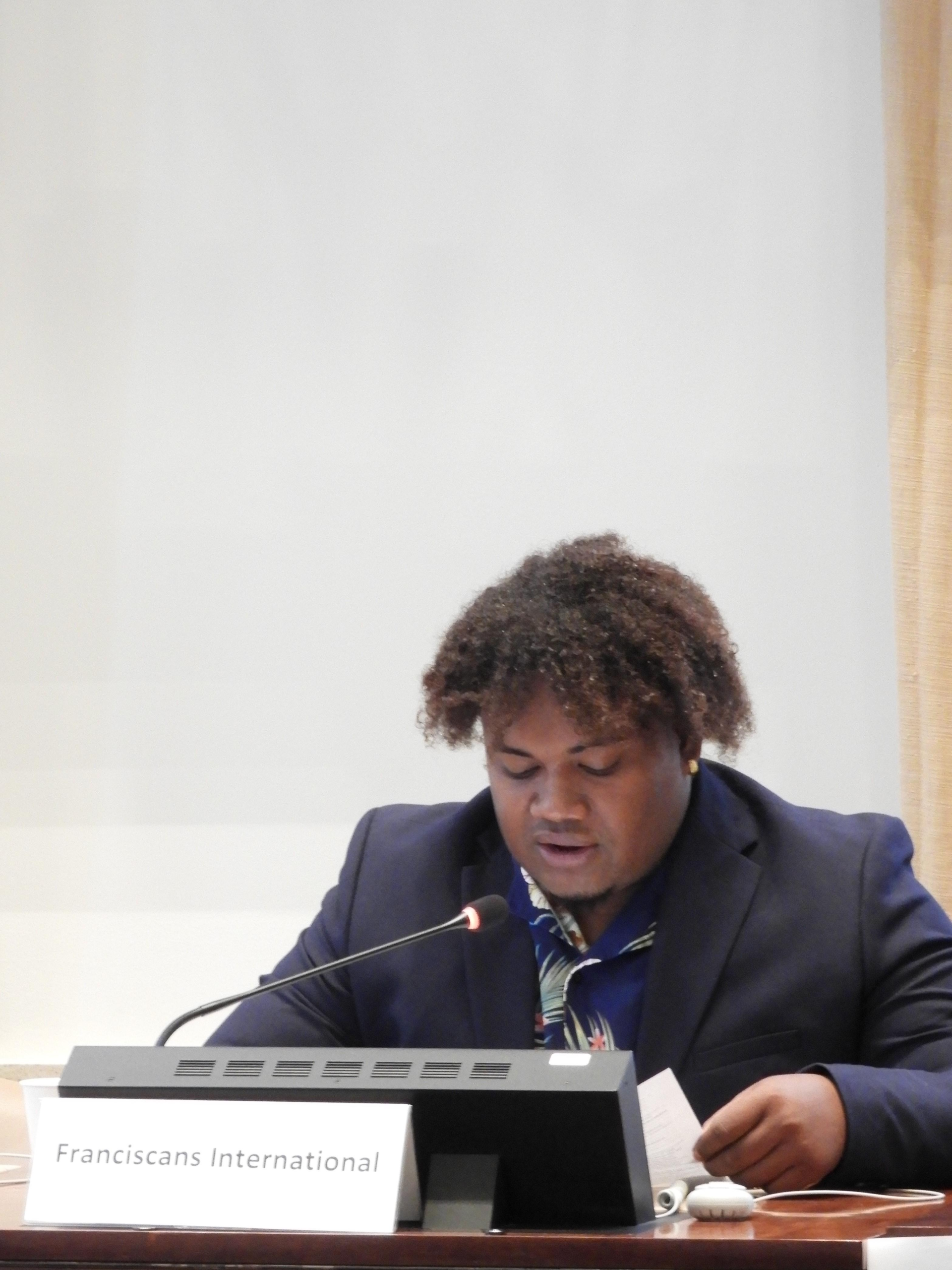
International and local civil society organisations have called on the Solomon Islands government to strengthen protections for communities affected by logging and mining, as part of submissions to the United Nations Universal Periodic Review (UPR) on human rights.
Franciscans International — a non-governmental organisation with consultative status at the UN Economic and Social Council — joined the Solomon Islands Climate Action Network and Dominicans for Justice and Peace in presenting recommendations during the fourth cycle of the review.
Their joint submission argues that existing legislation governing natural resource extraction is outdated and fails to adequately safeguard human rights and environmental protections.
The groups highlighted the country’s Forestry and Timber Utilisation Act of 1969 and the Mines and Minerals Act of 1990 as insufficient for regulating modern development negotiations. They urged authorities to adopt updated legal frameworks that guarantee free, prior and informed consent for landowners and local communities in dealings with companies, along with mandatory human rights due diligence and equitable sharing of benefits.
The submission raised concerns about environmental degradation linked to logging and mining, including reports of polluted rivers and water sources that pose health risks and threaten food security. It also warned that ecosystem damage — particularly to mangroves and river systems — has weakened climate resilience, increasing vulnerability to sea-level rise and extreme weather in the Pacific island nation.
Among their recommendations, the organisations called for improved climate adaptation support for frontline communities, including flood mitigation infrastructure, strengthened early warning systems, and restoration of coral reefs, mangroves, and forests.
They also advocated reforms beyond environmental issues, including raising the legal age of marriage to 18 and establishing provincial complaint mechanisms to support victims of gender-based violence, child exploitation, and trafficking linked to extractive industries.
The coalition reaffirmed its commitment to working with the government on implementing national priorities and urged authorities to use the UPR process as an opportunity to demonstrate leadership in adopting the recommendations.
The UN Universal Periodic Review is a peer-review mechanism through which member states assess one another’s human rights records, with civil society participation playing a key role in shaping recommendations.
[ENDS]
