
by Georgina Maka’a
The High Court recently ordered a Honiara lawyer and his two clients to jointly repay more than $2.57 million to a logging company after finding they had no legal right to obtain the money through court enforcement proceedings.
In a summary judgment, Justice Maelyn Bird ordered lawyer Whitlam Togamae and clients Nicholas Kuli and Stevenson Carlos to repay $2,575,501.77 to Bulacan Integrated Wood Industries SI Limited, together with interest, while damages for loss of business will be assessed at a later date.
They were also ordered to pay Bulacan’s legal costs. Bulacan Integrated Wood Industries SI Limited is owned by Filipino businessman Johnny Sy.
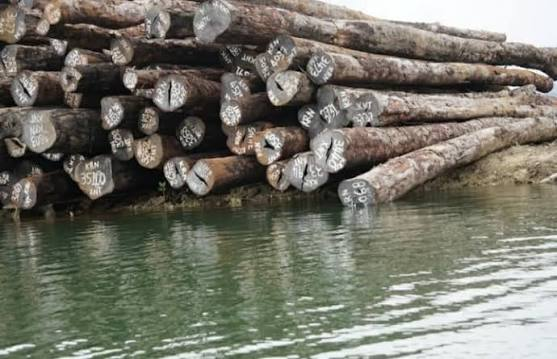
The case stemmed from the seizure and export of 1,818 tubi logs harvested from Goe land in Isabel Province.
The logs, valued at $1,999,657, had been seized by the Commissioner of Forests because tubi is a prohibited species for export under the Forest Resources and Timber Utilisation Act.
The Commissioner subsequently appointed Bulacan International (SI) Company Limited to export the seized logs.
The court heard that in 2015, a consent order in the Central Magistrates’ Court directed that 25 per cent of the export proceeds be paid to the Solomon Islands Government as export duty, with the remaining balance to be released to Bulacan International (SI) Company Limited.
However, the High Court found that after a separate civil case had already been discontinued, the defendants continued to pursue court orders that ultimately resulted in Pan Oceanic Bank paying $2,575,501.77 into Togamae’s trust account under an enforcement order.
The court noted that the money was subsequently disbursed before the enforcement order was later set aside in 2019.
An appeal by the defendants was dismissed by the Court of Appeal in 2022.
In her ruling, Justice Bird found that Bulacan Integrated Wood Industries SI Limited was not a party to either of the earlier court proceedings and was not a beneficiary of the consent orders relied upon by the defendants.
She said the defendants had mistakenly pursued claims against the wrong company and had failed to produce any admissible evidence establishing that the claimant had committed any civil wrong against them.
Justice Bird also rejected allegations of fraud made by the defendants, finding that no particulars had been pleaded as required under the Civil Procedure Rules.
“The 1st and 2nd Defendants have erroneously made unsubstantiated claims against the Claimant,” Justice Bird ruled.
“There is no admissible evidence produced by the defendants to show that the Claimant has done any civil wrong against them.
“In effect, it is clear that they do not have any cause of action against the Claimant. They are suing a wrong entity.”
Justice Bird further found there was no real dispute over any material facts, concluding that the defendants had no arguable defence to the claim and that their counterclaim was frivolous and vexatious.
She therefore entered summary judgment in favour of Bulacan without the need for a full trial.
