
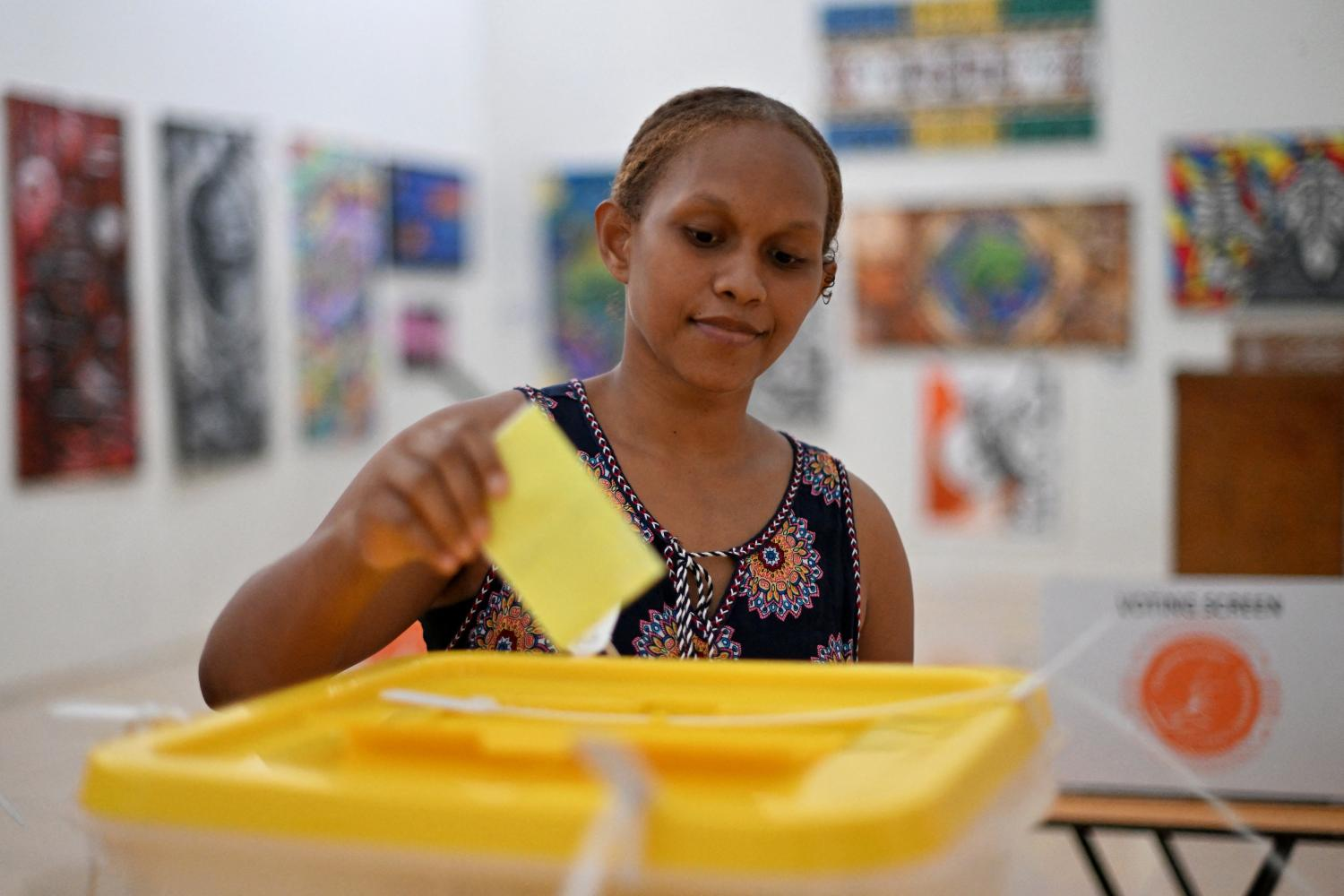
Transparency Solomon Islands (TSI) acknowledges and thanks the Chief Electoral Officer of the Solomon Islands Electoral Commission (SIEC) Mr. Jasper Anisi, for his comments on the Corruption Perception Index launched on Wednesday 11th February 2026 by the Chairman of Transparency Solomon Islands Mr Rodney Kingmele.
The Chief Electoral Officer’s comments were covered by Solomon Islands Broadcasting Corporation (SIBC) News Facebook page concerning the Corruption Perceptions Index (CPI) launched on Wednesday 11 February 2026.
TSI supports, recognises and respects the constitutional and statutory mandate of the Solomon Islands Electoral Commission in administering elections in accordance with the law and much more to accord citizens their democratic right come election day. Conducting elections come election day is just one of the roles and responsibility of SIEC. It is much more, the reason why TSI continues to call for the adequately resourcing of SIEC.
That mandate is grounded primarily in the Constitution of Solomon Islands, the Electoral Act 2018, and subsidiary electoral regulations and operational guidelines. Under these laws, SIEC is responsible for the conduct and supervision of elections to ensure that processes remain lawful, orderly, and credible, and much more .
This responsibility extends beyond polling day. It includes voter registration, candidate nomination processes, counting and declaration of results, voter education and public awareness programmes conducted before, during, and after National General Elections. Voter education is not optional; it is central to ensuring that elections are free, fair, and properly understood by the people.
The most important of SIEC’s role is in conducting Electoral awareness and processes that are professional, impartial, transparent throughout the electoral cycle period (4yrs in Solomon Islands) enhancing people’s ability to exercise their democratic rights come election time.
TSI acknowledges SIEC’s commitment to conducting elections in accordance with the law and recognises Solomon Islands’ positive performance in the Electoral Integrity Global Report 2024. However, the country cannot ignore the findings of the many democracy projects findings and that of the World Bank’s diagnostic tool the Country Policy and Institutional Assessment (CPIA) that evaluates the quality of policies and institutions in countries with regard to eligibility of International Development Association Assistance (IDA), the many democracy project reports of our country and that of Global Insights Country Risk Ratings that provided data for the calculation of CPI in our country.
The CPI in Transparency Solomon Islands view should serve as an important accountability tool highlighting areas where reforms are needed and where progress has been made with regard to the Integrity of the Electoral Processes and integrity needs strengthening.
The concerns raised during the CPI launch address a broader dimension of electoral integrity that extends beyond administrative procedure.
The CPI 2025 theme, “The Integrity of Electoral Processes and Their Importance to the Integrity of Political Leadership,” recognises that while electoral management bodies safeguard the mechanics of elections, the legitimacy of democratic outcomes is also shaped by the wider political environment in which those processes occur.
The CPI launch referenced public concerns relating to:
- recurring allegations of vote-buying and financial inducements during election periods;
- perceptions surrounding the use and distribution of constituency development funds during electoral cycles;
- limited transparency in political campaign financing practices;
- the influence of financial interests in political competition; and
- concerns about unequal electoral competition where access to resources affects viability.
These issues cannot be solved by SIEC’s administrative functions, but most certainly it has a role to play. In effect, these issues reflect systemic governance vulnerabilities within the broader political environment in which elections take place. Elections are means for filling an office through choices made by people, a process through which people recruit politicians, influence the formation of government and above all provide representation. This is why the Integrity of Election is important to the integrity of the country’s political leadership.
Elections conducted in procedural compliance with the law may still face public confidence challenges if citizens perceive that financial influence affects leadership outcomes. When public perception associate’s money with electoral success, trust in democratic institutions can be weakened. This is regardless of the technical efficiency of polling operations. The Global Corruption Barometer Pacific 2021 shows that these are no longer perceptions but a real experiences of citizens.
The CPI launch emphasised an important democratic principle: elections without public confidence in their integrity do not provide leaders with unquestioned legitimacy, nor do they strengthen long-term institutional trust.
Integrity of Electoral Processes and that of Political Leadership are intricately linked. Where there is no Integrity in the Electoral Processes there can be no Integrity in Political Leadership.
Voter education must extend beyond instructions on how to cast a ballot. It should also promote civic responsibility, ethical participation, and awareness of the long-term implications of monetised politics.
While international recognition in electoral administration is positive, procedural integrity alone does not fully address broader political finance concerns. A resilient democracy requires both effective institutions and a political culture grounded in transparency and accountability.
TSI maintains that strengthening democracy in Solomon Islands requires honest national reflections of what is happening and not the legalistic arguments.. Transparency is not an accusation; it is a safeguard.
It is naïve and irresponsible of the Chief Electoral Officer to go on record and say that the country’s electoral process is not corrupt because it is conducted under the law.
TSI remains committed to advocating for stronger and well-resourced institutions of accountability and integrity especially the Solomon Islands Electoral Commission and the important role this institution plays in facilitating people’s participation in our Political Leadership.
[ENDS]
