
by Georgina Makaa
One hundred and twenty-six vessel inspections, as well as 84 in ports and 42 at sea, along with 56 vessel sightings were recorded during Operation Kurukuru 2025 – a three-week maritime operation conducted by the Forum Fisheries Agency (FFA), and which concluded today.
Eleven high risk vessels of interest were identified, while one vessel was apprehended in Solomon Islands for suspected offences.
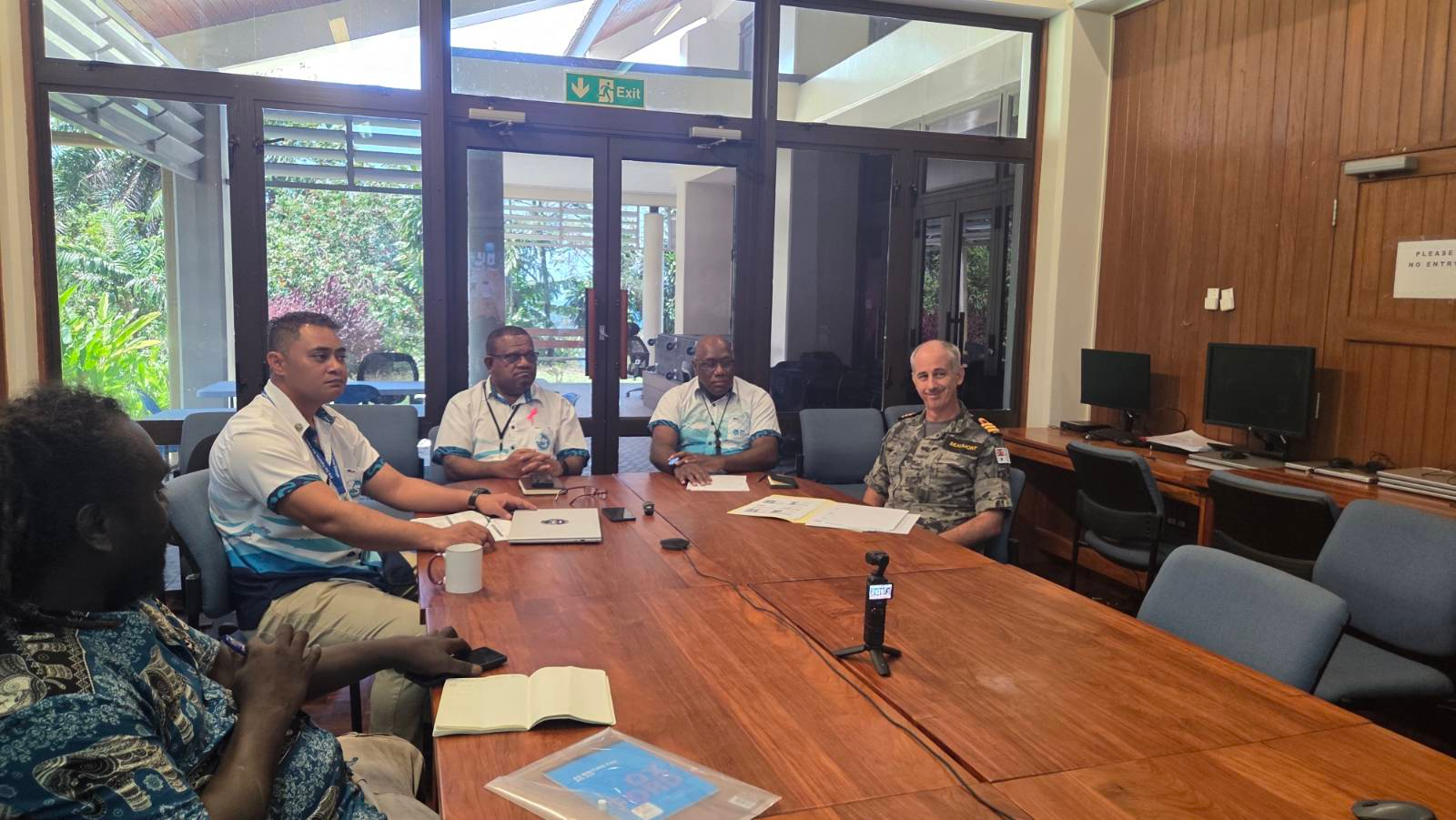
FFA’s Surveillance Operations Officer Yohni Fepuleai today provided an update to journalists about the four focus areas that Operation Kurukuru undertook.
Fepuleai said they have achieved all the focus areas.
“It’s fair to say at the outset that we’ve achieved all those four key objectives reflecting on the surveillance coverage over the 30 million square kilometers of water,” he said.
FFA Director-General Noan David Pakop said the operation was an important milestone in delivering on the goals of the Regional Monitoring, Control and Surveillance (MCS) Strategy 2025 – 2029, which aims to optimise compliance and strengthen fisheries enforcement across the Pacific.
“Operation Kurukuru 2025 is more than just an annual surveillance exercise. It marks the first full year implementation of our Regional MCS Strategy,” Pakop said.
“It demonstrates how policy commitments are being put into action through coordinated patrols, intelligence sharing and targeted enforcement,” he added.
“Our Members are using data and technology more effectively than ever to protect their tuna resources.”
Pakop said the steady detection rate and follow-up actions show the value of sustained regional coordination.
“These outcomes confirm that our approach to intelligence-driven operations is delivering real results.
“We are identifying high-risk vessels earlier and directing assets more efficiently, even across vast ocean areas,” he said.

Pakop also highlighted that Operation Kurukuru 2025 reinforces that monitoring, control and surveillance continue to be a key components of sound fisheries management in the region.
“Our shared efforts are essential to keep our tuna resources sustainable and beneficial for all Pacific people.”
The operation involved surface and aerial assets from the Cook Islands, Federated States of Micronesia, Fiji, Kiribati, Palau, Papua New Guinea, Samoa, Solomon Islands and Tonga, supported by aircrafts from Australia, New Zealand, France and the United States.
It also included high seas coverage under the Western and Central Pacific Fisheries Commission (WCPFC) framework, with surveillance operations conducted by the French Navy, Cook Islands and FFA King Air aircraft.

You must be logged in to post a comment.