
by Ofani Eremae
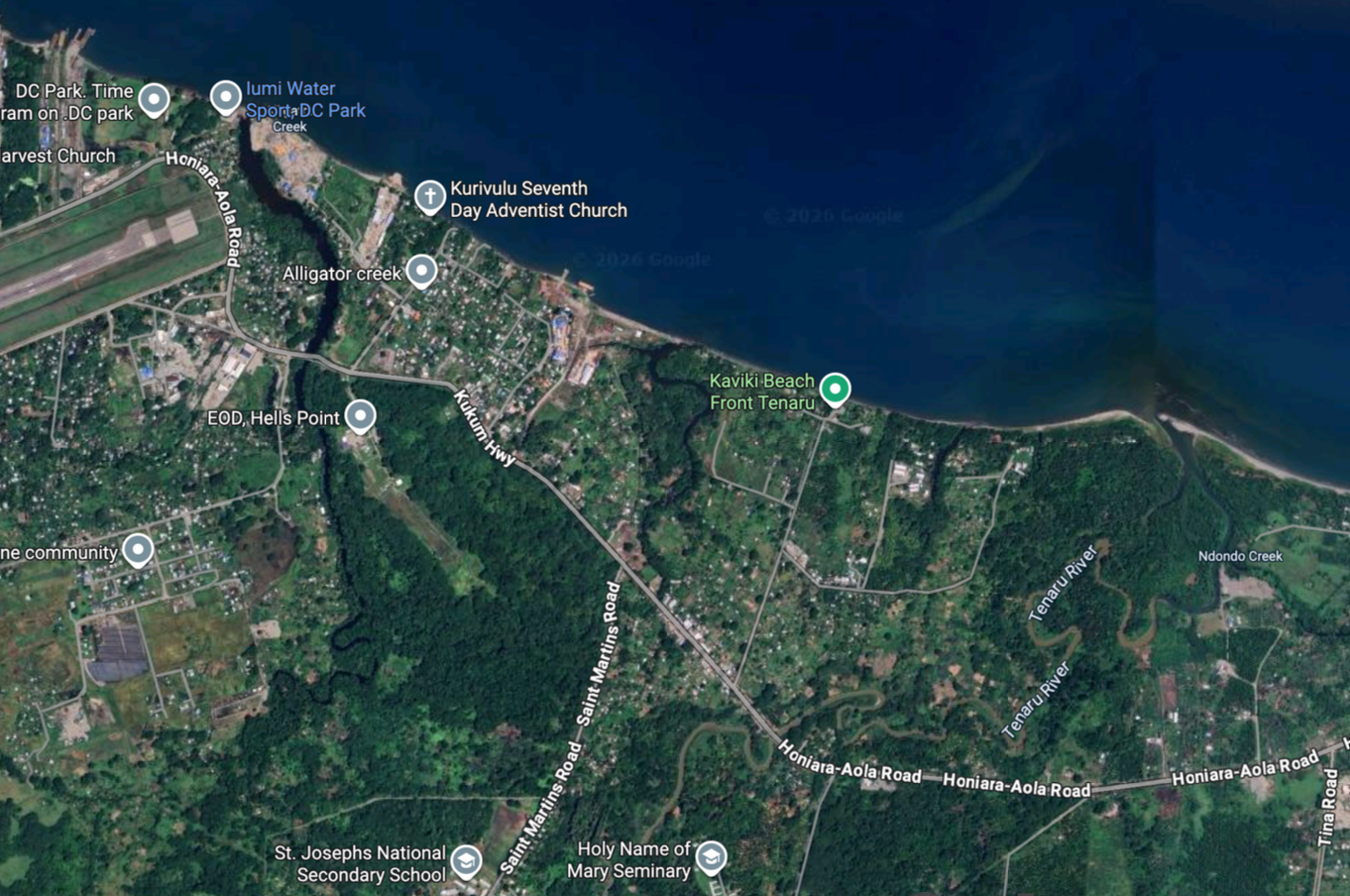
A High Court judge yesterday dismissed attempts by the Government to reclaim Lever Solomons Ltd-held land in the Alligator-Tenaru area, east of Honiara.
Justice Gina Nott made the ruling after Lever Solomons Ltd (LSL) challenged the Government’s attempts to seize the land through forfeiture and compulsory acquisition.
Justice Nott ruled that the “forfeiture and compulsory acquisition” attempts by the Government are “invalid, void and of no effect”.
“The power to take private property is not ‘at large’ and must strictly adhere to Constitutional and statutory safeguards,” Justice Nott reminded the Government in her ruling.
The case centers on large tracts of land – including the high-profile Hells Point – held by LSL under fixed-term estates (FTEs).
The dispute intensified in 2020 and 2021 when the Commissioner of Lands Alan McNeil issued “Notices Before Forfeiture” alleging LSL had failed to develop the land and pay rent.
Simultaneously, the Minister for Lands issued declarations to compulsorily acquire the land for “public purposes,” including a police training facility, public housing, and a proposed township in Guadalcanal.
LSL challenged these moves, arguing they were “improper,” “in bad faith,” and lacked a lawful evidentiary foundation.
Justice Nott dismantled the Government’s case on two primary fronts: Compulsory Acquisition and Forfeiture.
She quashed the Minister’s declarations for land acquisition in Civil Cases 526/2021, 41/2022, and 47/2022.
Key Findings:
1. Lack of Evidence for “Public Purpose” – While the Government claimed the land was needed for public purposes – such as police training at Hells Point, public housing, and a township development – Justice Nott found that the Government failed to provide actual evidence that the land was “required” at the time of the declarations.
-
Hells Point: Although it was common ground that police training is a public purpose, there was no evidence explaining why this specific land was required at the time the declaration was made.
-
Public Housing: The judge noted there were no building works, no approvals, and no public notifications regarding a housing scheme; the land was merely “suitable,” not necessarily “required”.
-
Township Development: The Government relied on a “Guadalcanal Township Plan” (or “GP Plan”), but this document was never produced in court, and even the Commissioner of Lands admitted he had not seen it.
2. Failure of the “Necessity” Test – Justice Nott emphasized that under Section 71(1) of the Lands and Titles Act, land must be “required” – meaning there must be a real and operative necessity, not just a future possibility or general policy goal.
-
The court found that the Government’s process appeared to be driven by a Cabinet directive to “take back” the land rather than an assessment of specific public needs.
-
The judge ruled that subsequent use of the land (e.g., current police use of Hells Point) cannot retrospectively justify an acquisition if the necessity wasn’t established at the time of the declaration.
3. Improper/Collateral Purpose – Regarding Hells Point, LSL argued the Government used compulsory acquisition to avoid paying $50 million owed under a previous agreement.
-
While the judge found the timeline “suspicious,” she ultimately ruled that LSL did not provide enough proof to establish “bad faith” or “improper purpose” as the primary motive.
-
However, the acquisition was still declared invalid because the Government failed the basic evidentiary tests for necessity mentioned above.
4. Forfeiture Issues – Justice Nott also addressed the Government’s attempt to forfeit the land for alleged breaches (like non-payment of rent):
-
No Authority: The Commissioner of Lands claimed he had delegated authority from the Land Board, but the judge found the only “writing” evidencing this was a set of unsigned minutes from 2017 that specified a six-month trial period which had long expired.
-
Interference with Payment: The judge found that the Commissioner had issued a directive not to accept rent payments from LSL specifically to prevent them from remedying their default, which was improper.
The Government was represented by the Attorney General’s office whilst LSL engaged Sydney-based barrister Geoffrey McDonald and private lawyer Alice Willy.
[ENDS]
