
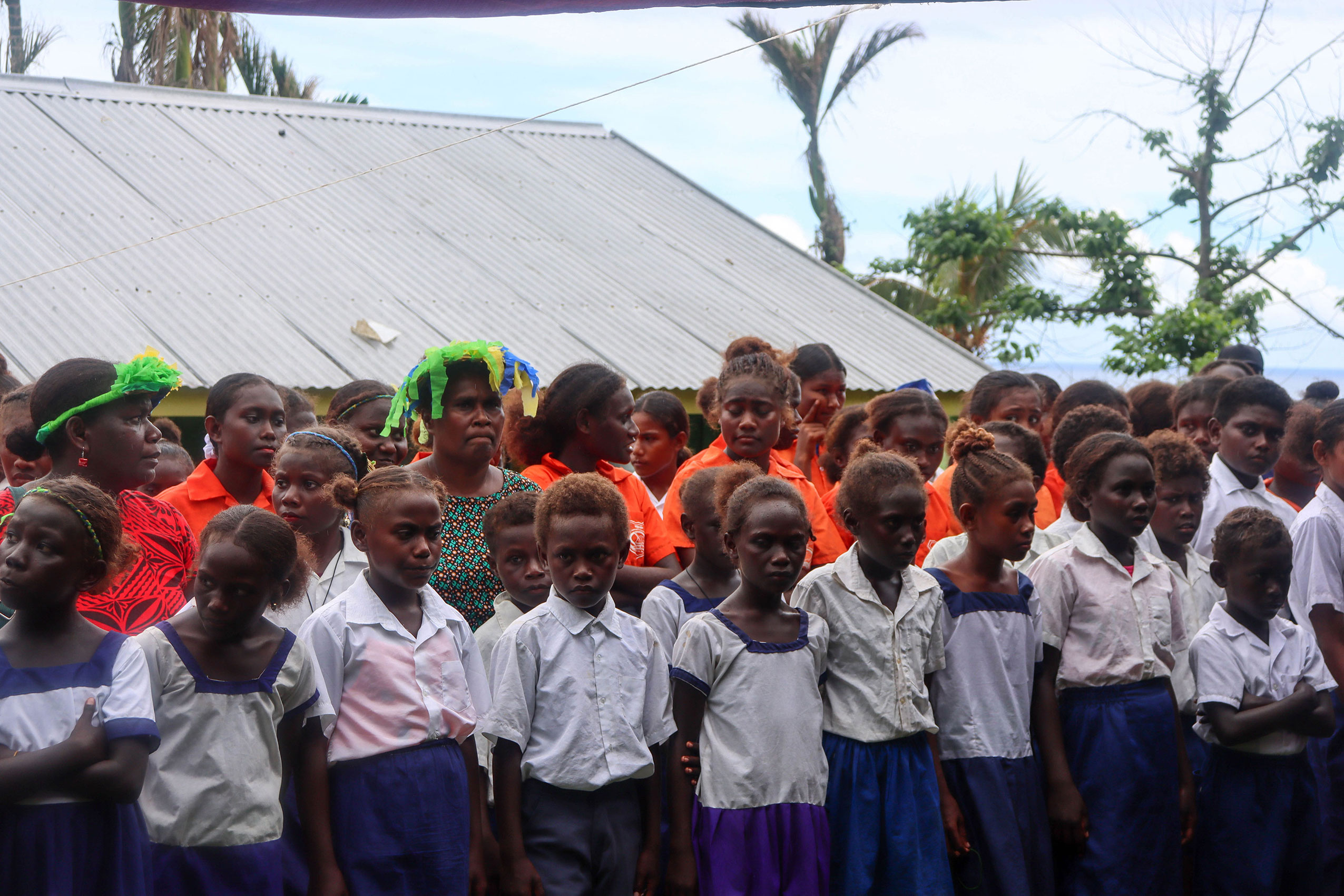
“We could see the children were no longer comfortable coming to school because their families had nowhere proper to live after Cyclone Maila devastated our village,” says Anleta Mazini, Principal of Keara Primary School on Ranongga Island in Western Province.
Keara Primary was among 18 schools in Western Province affected when Tropical Cyclone Maila struck in April 2026, leaving widespread destruction across communities and damaging education infrastructure.
More than 1,700 students across the province were directly impacted, including 112 students from Keara Primary School.
Although the school’s two main classroom buildings escaped with only minor damage because they are located inland, the same could not be said for the nearby coastal community.
Homes were swept away by the powerful cyclone, leaving hundreds of families homeless.

“For many families, losing their homes meant they had nowhere to settle,” Mazini explains.
“As a result, children stopped coming to school,” she added.
In the immediate aftermath of the disaster, the school itself became a refuge.
“Our classrooms were turned into emergency shelters for displaced families. People were even living underneath the classroom buildings,” she recalls.
Several teachers were also among those left homeless after staff houses were destroyed.
As part of the emergency response led by the Solomon Islands Government, supported by development partners and non-government organisations (NGOs), tents were distributed to affected communities to provide temporary accommodation.
Nearly two months after the cyclone, many families are still living in those tents.
“The tents allowed families to move out of the classrooms and into temporary shelters,” Mazini says.
“That meant we could finally reopen the school.”
Keara Primary has now resumed classes, marking an important milestone in the community’s recovery.
Yet Mazini says rebuilding lives – and restoring a sense of normalcy – will take much longer.
“Before Cyclone Maila, our children loved coming to school. They were confident and enjoyed expressing themselves in the classroom,” she says.

“Now they have lost everything. Many are homeless. Their school supplies, books and personal belongings were washed away. Their parents have also lost their food gardens.
“It has deeply affected their education and their wellbeing. These are difficult times for our students, their families and our teachers.
“But with God’s blessing, we will overcome this and look forward to a better future.”
Supporting children’s recovery
The Ministry of Education and Human Resources Development (MEHRD) is providing psychosocial support to affected schools to help students and teachers recover from the trauma caused by the cyclone.
Working alongside development partners and NGOs, the ministry has completed assessments of damaged schools to guide the education sector’s recovery plan.
Emergency learning materials have already been distributed to affected schools to help ensure learning continues, while UNICEF has supplied high-performance tents to serve as temporary classrooms where school buildings were severely damaged.

As fresh green leaves begin to emerge from trees stripped bare by Cyclone Maila, they have become a powerful symbol of resilience and hope for the people of Keara.
That sense of hope was strengthened in late May when Prime Minister Mathew Wale visited Keara and Irigila villages in Western Province to assess the damage firsthand.
He was accompanied by Education Minister Stephen Kumi and other members of the government delegation.
During the visit, the Prime Minister assured affected communities that damage assessment reports were being fast-tracked so government assistance could be delivered as quickly as possible.
He reaffirmed his government’s commitment to supporting the long-term recovery of communities devastated by the cyclone, including rebuilding the education sector.
For Mazini, the visit offered reassurance that Keara Primary School will not be forgotten.
“We are grateful that the Prime Minister came all the way to Keara,” she says.
“His visit has given us hope that the Government will continue supporting education here, as well as helping us recover in other areas affected by the cyclone.”
While classes have resumed, significant challenges remain.
Mazini, who is currently living in the community hall after losing her home, says rebuilding staff housing is one of the school’s most urgent priorities.
Access to clean water is another pressing concern.
“Our only water source was damaged when trees fell onto our dam,” she says.
“Without a reliable supply of clean water, both students and teachers are struggling to maintain proper sanitation.”
Despite the hardships, Mazini remains optimistic.
She continues to encourage her teachers, students and the wider community to stay resilient as they rebuild not only their school, but also their lives.
For Keara Primary, the reopening of classrooms represents more than just the return of lessons.
It is a sign that, even after one of the community’s darkest moments, hope is beginning to take root once again.

You must be logged in to post a comment.