
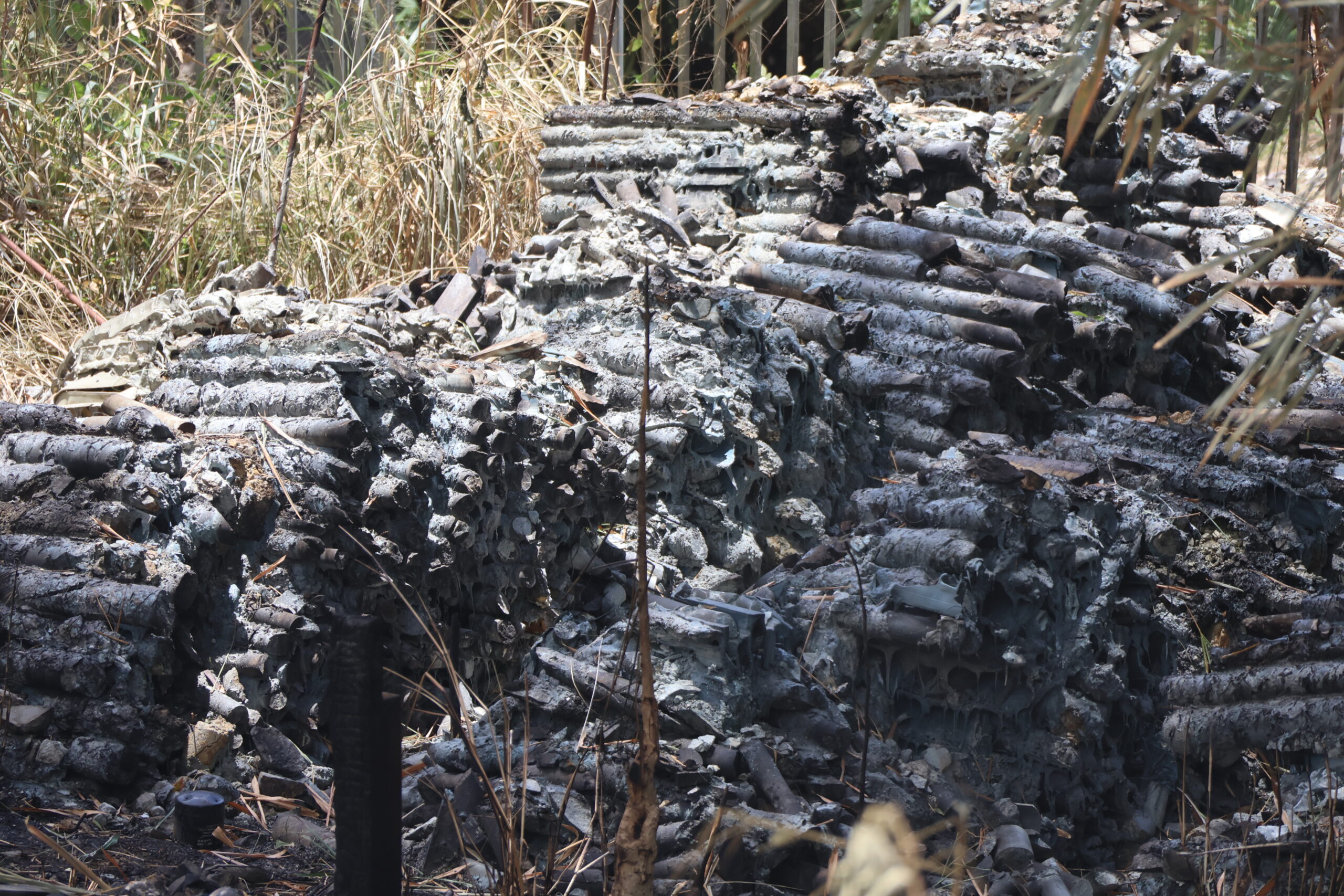
A fire at the Ministry of Mines, Energy and Rural Electrification compound last week destroyed millions of dollars worth of vital “mineral core” data.
It devastated a priceless archive of the country’s underground geology mapping – wiping out millions of dollars worth of vital mining information.
“These ‘minerals core’ are cylindrical rock samples drilled from hundreds of meters below the earth’s surface by exploration companies,” Mines Director Krista Tatapu told In-depth Solomons.
“They are physical maps of the underground world, they show scientists and investors exactly what minerals are buried on which islands, how deep they are hidden, and how the geological layers stack up,” Tatapu added.
She said the destruction was a devastating setback for both Solomon Islands and prospective investors.
“This is the most important information, not only for us, but also for investors who want to do mining here in the country,” Tatapu said.
“Investors spent millions for mineral exploration, and the lost core is what they brought home. We just lost the most valuable information in the flames.”
Without these physical samples, the mining sector has effectively been pushed back years.
The cause of the fire is yet to be determined, but Tatapu stated it started from outside source.
Mines Chief Inspector Nikson Killia explained that the lost archives provided an easy, highly detailed guide for new operations.
“Because these decades of records have vanished in the fire, any future mining projects will have to start completely from scratch, repeating years of costly drilling and exploration.”
Before the disaster, the ministry was already working on a plan to move these valuable samples to a more secure location.
Tatapu said that her office had recently finished and approved the design for a new, dedicated facility at the Solomon Islands National University (SINU) Kukum campus.
While the historical collection is now gone, Tatapu confirmed the new facility’s construction will still go ahead.
The space will eventually house future mineral samples, ensuring that tomorrow’s university students can study the country’s geological makeup firsthand.
