
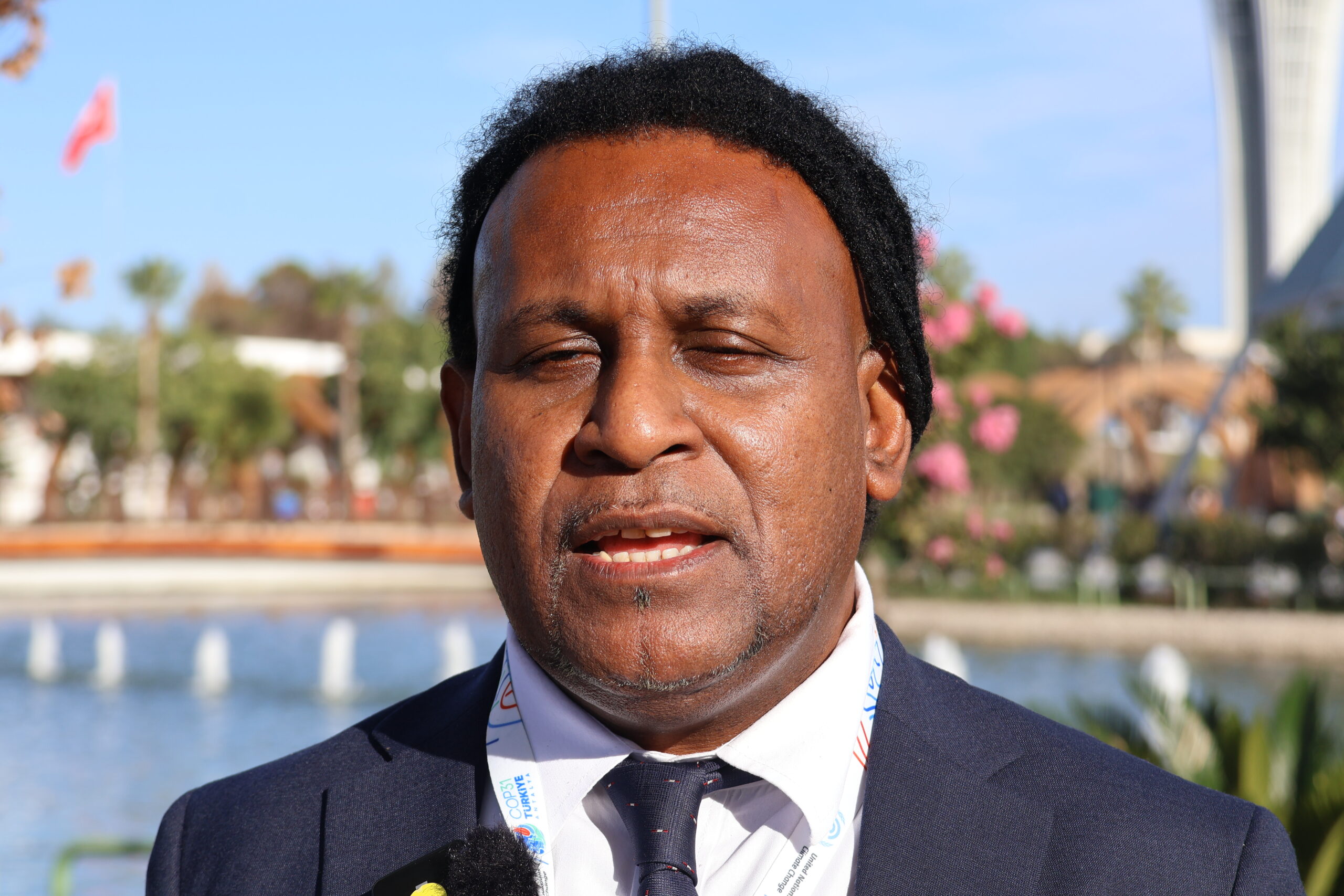
by Charley Piringi in Antalya, Turkiye
Although the Solomon Islands has unlocked over USD120 million in global climate finance, structural gaps force reliance on foreign intermediaries and delays urgent disaster relief.
Speaking exclusively to In-depth Solomons in Antalya, Exley Taloiburi, Green Climate Fund (GCF) Head of Multilateral Governance and Observer Engagement based in South Korea, cautioned the country’s current financial architecture.
He said, while celebrating major investments like the $86 million Tina River Hydropower Project and the $25 million SOLCAS initiative, Taloiburi warned that the Solomon Islands is missing a crucial piece of the puzzle _”a domestic accredited implementing entity.”
“Right now, the Green Climate Fund disburses funds directly to an accredited entity. In the Solomon Islands, we currently have a gap in that space—we do not have a national implementing entity,” Taloiburi said.
This structural void means the Solomon Islands must rely on international middlemen, such as the Asian Development Bank or foreign NGOs, to manage its climate funds.
Taloiburi pointed out that neighboring nations like Fiji and the Cook Islands have successfully accredited their own development banks and finance ministries, granting them direct control over international disbursements.
Having a local entity, he explained, would help the Solomon Islands gain “more national ownership over the resources, rather than relying heavily on regional or international organizations to access funding for us.”
The lack of domestic financial machinery also has devastating consequences during natural disasters. “While nations like Tuvalu operate a dedicated survival fund capable of deploying assistance within 48 hours of a cyclone, the Solomon Islands lack such a rapid-response facility.”
“Right now, we have to wait for international resources to arrive before we can support our communities,” he said. “We lack such a facility and have to wait weeks for support.”
He highlighted a severe accountability blind spot, saying while projects are being implemented, the country lacks the robust monitoring and evaluation systems needed to verify the tangible impact of the millions already accessed at the community level.
He also cautioned communities that grassroots needs must be officially recognized by the national government to receive global money.
“The GCF cannot just come in and assist with any project; we are guided by the government’s priorities,” Taloiburi warned. “If your priority is not included in the government’s national policies and plans, it will be very, very difficult for you to access climate finance.”
Despite these hurdles, Taloiburi commended the current government’s proactive steps to close these gaps, specifically their legislative efforts to establish a dedicated National Climate and Resilience Fund and to seek GCF accreditation for the National Transport Fund and Ministry of Finance.
