by Charley Piringi
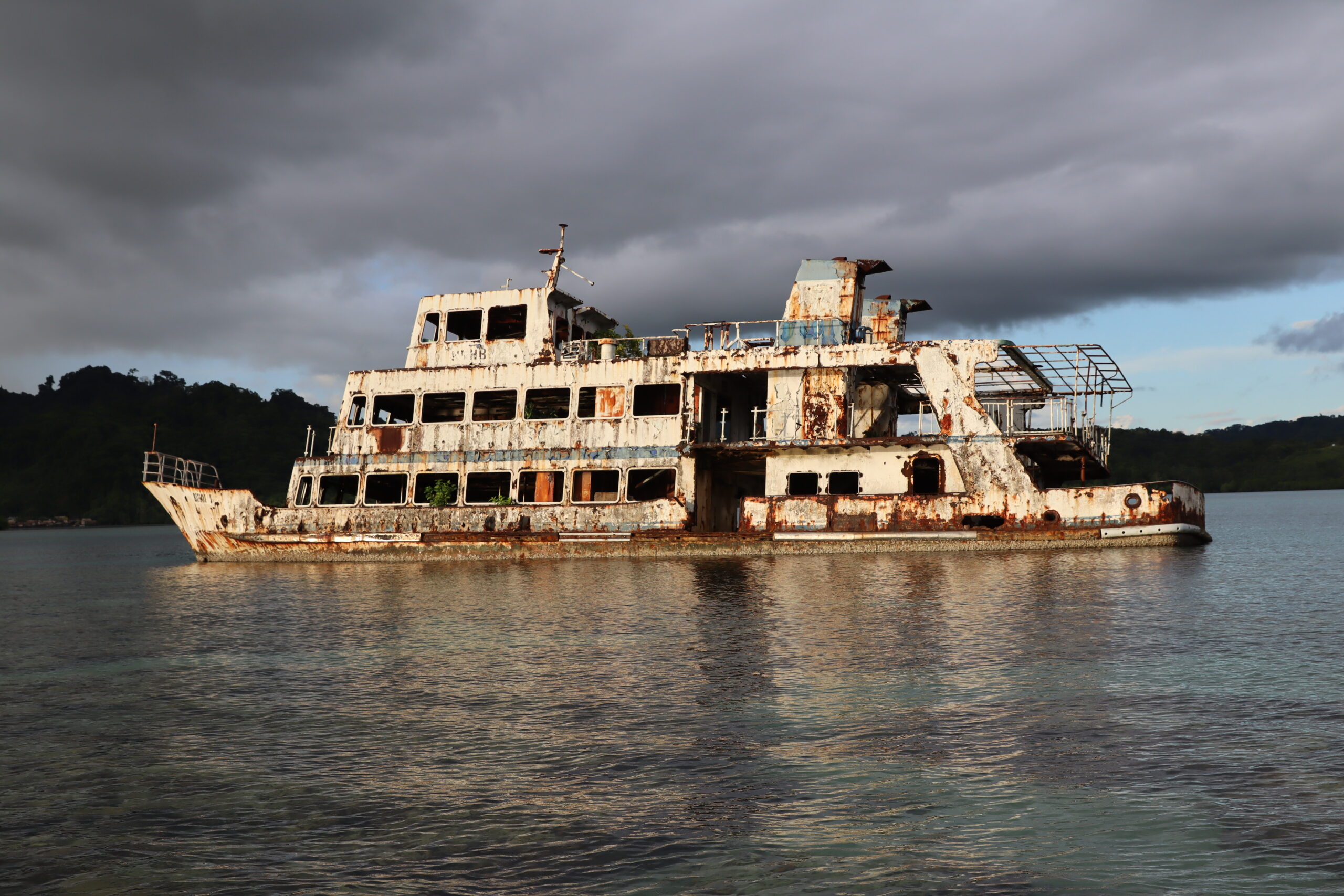
To fully Understand the true cost and impact of the National Shipping Grant on rural communities, In-depth Solomons paid a visit and examined Central Province’s shipyards, where the deteriorating remnants of the publicly funded constituency fleet now lie abandoned.
Audits from 2017 reveal that only SBD19.1 million of the SBD 70 million shipping grant funded actual vessel purchases. Today, the majority of the resulting constituency fleet lies decaying in Central Province's waters and mangroves, with others scattered across the constituencies they were supposed to serve.
A $70M public initiative to connect rural Solomon Islanders resulted in vanished funds, zero political accountability, and rotting vessels abandoned in coastal waters.
Type your paragraph here
Since the Office of the Auditor General issued its final shipping grant report in 2017, covering a period from 2013-2015, there has been a deafening silence around the millions in unaccounted funds.
Not a single parliamentarian has been held accountable for their use of these public funds.
Some funds were used to buy old vessels that soon broke down, while other grants vanished with no ships bought.
The audit found that Cabinet held executive oversight over shipping grant disbursements, leaving the Ministry of Infrastructure Development as a mere accounting mechanism with no central database to track or monitor allocations.
A total of $70.3 million was allocated for the program over the three-year period. Actual expenditures included $27.6 million spent in 2013 and 2014, and an additional $28.2 million spent in 2015.
The audit accounted for only $19.1 million that successfully resulted in purchased and registered vessels. However, the remaining $26.3 million was provided to recipients who ultimately had no registered vessels or were missing documentation.
Most were refurbished vessels that briefly operated before breaking down and being abandoned in Tulagi’s shipyards or along coastal areas of Solomon Islands waters.
A classic example of discrepancies in the Audit findings show former Malaita Outer Islands MP, the late Martin Kealoe, obtained $7 million in shipping grants between 2013 and 2016, but had not acquired a vessel.
The only cases that made it to court involved Savo-Russells MP Dickson Mua and the late Ulawa-Ugi MP William Bradford Marau.
Mua’s conversion charges over alleged misuse of SBD$3 million in shipping grants were dismissed after a prosecution witness failed to appear. To date no vessel has been purchased for Savo-Russells constituency.
Marau’s case reached the magistrate court this week for formal closure following his death weeks earlier. His case involved a controversial $5 million shipping grant ordered to be transferred into his personal bank account from the constituency account. He used a portion of the fund to purchase the landing craft, LC Lokoiola.
The only successful conviction case was of the former West Makira MP, the late Japhet Waipora, imprisoned in 2013 for three years for misappropriating SBD$150,000 in constituency funds (2007–2008), partly for MV Haura’s engine.
The late Waipora purchased MV Haura even before the existence of the National Transport Fund.
Transparency Solomon Islands (TSI)I previously demanded transparency regarding Amwata Shipping and Boat Building, which received $2.5 million from the 2015/16 National Shipping Grant Initiative to purchase MV Amwata, by the former MID PS Henry Murrray.
The MV Amwata had a short operational life and now sits stranded at Koli Point, North East Guadalcanal.
Since the shipping grant’s inception across consecutive administrations, few vessels remain operational, with the auditor general’s report stating some former MPs and their families converted constituency shipping businesses into their own private businesses.
Formerly called the National Shipping Grant, the initiative now sits under the rebranded National Transportation Initiatives Program operating alongside the Franchise Shipping Program, a separate government subsidy supporting non-viable inter-islands maritime routes.
To date, many of the vessels actually purchased through the scheme lie in ruins with only few still operational. It is unclear whether any of the recommendations in the auditor general’s report have been implemented in the ongoing disbursement of public funds under the National Transportation Initiatives Program.
In-Depth Solomons sought answers from law enforcement authorities (Police/JANUS) and the Ministry of Infrastructure Development regarding the status of inquiries into former grant beneficiaries and whether any officials will face consequences for the squandered millions.
Subsequent reports in this investigative series will be released as new details emerge in the coming months.