
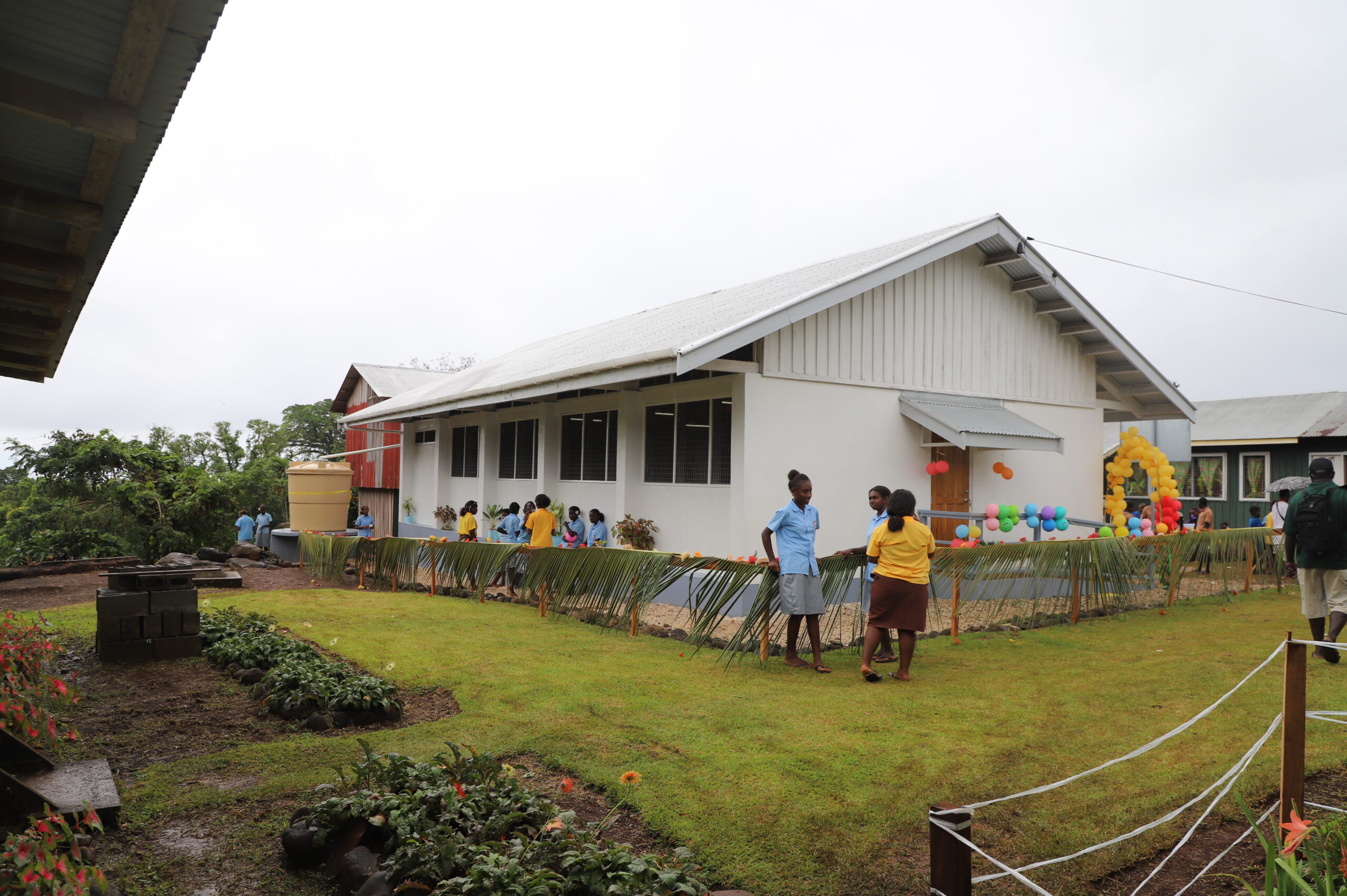
Students at Dekurana and Poitete Community High Schools in Western Province will have new opportunities to learn, experiment and develop practical skills following the handover of two new science laboratory classrooms worth more than SBD2.7 million.
The new facilities were delivered through a partnership between the Governments of Australia and New Zealand and the Ministry of Education and Human Resources Development (MEHRD).

The laboratories provide modern learning spaces designed to strengthen practical science education and improve learning outcomes for students in rural communities.
They will allow students to conduct experiments and gain hands-on experience while encouraging them to pursue careers in fields including health, engineering, education, technology, agriculture and environmental science.
The investment is part of the Education Sector Support Program (ESSP), through which Australia and New Zealand are supporting the Solomon Islands Government to improve school infrastructure and expand access to quality education.
Australian Deputy High Commissioner Andrew Schloeffel joined New Zealand High Commissioner Jonathan Curr, Education and Human Resources Development Minister Stephen Kumi, MEHRD and provincial representatives, teachers, students and community members for the official handover.
Schloeffel said the new laboratories were about more than providing new buildings.
“More than just buildings, they are places where students can investigate, experiment and develop the practical skills needed for future study and employment,” he said.
He said science education helps students develop curiosity, critical thinking and problem-solving skills.
“Whether students aspire to become teachers, engineers, doctors, scientists or future leaders, education provides the foundation for achieving those goals,” Schloeffel said.
He said Australia’s support extends beyond school infrastructure.
“We are working alongside Solomon Islands to strengthen the entire education system and ensure young people have access to quality learning, skills development and opportunities that can transform lives and communities,” he said.
New Zealand High Commissioner Jonathan Curr said New Zealand was pleased to support investments that improve learning opportunities for students and teachers.
“Quality education provides the foundation for stronger communities, economic growth and a prosperous future for Solomon Islands,” he said.
Minister Kumi said the new laboratories would give students and teachers better facilities for practical learning and scientific discovery.
“These new science laboratories will provide students and teachers with improved facilities for practical learning and scientific discovery,” he said.
He thanked Australia and New Zealand for their continued support in improving education outcomes for Solomon Islands children.
The new facilities are expected to strengthen science education in Western Province while helping develop a future workforce with the skills needed to contribute to national development.
Through ESSP, Australia and New Zealand are supporting the Solomon Islands Government to implement the Education Strategic Framework 2016–2030 and National Education Action Plan 2022–2026.
The program focuses on improving learning outcomes, strengthening the education system and expanding opportunities for children and young people across the country.

You must be logged in to post a comment.