
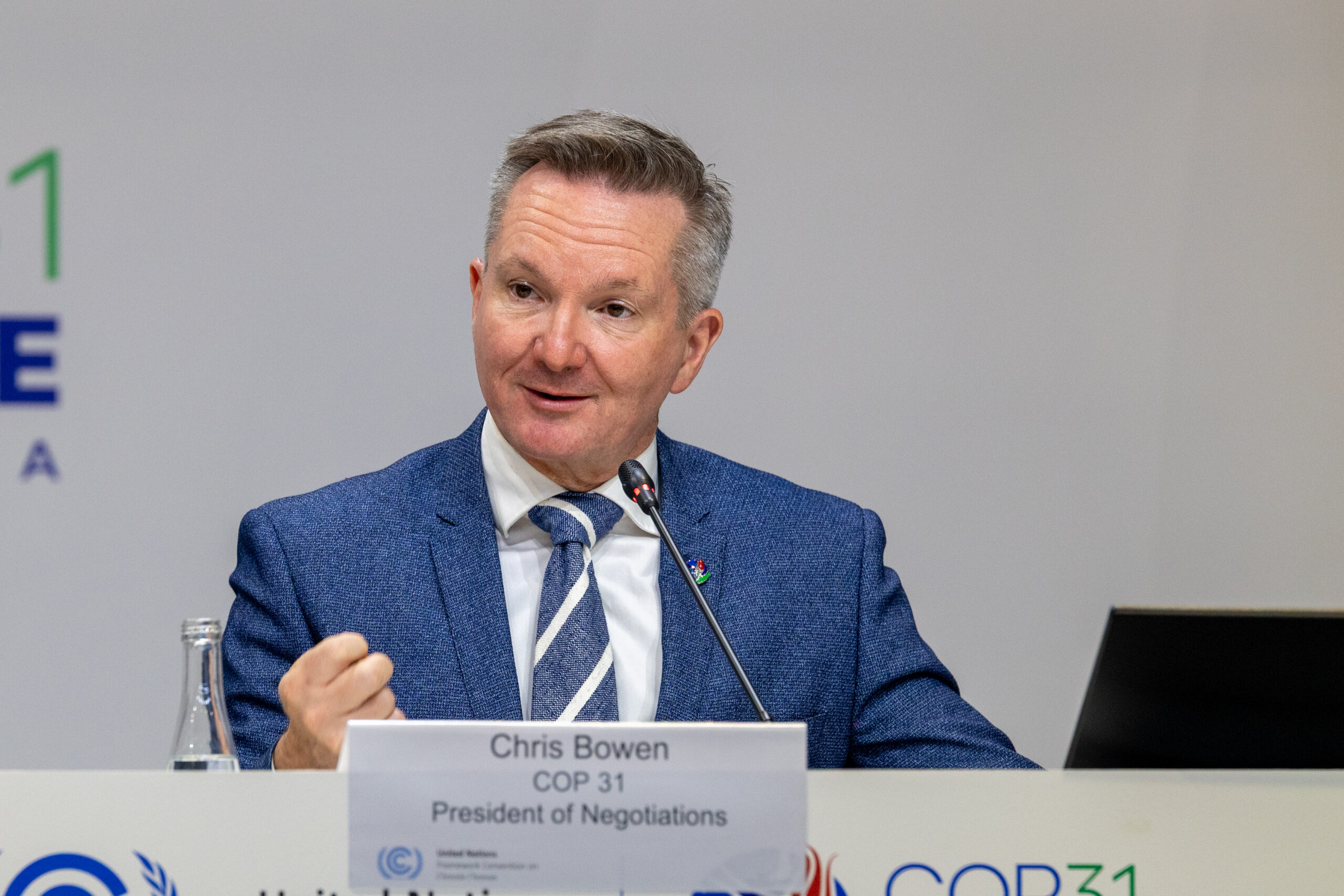
by Charley Piringi in Antalya, Turkiye
COP31 President Chris Bowen announced the initial presidency-led draft decision text incorporates key Pacific priorities, including adaptation finance and ocean concerns, as formal negotiations commence.
Speaking at a press conference today, President Bowen explained that the draft was released early to give negotiating parties sufficient time to discuss proposals and find common ground on critical climate issues.
He said the draft serves as a starting point for discussions rather than a final outcome or a reflection of the presidency’s preferred text.
“We outlined at the beginning of COP 31, to really enable plenty of time for proper conversation amongst parties and negotiations over the coming days to lead to the strongest possible outcome that consensus would allow.”
Highlighting the draft’s inclusion of ocean health, as a key priority for small island developing states, Bowen said.
“This is only the first draft. It won’t be the final draft. There are elements in this draft that not all parties will agree on. That is, given, there are things in here that Australia and the Pacific, as well as Turkey, have strongly advocated for and fought for.”
“There are other positions that other parties have called for, and we’re reflecting that in our role as President of Negotiations to enable a very genuine and meaningful negotiation. But of course, what we’ll be concentrating on in the coming days are those issues where people can find common ground.”
The draft also addresses temperature overshoot, proposes a pathway to triple adaptation finance, and sets a targeted 35 percent electrification goal by 2035.
The initial draft follows extensive consultations and 45 submissions representing over 160 countries.
The presidency-led text is expected to release at least one more draft before the weekends, with ministerial consultations set to resolve technical sticking points.
Reassuring participating delegations as negotiations intensify, Bowen affirmed:
“No one will be left out.”
This story was produced as part of the COP31 Climate Change Media Partnership, a journalism fellowship organized by Internews’ Earth Journalism Network and the Stanley Center for Peace and Security.
