
By Georgina Maka’a
Antalya, Turkiye
Pacific Small Island Developing States (SIDS) have arrived at the COP31 climate summit with a unified message: global energy transition commitments are failing frontline island nations, leaving them trapped in fossil fuel reliance and crippling energy costs.
Reflecting on ten years of climate policy since the Paris Agreement, UN Secretary-General António Guterres highlighted rapid global renewable expansion, yet Pacific leaders warned that structural and financial barriers continue to lock vulnerable island economies out of affordable clean energy.
-
Global Progress vs. Island Realities: While solar power surged globally to meet nearly three-quarters of new electricity demand last year, Pacific SIDS remain heavily reliant on expensive imported diesel.
-
EV Adoption Disparities: Electric vehicle sales reached nearly 1 in 3 globally this year, but remote island transport networks lack the infrastructure and financing to transition.
Despite renewables becoming the cheapest energy source worldwide, Pacific island nations remain severely exposed to volatile global oil markets and unsustainable fuel import bills.
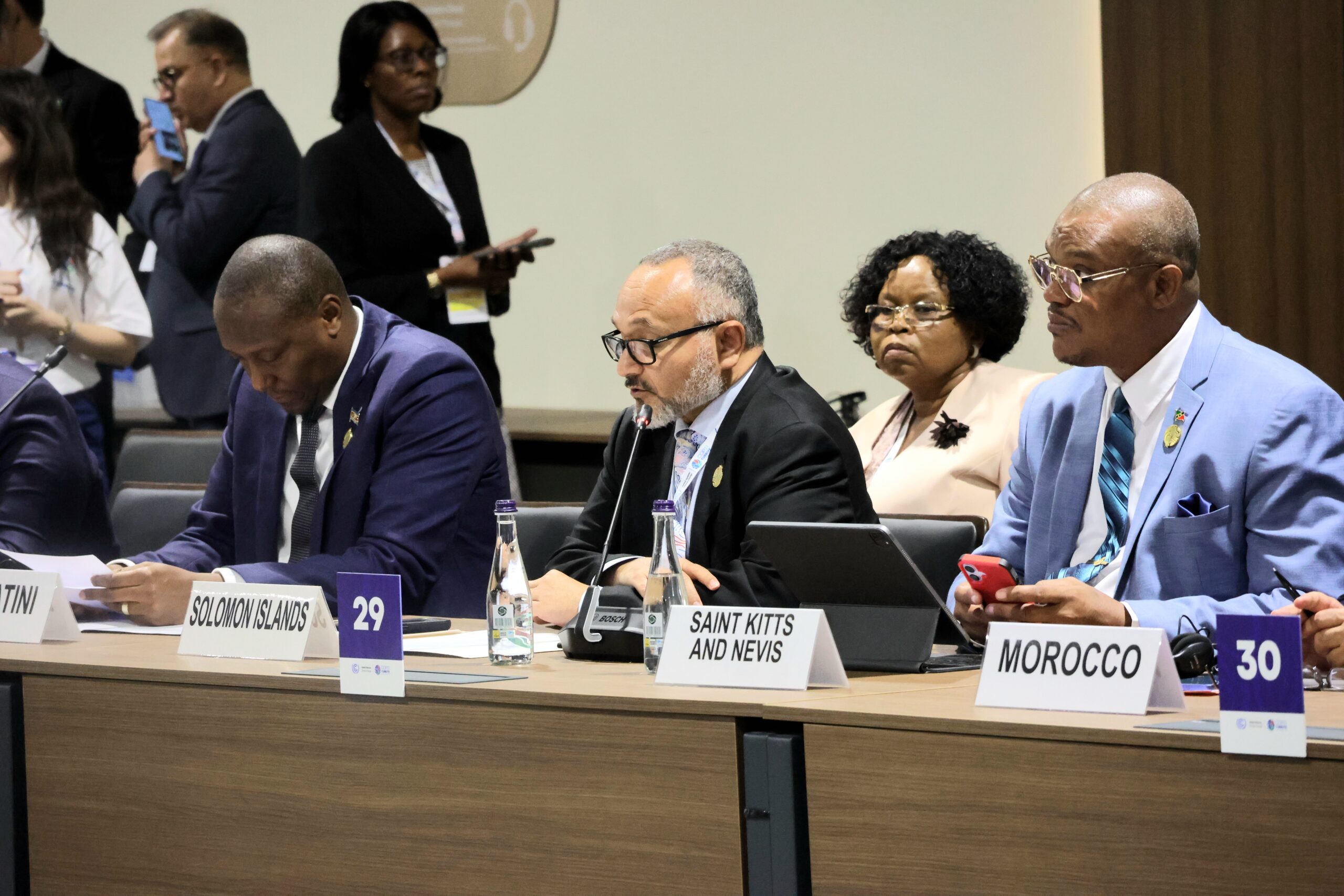
At the COP31 High-Level Dialogue, Solomon Islands Prime Minister Hon. Matthew Cooper Wale led calls for international partners to ensure climate pledges deliver direct, grant-based financing rather than compounding regional debt burdens.
“For diesel-dependent SIDS like us, 35-by-35 is about energy security,” Prime Minister Wale stated during the session themed “35 by 35: Powering the Future.”
He stressed that reliable, affordable power is essential for healthcare, education, and economic stability, while demanding strict adherence to keeping global warming below 1.5°C.
Wale highlighted the stark financial impact of fossil fuel dependency in the Solomon Islands, where diesel powers over 90 percent of the national grid, driving up electricity tariffs for struggling households and businesses.
He cited the 15-megawatt Tina River Hydropower Project—set to supply 70 percent of Honiara’s power and displace 78.35 gigawatt-hours of fossil fuels annually—as an example of progress, while warning that high infrastructure costs and geographical challenges continue to block energy access in rural areas.
Reinforcing these concerns, Pacific leaders presented a united front demanding immediate structural reform of international climate finance:
-
Vanuatu: Minister Ralph Regenvanu called for an equitable transition that enables developing economies to break away from fossil fuel reliance without incurring extra debt.
-
Palau: President Surangel S. Whipps Jr. urged international donors to immediately close the $300 million funding gap for the Pacific Resilience Facility (PRF) to deliver direct grant aid to frontline communities.
-
Tuvalu: Minister Maina Talia warned that upholding IPCC scientific targets and keeping warming below 1.5°C is an existential imperative for low-lying atoll nations.
-
Papua New Guinea: Prime Minister James Marape and Minister John Kaupa demanded that major economies treat COP31 as an “implementation COP” with transparent accountability and formal recognition of ocean and forest nations.
-
Fiji & Tonga: Minister Lynda Tabuya of Fiji urged embedding the ocean-climate nexus into negotiations, while Minister Siaosi Sovaleni Hu’akavameiliku of Tonga pressed for operationalizing Loss and Damage funding.
-
Marshall Islands: Minister Jess Gasper Jr. called for streamlined access to climate adaptation funds for vulnerable island communities.
To prevent growing regional debt burdens, Pacific leaders demanded dedicated grant mechanisms for climate-resilient infrastructure, technology transfer, and local technical training.
Addressing global systemic barriers, Secretary-General Guterres noted that 75 percent of humanity lives in fuel-importing countries vulnerable to price shocks, calling out corporate lobbying for delaying climate policy.
“The dinosaurs did not have a lobby,” Guterres said. “But fossil fuels do.
And their strategy is simple: Distort the science. Delay the policy. Delay the action. Delay the accountability.”
Guterres warned that current national pledges cover only one-third of the required 6 percent annual emissions reduction, leaving the planet on track for a 2.5°C temperature rise by 2100—a trajectory that threatens the survival of Pacific island nations.
