
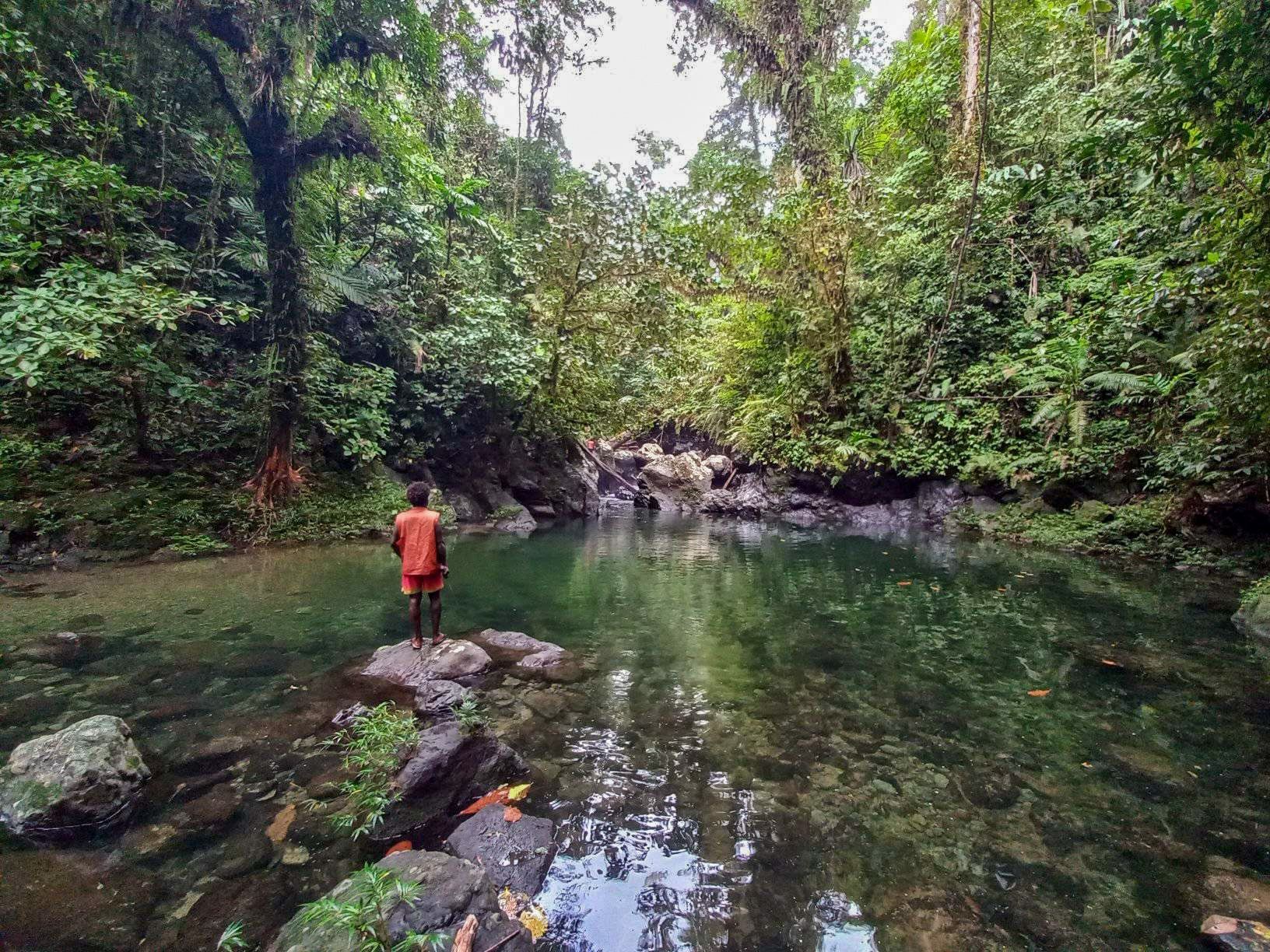
For the Padezaka people of South Choiseul, the decision to keep their forest standing has never been just about carbon credits. It’s about clean rivers, shaded streams, the animals that find refuge in old-growth trees and a future their children can believe in.
That vision took a major step forward this week when Padezaka’s forest was verified as an operational carbon project, allowing the tribe to earn income from protecting 4,800 hectares of old-growth rainforest the largest protected forest area in South Choiseul and part of the wider Babatana Rainforest Conservation Project.
For Patson Taniveke, secretary of the Padezaka Tribal Association, the news is something members have been waiting for since their land was declared a protected area in 2021.

“This carbon project could have a positive impact on the lives of the Padezaka people by a great deal,” he says.
“This will help with education, housing, lighting and other social means. We are all yearning for the potential benefit this project could bring about.”
The project is expected to deliver sustainable benefits for around 4,000 Indigenous landowners supporting livelihoods, school fees and other priorities set by the community.
The tribe has already measured 270,635 tonnes of avoided CO2 emissions from not logging the forest, a figure set to grow each year of the 30-year project, verified under the Plan Vivo Climate Standard.
But for Patson, the real value lies in what the forest does for life beyond the ledger.
A healthy forest absorbs and stores carbon, slowing global warming that is “impacting our world today, including us here in Solomon Islands,” he says.
On a small island like Choiseul, healthy forest is survival: it buffers communities against severe weather and protects the freshwater and coastal systems people depend on.
The community reached this milestone with support from the Conservation Finance for Forest and Communities project, funded by the New Zealand Ministry of Foreign Affairs and Trade in collaboration with NRDF and Nakau.
The forest lies along the Kolombangara River, forming part of the Maetambe Kolombangara River corridor, one of the Solomon Islands’ most biodiverse regions and an IUCN global biodiversity hotspot, home to threatened and endemic species.
Yet the threat of logging is never far. Illegal logging was detected across the Padezaka border in 2021 and 2022, sending sedimentation down the Kolombangara River to the reef.
Padezaka rangers reported the incursion and stopped operations on their land but just across the border, forests continue to fall, with devastating effects.
That contrast sharpens the tribe’s resolve. Chief Godfrey says conserving the land continues the vision of his late father, Chief Cornelius, and generations before him who opposed logging.

“They wanted the Padezaka land to stay as it was created so it remains virgin forest, with clean rivers for water, and full of plants and animals,” he says.
The protected area has become a refuge for wildlife fleeing nearby logged lands.
“Some of the tribes where we share common boundaries have already been logged, so animals will come inside the Padezaka forest. It’s a safe haven for all the animals.”
Seeing degraded land nearby reinforces why the tribe chose conservation.
“When I see logging, I feel very sad that the land is spoiled. Those bulldozers really dig deep and ruin the soil, everything. The rivers, streams are all flooded and spoiled.”
Young people from neighbouring areas, he says, have told Padezaka youth they are fortunate their land has been conserved.
“Padezaka young people are happy we have agreed to conserve the land. They feel more confident for their future.”
Now the task is passing that commitment forward. “We have to keep the Padezaka tribal land for the future benefit of our children to come,” Chief Godfrey says.
“And our children to come must continue with this message.” he adds.

You must be logged in to post a comment.