
By Georgina Maka’a
ANTALYA, Türkiye
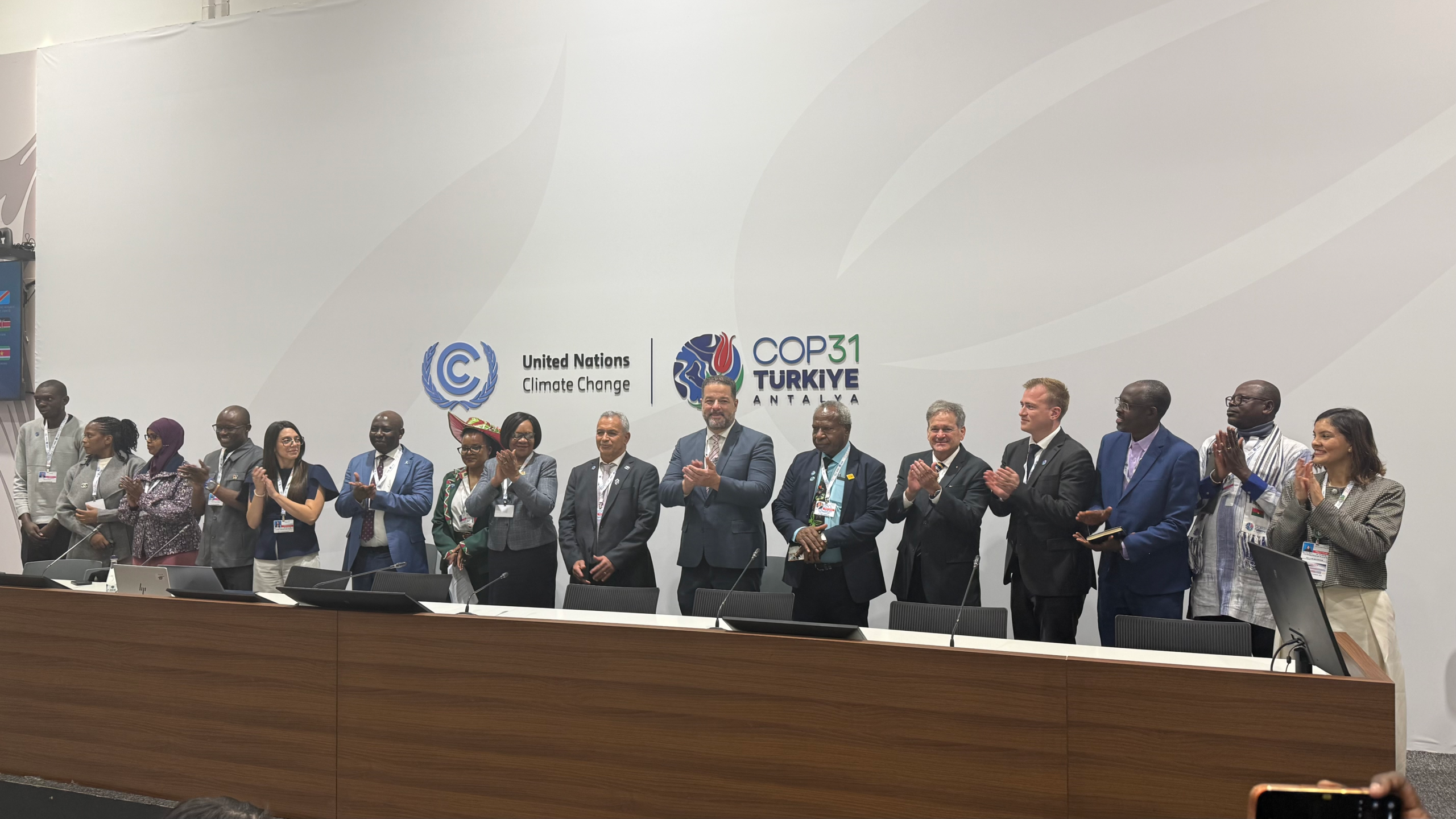
Papua New Guinea has joined Fiji and 23 other countries to launch the Wildlife for Climate Declaration at COP31, the first time governments have jointly pushed at a UN Climate Conference to recognize wild animals as part of climate action.
The Declaration, led by Zimbabwe and launched at a high-level event on 16 November, commits endorsers to protect, conserve, and restore wild animal populations and their habitats “as a cornerstone of science-based climate action.”
The 25 endorsers confirmed by the World Federation for Animals and IFAW are Andorra, Armenia, Belize, Brazil, Burkina Faso, Burundi, Democratic Republic of Congo, Dominican Republic, Fiji, The Gambia, Guatemala, Guinea-Bissau, Honduras, Kenya, Lesotho, Madagascar, Monaco, Panama, Papua New Guinea, Somalia, Suriname, Togo, Uzbekistan, Zambia and Zimbabwe.
Representatives from Belize, Brazil, DRC, the Dominican Republic, Lesotho, Panama, Papua New Guinea, Somalia and Zimbabwe attended the declaration last night.
Speaking on behalf of Papua New Guinea, Minister of Environment, Conservation and Climate Change John Kaupa thanked Zimbabwe for its leadership and said the wildlife-climate link is not abstract for PNG:
“Around 78 percent of our country remains covered by forest. We are also home to an estimated 6 to 8 percent of the world’s biodiversity,” he said.
Minister Kaupa added that a forest without its wildlife is not a fully functioning forest.
Protecting that wildlife is protecting our climate.
“Keeping our forests standing matters, keeping them alive with their wildlife thriving matters just as much,” he said.
He also made mention of the cassowary, a towering bird with an electric-blue neck, crimson wattles and a helmet-like casque as the jungle’s “irreplaceable gardener.”spreading the seeds of more than 200 plant species to grow the next generation of rainforest trees.
Without birds like it, he said, the forest cannot regenerate.
The speech highlighted that 97 percent of PNG land is under customary ownership, and pointed to two recent steps: last month’s third Nationally Determined Contribution, pledging to reduce deforestation and forest degradation by 20 per cent by 2035, and a new conservation initiative covering more than 270,000 hectares of protected and community-managed areas.
Fiji’s endorsement alongside PNG gives the Pacific two voices in the 25-country bloc, spanning Africa, Europe, Latin America, the Caribbean and the Pacific.
The Declaration calls on UNFCCC Parties to recognise wildlife’s role in maintaining carbon sinks, tackle overexploitation, protect and connect habitats, and build those measures into national climate and biodiversity plans.
Zimbabwe’s Minister of Environment, Climate and Wildlife, Hon. Evelyn Ndlovu, said
When we lose wildlife, it is not only a loss of species; it is a loss of the living processes that keep natural systems working as they should.
The push is backed by science. A 2023 Nature Climate Change paper led by Yale University found protecting just nine wildlife groups could capture an extra 6.4 gigatonnes of CO2 a year, while more than 350 scientists from 47 countries have signed a Scientific Consensus on Wildlife and Climate.
For PNG, the message was a call for partnership: countries protecting globally valuable ecosystems cannot carry the cost alone and need investment that delivers real benefits to the communities protecting them.
Facebook Comments Box
