
A leading Solomon Islands international maritime law expert says the Ship Rider Agreement does not compromise the nation’s sovereignty or violate international law.
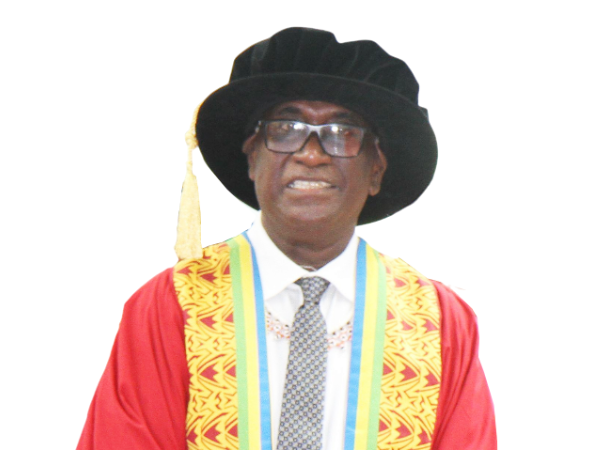
Professor Transform Aqorau, Vice Chancellor of Solomon Islands National University (SINU) and one of the Pacific’s foremost authorities on the Law of the Sea, said Ship Rider Agreements are “among the strongest expressions of Pacific Island sovereignty” because all enforcement powers remain with the coastal state.
Prime Minister Matthew Wale signed the agreement with the United States in Honiara on Tuesday.
Opposition Leader Manasseh Sogavare has claimed the agreement would give away Solomon Islands’ sovereignty.
Weighing into the debate, Professor Aqorau argued that the agreement does exactly the opposite.
He explained that while partner countries such as the United States provide ships, aircraft and logistical support, they do not acquire any enforcement powers within Solomon Islands’ Exclusive Economic Zone (EEZ).
“Instead, Solomon Islands places its own authorised officers aboard those vessels, who continue to exercise Solomon Islands law.
“The authority never changes hands.
“The sovereignty never leaves the coastal State.
“The foreign vessel merely provides transport, communications, accommodation and operational support,” Professor Aqorau wrote in a commentary published on Facebook.
An internationally recognised maritime law expert, Professor Aqorau helped draft the landmark Niue Treaty on fisheries surveillance in the 1990s.
He said Ship Rider Agreements were pioneered by Pacific Island countries as an innovative solution to the enormous challenge of policing some of the world’s largest ocean territories with limited patrol assets.
Professor Aqorau also dismissed suggestions that the agreement violates the United Nations Convention on the Law of the Sea (UNCLOS).
According to him, UNCLOS grants coastal states sovereign rights over resources within their EEZs and gives them full authority to enforce their fisheries laws.
“It does not prohibit states from entering into agreements that allow them to exercise those powers with operational assistance from trusted partners,” he said.
He added that UNCLOS actively encourages international cooperation in the management and conservation of marine resources, making Ship Rider Agreements fully consistent with the convention’s principles.
“The agreements are also supported by the Niue Treaty framework and the Vienna Convention on the Law of Treaties,” he said.
Professor Aqorau noted that similar Ship Rider Agreements have operated successfully for decades between the United States and numerous Pacific Island countries without diminishing national sovereignty.
“Far from weakening Pacific sovereignty, Ship Rider Agreements strengthen the ability of Pacific Island countries to exercise the sovereign rights that international law has already recognised,” he concluded.
Twelve Pacific Island countries already have bilateral Ship Rider Agreements with the United States, making Solomon Islands the 13th nation in the region to join the framework.