
By Georgina Maka’a
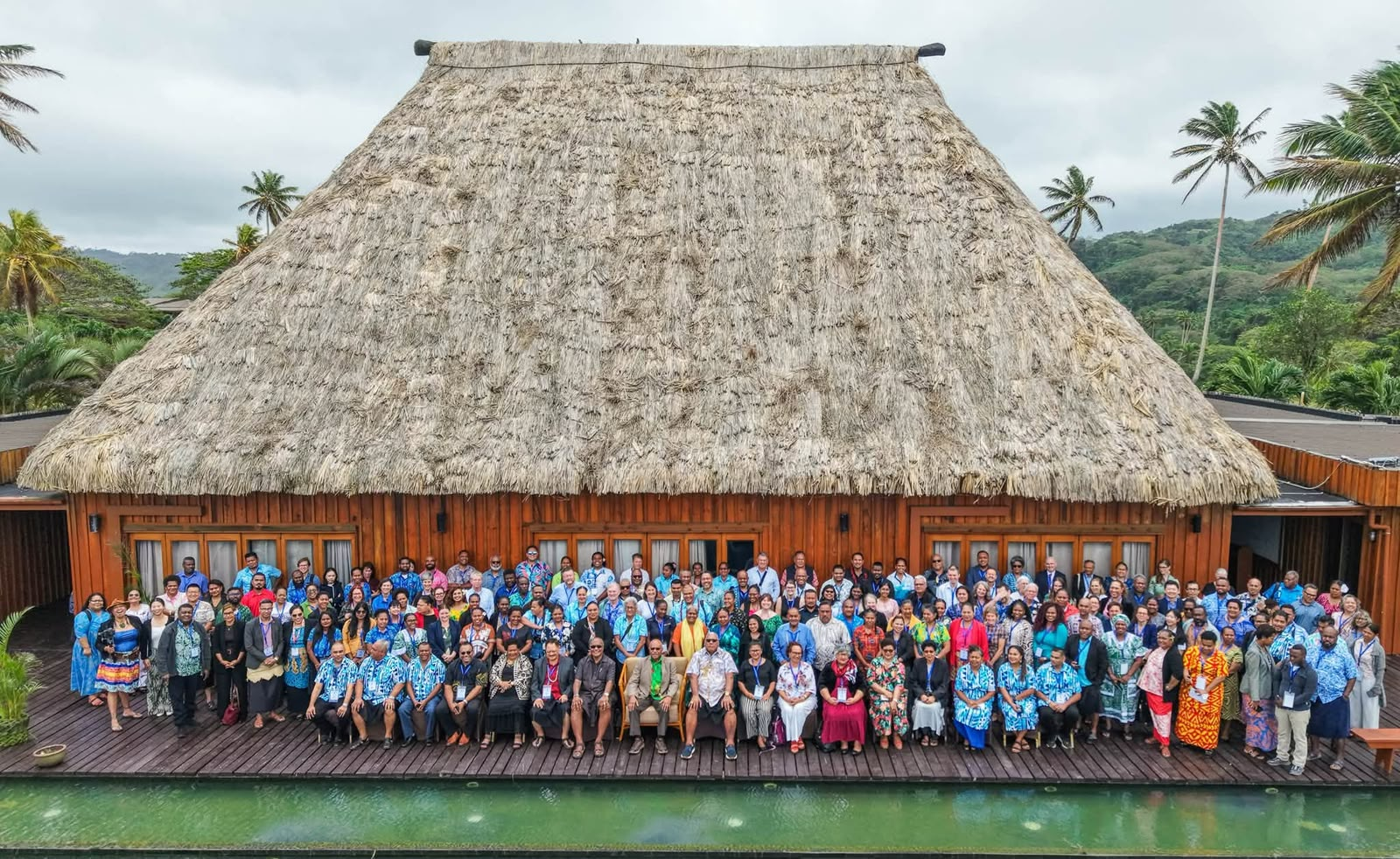
The formal plenary sessions of the 8th Pacific Media Summit officially wrapped up yesterday in Savusavu, Fiji, bringing newsroom leaders, editors, journalists, and regional partners together from across the region to chart the future of journalism in the Blue Pacific.
Gathering under the theme “Reaching the Remote: Media and Digital Innovation for a Connected Blue Pacific,” the weeklong summit organized by the Pacific Islands News Association (PINA) and hosted by the Fijian Media Association (FMA) addressed critical issues facing the industry from digital disruption and financial sustainability to climate accountability and gender equity in leadership.

The summit opened Wednesday, Sept. 23, with a keynote address from Fiji Prime Minister Sitiveni Rabuka, who underscored the indispensable role of an independent press in safeguarding democracy and amplifying Pacific perspectives globally. Delegates also welcomed a new educational partnership between Fiji National University (FNU) and the FMA, presented by FNU Vice Chancellor Prof. Unaisi Nabobo-Baba and FMA President Rosi Tamani-Doviverata.
On Thursday, Fiji’s Deputy Prime Minister and Minister for Trade and Public Enterprises, Hon. Manoa Kamikamica, addressed media sustainability, smart regulation, and collective action to combat misinformation. PINA President Kalafi Moala reinforced that focus, urging news organizations to maintain core journalistic principles while adapting to economic and technological shifts.
Throughout the plenary sessions, delegates explored how artificial intelligence and emerging digital tools are reshaping Pacific newsroom operations. Researchers Eira Martin Edwards and Jenni Ryall from Other Labs, Australian Associated Press (AAP) Editor in Chief Andrew Drummond, and digital strategists from regional broadcasters shared practical applications for AI in content creation, archiving, and audience engagement.
Panellists highlighted the need for improved digital infrastructure, including 5G expansion and satellite connectivity such as Starlink, to reach remote island communities.

However, speakers repeatedly emphasized that technological adoption must be paired with rigorous fact-checking and media ethics to combat online disinformation.
Building financial resilience in isolated regions was another key focus. In a session on maintaining editorial independence alongside operational viability, media executives including Solomon Islands Broadcasting Corporation (SIBC) CEO Johnson Honimae and Cook Islands News Publisher John Woods, alongside leaders from Papua New Guinea and Vanuatu shared strategies for diversifying revenue.
With climate change presenting an existential threat across the Pacific, environmental coverage remained central to the agenda.
Alongside workshops on climate governance and loss and damage hosted by the Secretariat of the Pacific Regional Environment Programme (SPREP) and UNODC, delegates attended a Pre-COP31 presentation led by former Fijian President and Climate Champion Ratu Wiliame Katonivere and Pacific Oceans Advocate Taholo Kami.
Extending discussions beyond the conference venue, a town hall took place Wednesday evening at Nukubalavu Village, allowing visiting journalists to connect directly with residents and hear firsthand accounts of local environmental impacts.
Promoting gender equality and fostering emerging leaders formed another core theme.
On Thursday morning, delegates convened for a Women in Media Breakfast supported by the Pacific Media Assistance Scheme (PACMAS), followed by a panel on inclusive leadership featuring Fiji Sun Editor-in-Chief Rosi Doviverata and Tavuli News Director Elizabeth Osifelo.
Strategic partnerships with regional and international bodies including PACMAS, BBC Media Action, ABC International Development, and the International Fund for Public Interest Media (IFPIM) were recognized as key drivers for ongoing professional development, mentorship, and regional collaboration.
With formal plenaries concluded, the summit’s focus shifts today to organizational governance and network strengthening.
This morning’s program opens with a National Media Associations roundtable aimed at strengthening regional advocacy and professional standards.
This will be followed by the PINA General Conference, where member organizations will vote on media policy resolutions, regional priorities, and institutional governance.
The 8th Pacific Media Summit will officially conclude this evening with a dinner and closing ceremony at Nawi Island.
