
A new forest carbon policy project, RISE, has launched in Solomon Islands to support stronger policies, safeguards and community leadership in the country’s emerging carbon market.
RISE stands for Rights, Integrity, Safeguards and Equity in carbon markets.
The project aims to promote best-practice policies and regulations for community-owned forest carbon projects, ensuring local communities retain their rights and receive fair benefits and development opportunities.
“This project is about putting local leadership, customary land rights and fair, inclusive benefit-sharing at the core of Solomon Islands’ growing carbon market,” said Bill Apusae of Live and Learn Solomon Islands.
“RISE is about having constructive dialogue with carbon market decision-makers. We want to see a place for locally led projects in national and international policy forums,” Apusae added.
Live and Learn Solomon Islands is leading the RISE project in Solomon Islands, in collaboration with Live and Learn International, Nakau and the Plan Vivo Foundation.
The project is funded by the UK Government’s Foreign, Commonwealth and Development Office (FCDO) through the UK-based Forest Governance, Markets and Climate Programme.
“High-integrity carbon markets cannot be achieved by individual projects and actors alone,” said Elmah Panisi, Director of Live and Learn Solomon Islands.
“They require the same collaboration we see at the project level to extend to national policies, safeguards and implementation frameworks,” Panisi added.
“The RISE project will engage with change-makers across society.
“We invite everyone—from national and provincial governments to civil society, community representatives and technical partners—to be part of this process.”
Putting Communities at The Centre
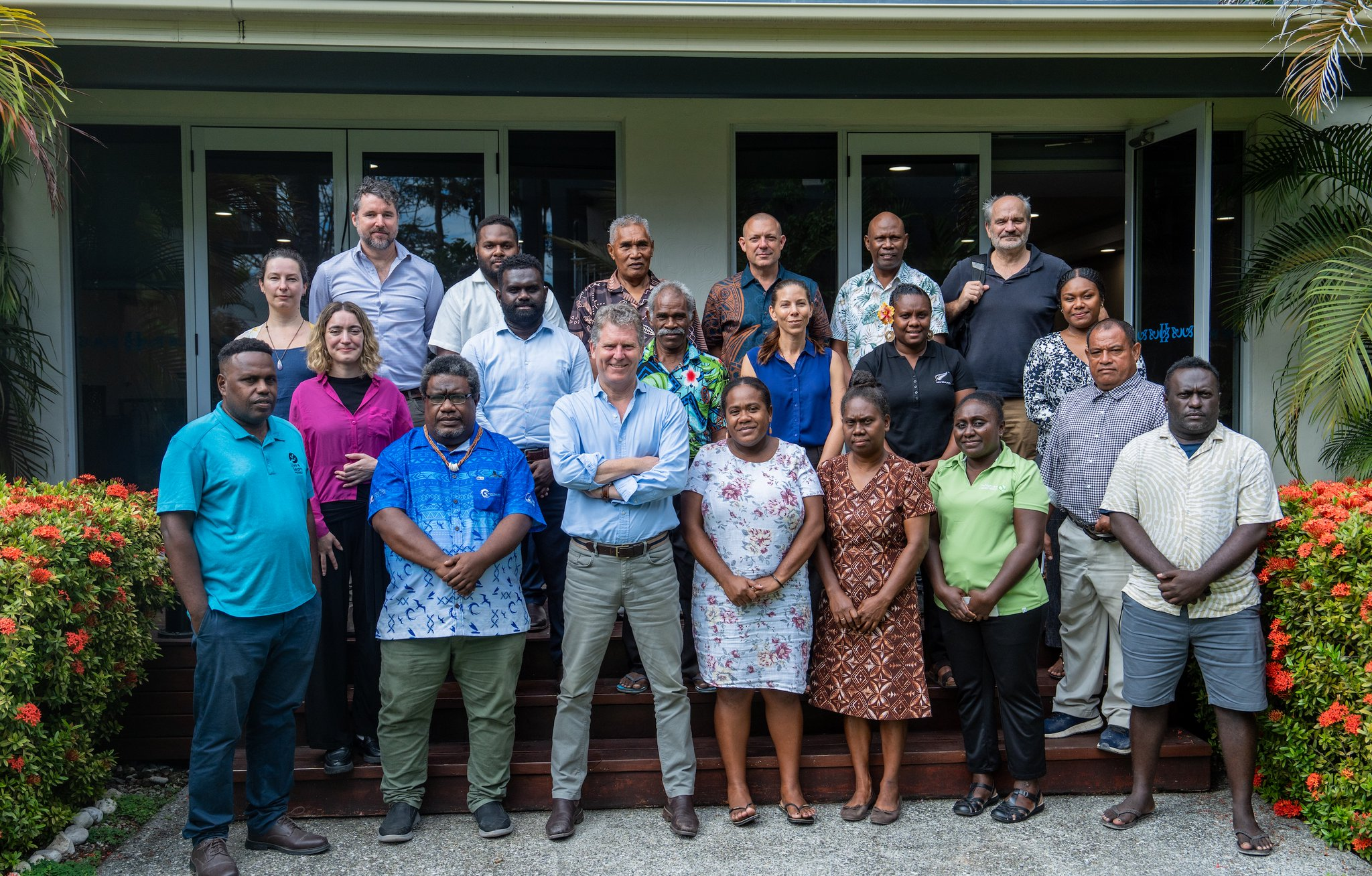
Launched in Honiara on 25 August, the RISE initiative highlighted the progress and potential of forest conservation carbon projects in Solomon Islands and called for continued collaboration to develop policies and practices that support locally led and rights-based projects.
The launch was attended by representatives from the Ministry of Environment, Climate Change, Disaster Management and Meteorology and the Ministry of Forestry and Research, along with NGOs and other key stakeholders.
A central focus of RISE is ensuring that national carbon policies recognise Indigenous governance systems and customary land ownership, while ensuring that benefits are shared equitably with landowners.
The project will also promote inclusive participation, with a focus on ensuring women, youth and people with disabilities can meaningfully participate in and benefit from carbon projects.
Forest conservation and carbon projects are strongest when they are built on these foundations and when the benefits generated by local projects reach the communities responsible for protecting and managing forests.
Sebastian Thomas, Policy and Advocacy Coordinator at Nakau, said carbon markets could play an important role in supporting sustainable livelihoods and better stewardship of natural systems.
“Carbon is the currency of a climate-changed world and a measure of value in an economy that depends on how well we care for the natural systems that sustain us,” Thomas said.
“Done well, carbon markets can help turn that stewardship into sustainable livelihoods, regenerative businesses and a more resilient model of trade and development,” he added.
RISE is also being launched in Papua New Guinea and Indonesia.
Across the three countries, the project will share accessible knowledge and evidence from project case studies and policy analysis, strengthen capacity and policy dialogue through multi-stakeholder workshops, and advocate with international policy and market actors for greater recognition and support of locally led carbon projects.
