
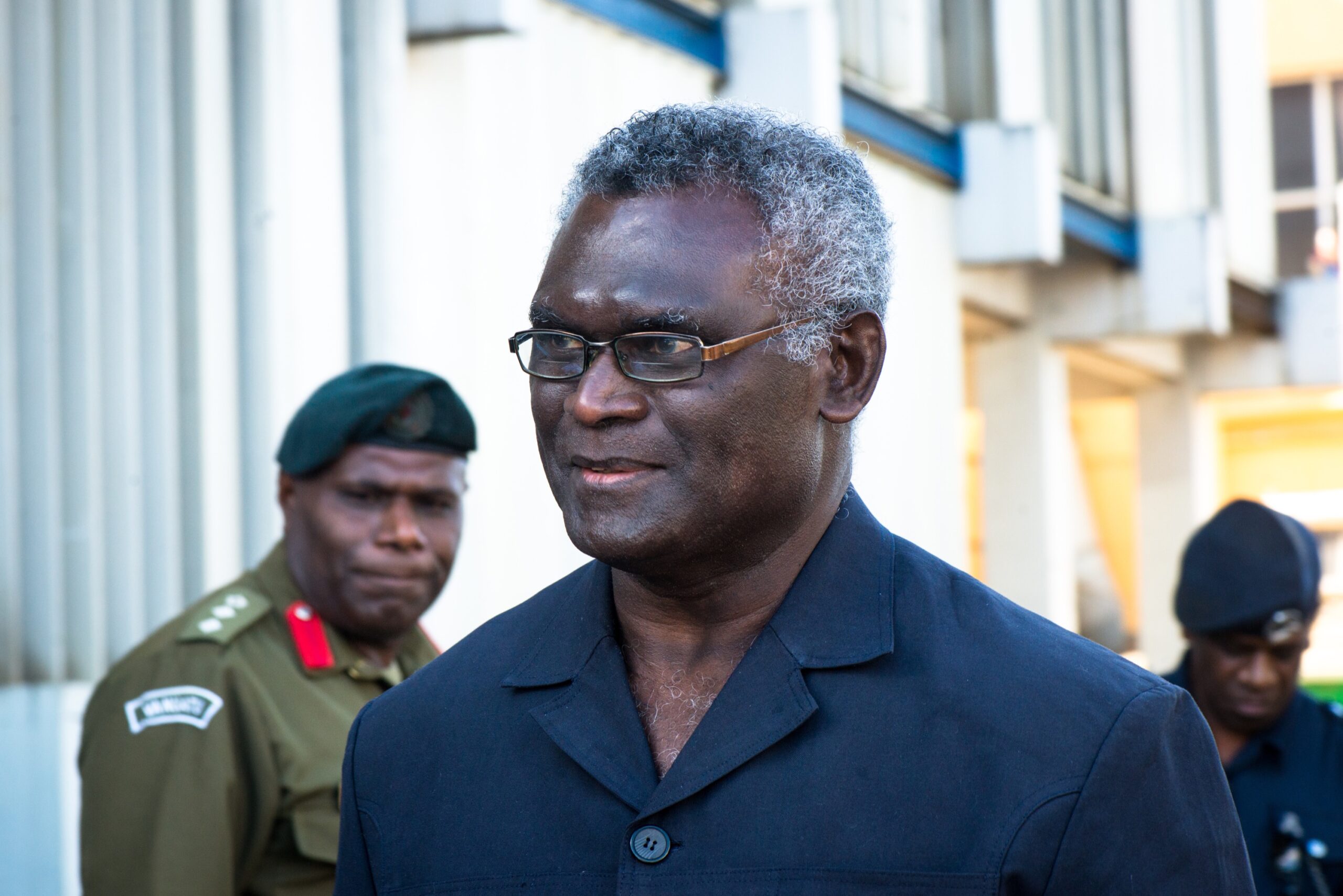
By Georgina Maka’a
Opposition Leader Manasseh Sogavare has launched a scathing attack on the Government’s proposed Fee-Free Education policy, saying it raises more questions than it answers.
Speaking in Parliament yesterday in response to the Speech from the Throne, Sogavare said the Government had committed itself to fee-free education without answering the most basic questions about how the policy would work.
“The Speech from the Throne now attaches the Government’s name to Fee-Free Education in 2027, but does not answer a single one of the questions,” he told the Chamber.
Sogavare said the first question was simple: what exactly will be free?
He asked whether the policy would apply only to Government schools or also include church-run and other education providers. He also questioned whether it would cover tuition alone or extend to boarding, food, uniforms, transport and other school costs.
“These are entirely different policies with entirely different price tags. This House cannot vote on a slogan,” he said.
He reminded Parliament that the current Education Act and Regulations already cap annual school fees at $250 for rural primary day students and $800 for non-urban junior secondary students
Sogavare then raised the cost. Independent analysis, he said, puts the price of a broad fee-free policy at around $1.3 billion a year, against a total national budget of $4–5 billion.
“That is not a marginal adjustment. That is a very substantial commitment,” he said. “Every dollar committed to one sector is a dollar not available somewhere else.”
On quality, Sogavare pointed to the country’s rapid growth — about 46 babies born every day, and more than 16,000 new children entering schools every year.
“It is one thing to promise fee-free education. It is another thing entirely to deliver quality education,” he warned.
“If classrooms become overcrowded, if teachers are overstretched… families will very quickly discover that the removal of fees, on its own, does not educate a child.
“Parents in this country do not simply want a cheaper education. They want a good one.”
The opposition leader then warned about relying on foreign donors to pay for the policy, saying this could put the nation’s future at risk.
“A responsible government does not confuse start-up assistance with permanent national capacity. Education is too important to be built on uncertain foundations.”
He welcomed the plan to train some 300 school principals but demanded guarantees about what happens when schools open in 2027.
“Training principals is not the same as opening schools,” he said. “What is the assurance… that their schools will not open in January 2027 with more children, no fees, and no compensating transfer from the Treasury?”
Sogavare further clarified that the Opposition is not against change — only against change without a clear plan.
“This is not a case against reform. It is a case against undefined reform,” he said.
He offered the Opposition’s own model based on enforcing the existing law, targeting help to poor and remote families, and investing in classrooms, teachers and materials.
“If the Government were to bring such a Bill before this House, it would find this side of the Chamber supporting it clause by clause.”
The opposition leader concluded that the Opposition will not support “a promise that is broad, undefined, uncosted and donor-dependent – one that raises parents’ hopes this year but could become “the fiscal crisis of the country in the years to come”.
