
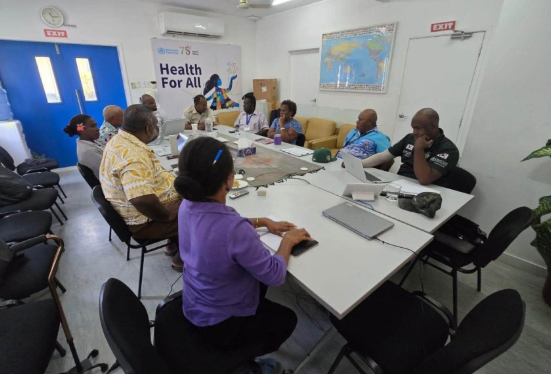
Solomon Islands health authorities and partner agencies recently gathered for a simulated disease outbreak exercise to test how rapidly the country can detect, assess, and report potential public health threats.
The initiative, dubbed Exercise Crystal 2026, took place on 24 September as part of a regional simulation coordinated by the World Health Organization (WHO).
Its primary goal was to strengthen national readiness to respond to outbreaks and emergencies before they escalate.
During the exercise, participants navigated a fictional outbreak scenario requiring rapid information sharing, risk assessment, and cross-agency coordination.
The simulation tested the country’s capability to notify WHO and communicate effectively if a health event poses a broader regional or international risk.
The event brought together representatives from the Ministry of Health and Medical Services (MHMS), WHO, and key government sectors involved in emergency preparedness.
For local communities and families, swift identification and reporting of a health threat can make a critical difference.
Early detection enables authorities to intervene sooner, helping contain outbreaks, protect lives, and minimize disruptions to health services.
“An outbreak anywhere can quickly become a concern for everyone if it is not identified and addressed early,” said Dr. Gregory Jilini, Acting Permanent Secretary of MHMS.
“Exercises like this ensure that the right information reaches the right people at the right time, enabling a faster, more coordinated response to protect our communities,” Jilini added.
Exercise Crystal is designed to help countries apply the International Health Regulations (2005), emphasizing protocols that facilitate information sharing and cross-border cooperation during health emergencies.
Beyond testing current procedures, the exercise highlighted opportunities to further strengthen inter-agency collaboration, communication, and data sharing.
“Preparedness is not just about responding to emergencies when they strike,” Georgios Theocharopoulos, WHO Solomon Islands Technical Officer for Health Emergencies said.
“It is about regularly testing our systems, learning from experience, and continuously improving how we work together,” Theocharopoulos added.
“Exercises like Crystal demonstrate strong information sharing across agencies while pointing out areas for refinement. This ensures the country is ready to act decisively when a real public health threat emerges.”
Lessons learned from Exercise Crystal 2026 will guide future training activities, refine inter-agency coordination, and ensure Solomon Islands remains equipped to prevent, detect, and respond to future health risks.
