
By Georgina Maka’a
Prime Minister Matthew Wale has urged Pacific leaders to take greater ownership of the region’s future, warning that the Pacific must not allow outside powers to shape its development and security agenda amid growing geopolitical competition.
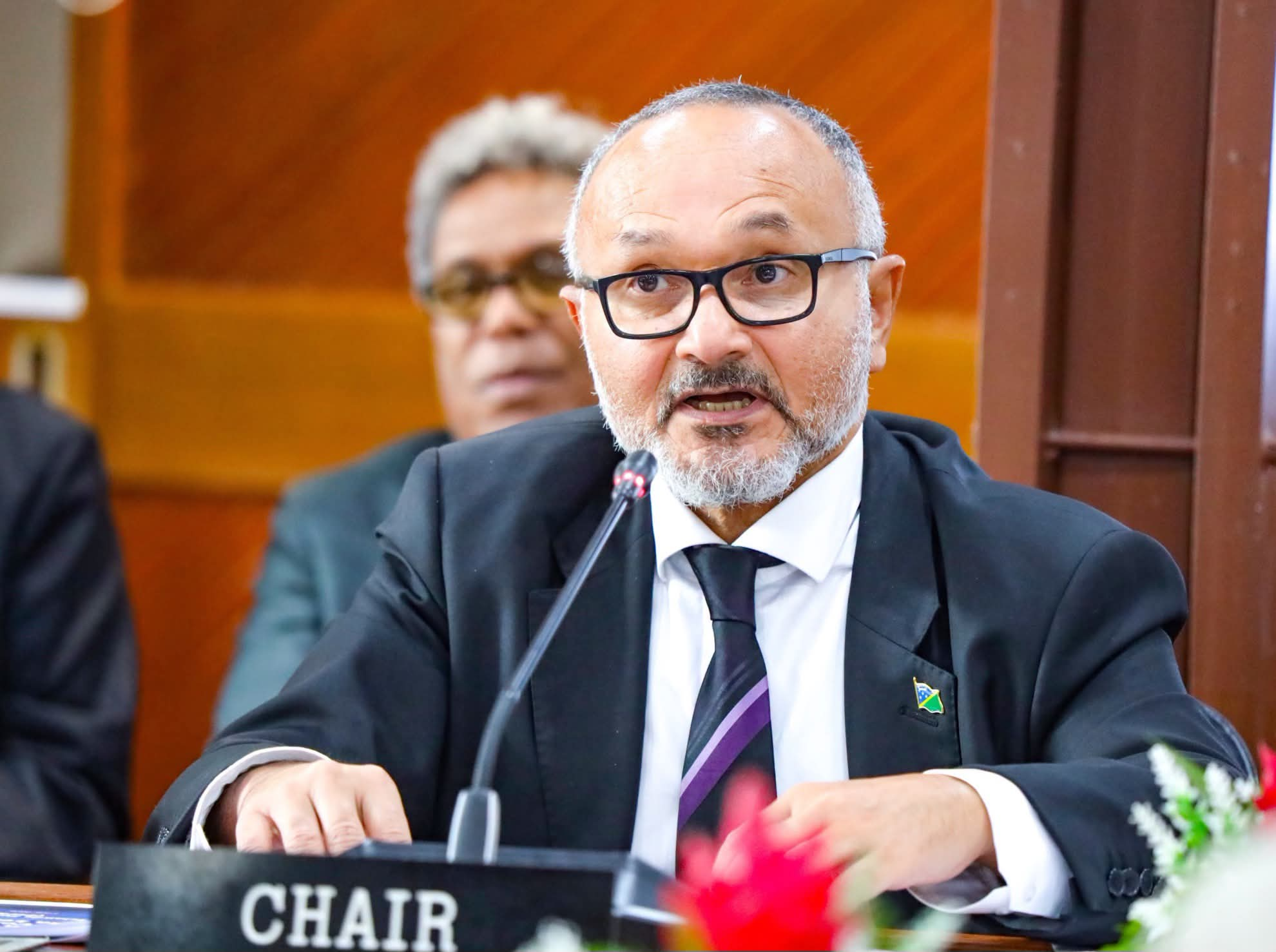
Addressing staff at the Pacific Islands Forum (PIF) Secretariat in Suva today during his first official visit as Forum Chair, Wale said the region’s future must be determined by Pacific nations themselves.
“The fact that we are in a geopolitically contested time is no secret,” Wale said.
“Our success as a region lies not in the hands of others but in our very own, unless we willingly hand over our future to those outside our region to shape,” he added.
The prime minister said increasing competition among global powers had heightened the importance of Pacific unity and reinforced the need for leaders to speak with one voice on issues affecting the region.
While welcoming international partnerships, Wale stressed that Pacific countries must remain in control of their own development agenda.
“Our partners should help us realise and complement our ambitions – not define or shape them for us,” he said.
“The Pacific Islands Forum must remain first and foremost the political home of our region.”
Wale said regionalism remained the Pacific’s greatest strategic strength, enabling small island nations to amplify their collective voice on global issues such as climate change, ocean governance and maritime security.
“It allows us to engage the world not as small island states, but as one Blue Pacific Continent,” he said.
The Prime Minister also called for stronger regional security arrangements, saying decisions affecting the Pacific’s peace and stability should be led by Pacific nations.
He said existing regional frameworks, including the Biketawa and Boe declarations, had laid important foundations but argued there was room to strengthen the region’s collective security architecture.
“We must work together to put in place a regional mechanism that safeguards our collective security and ensures the aspirations of our Ocean of Peace are realised.”
Wale also challenged Pacific leaders to shift their focus from making declarations to delivering results.
“The Pacific has never lacked vision,” he said.
“The challenge before us now is not one of good ideas – it is one of implementation.”
He said the success of the Pacific’s 2050 Strategy for the Blue Pacific Continent would ultimately be measured not by the number of meetings held but by tangible improvements in the lives of Pacific Islanders.
“Our people are looking to us not simply for statements of intent, but for lasting results.”
As Chair of the Pacific Islands Forum, Wale said leaders must protect the annual Forum Leaders’ Meeting as the region’s premier political decision-making platform and ensure it remains focused on Pacific priorities.
He also urged Pacific nations to stop defining themselves primarily through their vulnerabilities.
“Too often we emphasise our vulnerabilities – geopolitical contestations and climate change – to the point that the opportunities before us struggle to surface,” he said.
Instead, he pointed to the Pacific’s combined Exclusive Economic Zone of almost 40 million square kilometres as one of the region’s greatest strategic assets.
“If we remain united in purpose, steadfast in our values and confident in our own leadership, there is no challenge that the Blue Pacific cannot overcome.”
Wale called on Pacific governments, regional organisations and development partners to work together to turn the region’s shared vision into concrete action ahead of the 55th Pacific Islands Forum Leaders’ Meeting in Palau in August.
