
by Ofani Eremae
Twice he applied for key accountability roles. Twice, he was rejected.
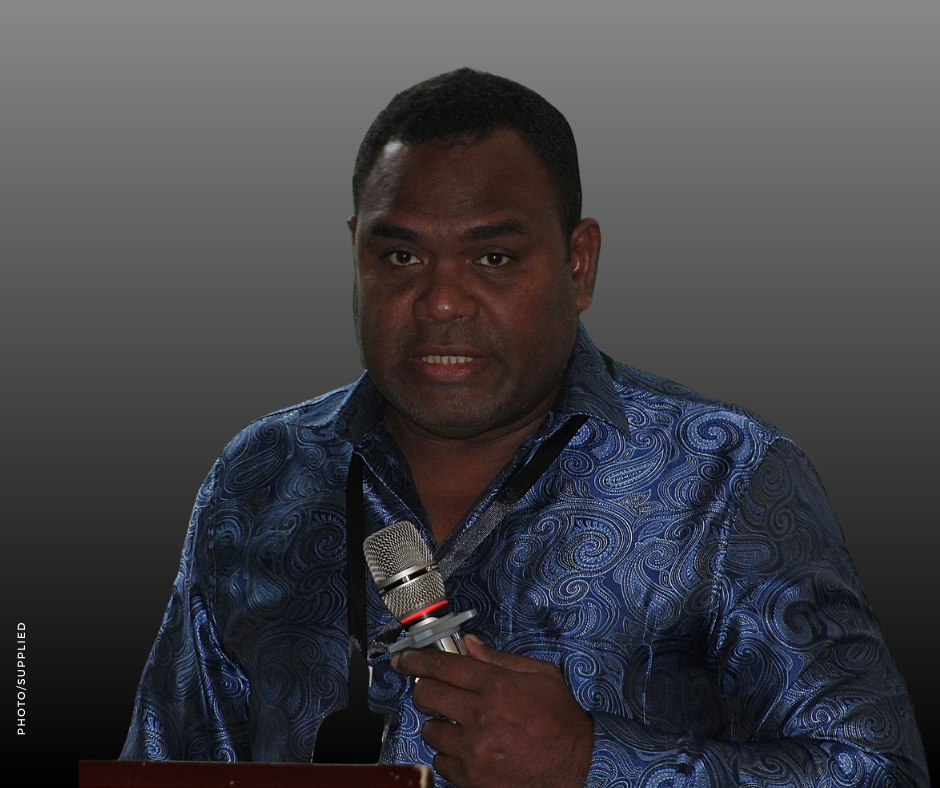
Solomon Kalu is widely regarded as a lawyer of integrity – a “straight shooter” in the words of those who know his work.
So why was he rejected?
That question has unsettled observers and fuelled public debate in recent weeks.
After graduating from law school, Kalu began his career as a defence lawyer at the Public Solicitor’s Office in Honiara. He later moved to the Leadership Code Commission (LCC), where he built his career and was appointed chairman in 2016.
He served two terms before his chairmanship ended in 2022, at the height of the COVID-19 pandemic, when his contract expired.
The Government re-advertised the position in early 2025. Four candidates applied -Kalu among them.
The other applicants were:
-
Steven Belakame – immediate former LCC chairman
-
Colin Bentley – former political appointee
-
Dr Derek Sikua – former prime minister
According to government documents cited by In-Depth Solomons, Sikua later withdrew his application, leaving Kalu and the remaining two candidates for the Nominating Committee to consider.
Government documents show that after reviewing the candidates’ profiles, the acting prime minister – serving as chair of the Nominating Committee – endorsed Kalu as the most suitable candidate.
A submission file was subsequently prepared and circulated to committee members for comment.
However, documents reveal that on Friday, 4 July 2025, Public Service Commission chairman Milner Tozaka – also a member of the Nominating Committee – met with Prime Minister Jeremiah Manele to raise concerns about Kalu’s candidacy.
Tozaka noted that during his previous tenure as LCC chairman, Kalu had allegedly refused to comply with a lawful government policy enacted under the Emergency Powers (COVID-19) Regulations 2020, which required all public servants to be vaccinated.
His refusal — reportedly based on religious or personal ethical beliefs — was said to have led to his resignation.
During their discussion, the Prime Minister and Tozaka expressed concern that reappointing Kalu could set an undesirable precedent, potentially encouraging former employees who resigned or were terminated for non-compliance with COVID-19 regulations to seek reinstatement within the Public Service.
They also noted that several employment matters arising from COVID-19 non-compliance remain before the High Court.
Although the Emergency Regulations have since been revoked, concerns persisted about the implications of reappointing an individual who had previously refused to comply with government directives issued during a state of emergency.
Based on these concerns, the Prime Minister and Tozaka sought legal advice from Attorney General John Muria Jnr.
They specifically requested guidance on whether Kalu’s reappointment could be perceived as the Government condoning past non-compliance and thereby undermining its own rules.
Attorney General’s Advice
The Attorney General advised that the position of LCC chairman is “a critical role in the machinery of government,” responsible for ensuring leaders comply with governance standards and statutory obligations.
He warned that appointing a chairman with a history of non-compliance with lawful directives could create challenges in maintaining moral and institutional credibility.
“Reappointing a former official who refused to comply with those lawful directives… may send a conflicting message,” Muria wrote.
“It risks eroding public confidence in the Government’s commitment to uphold and enforce its own rules.”
He further advised that the reappointment “could reasonably be perceived as the Government condoning past non-compliance.”
When asked whether Kalu’s resignation due to non-compliance was a valid consideration, the Attorney General said it was both lawful and appropriate for the Nominating Committee to take prior conduct into account.
“A history of non-compliance… raises legitimate concerns about the candidate’s willingness to uphold government policy,” he stated.
He also cautioned that reappointing Kalu while related employment disputes remain before the High Court could complicate ongoing proceedings involving the validity of the “No Jab, No Job” policy.
Ultimately, the Attorney General concluded that considering Kalu’s prior resignation as a disqualifying factor was a relevant consideration that would fall within the committee’s legal and policy discretion.
LCC Role Offered to Paulsen
None of the shortlisted candidates ultimately secured the LCC chairmanship.
Instead, the Government offered the position to lawyer Frank Paulsen, former chair of the Law Reform Commission — despite him not being shortlisted or interviewed.
Paulsen now serves as LCC chairman.
Second Application
Later that year, Kalu applied for the Director General position at the Solomon Islands Independent Commission Against Corruption (SIICAC).
He was shortlisted alongside outgoing director general John Kouni and Frank Paulsen.
The interview panel comprised Ombudsman Fred Fakari’i, Law Reform Commission chairman Philip Kanairara, and Dr Patricia Rodie, a university academic and member of the Judicial and Legal Service Commission (JLSC).
After interviewing the candidates, the panel recommended Kalu for appointment.
That recommendation was forwarded to the JLSC for formal approval.
However, relying on the Attorney General’s earlier advice regarding Kalu’s status, the JLSC declined to endorse the recommendation.
The director general position is now expected to be re-advertised.
“I Did Not Resign”
Contacted for comment, Kalu disputed the claim that he resigned.
“I did not resign,” he told In-Depth Solomons.
“My employment with the Government ceased because my contract came to an end.
“It is unfortunate that my employment records with the Public Service, it seems, have never been consulted to correctly inform any advice or decisions.
“I wish to say no more.”
Kalu currently heads the Governance Unit at the United Nations Development Programme (UNDP) office in Honiara.
The Unit plays a critical role in promoting transparent, accountable, and inclusive governance to support sustainable development, peace, and stability in the country.
Meanwhile, SIICAC remains without a director general since Kouni exited the role in April 2025.
