
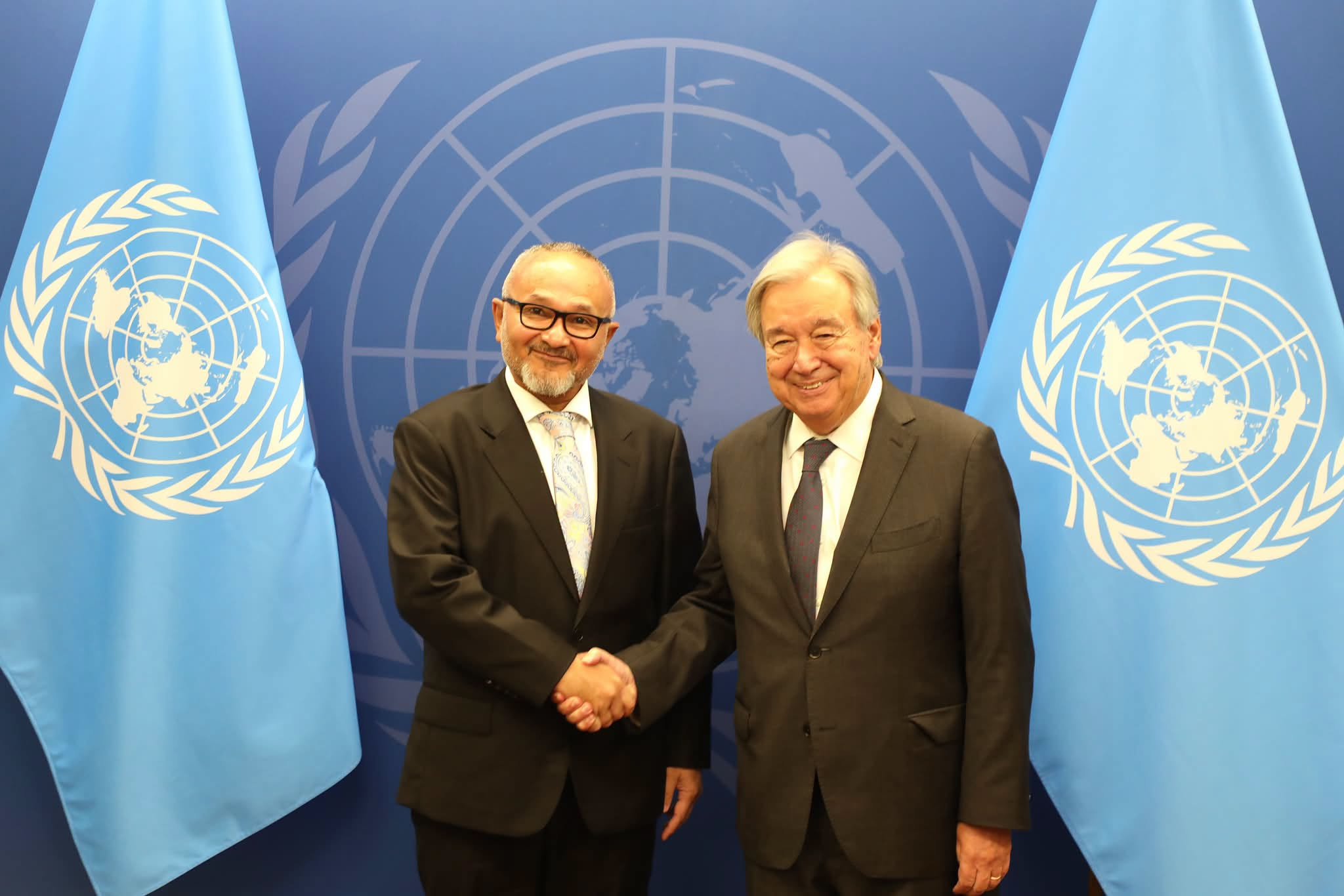
Solomon Islands Prime Minister Matthew Wale has demanded a sweeping overhaul of the UN Security Council, calling its veto power a dangerous “relic of 1945” at the United Nations General Assembly last week.
Speaking at the UN, Wale pointed to the “double standards” fueling global wars and the unresolved human rights violations in West Papua.
As the United Nations approaches its 81st anniversary, Wale delivered a strong assessment of a multilateral system that he says must evolve to meet modern realities while protecting its most vulnerable member states.
“Solomon Islands looks to the next Secretary-General to lead with vision and to ensure that the Secretariat is accountable to all Member States, serving the interests of small and large States on an equal footing.”
Prime Minister Wale said the inequities of the UN Security Council, specifically taking aim at the veto power held by its permanent members, describing it as “a shield used to violations of international law.”
He called for the complete abolition of the veto, demanding that, at an absolute minimum, it should never be used in situations involving atrocity crimes.
“The veto is a relic of 1945. Too often, it has been used to shield violations of international law and to entrench the double standards that fuel conflict. At a minimum, the veto must never again be used in situations of genocide, crimes against humanity or war crimes. Ultimately, it should be abolished.”
To create a more representative and accountable system, Wale pushed for a dedicated Security Council seat for Small Island Developing States (SIDS), arguing it would immediately strengthen the legitimacy of the world’s highest diplomatic body.
Wale explicitly linked this need for institutional accountability to the world’s blind spots regarding human rights and decolonization, most notably the plight of “Melanesian brothers and sisters” in West Papua.
Carefully balancing diplomatic candor with regional respect, Wale affirmed his country’s recognition of Indonesian sovereignty but refused to stay silent on the territory’s conditions.
“Reports of human rights violations in West Papua have persisted for far too long,” Wale told the assembly, stating that the claims must be independently verified rather than continually disputed.
He renewed urgent calls from Pacific Islands Forum Leaders for the Indonesian government to facilitate a long-delayed visit by the UN High Commissioner for Human Rights.
Wale characterized allowing the visit as “an act of confidence between friends, and an affirmation that there is nothing to fear from the light.”
The push for emancipation extended to other Pacific territories, reaffirming Solomon Islands’ steadfast support for the self-determination of the Kanak people in New Caledonia and the Maohi Nui people in French Polynesia.
He challenged the UN’s decolonization process to offer more than just hope, demanding “practical pathways” for Non-Self-Governing Territories to determine their own political and developmental futures.
Despite his sharp critique of the organization’s structural flaws, the Prime Minister reaffirmed his nation’s deep commitment to the UN’s founding charter.
He affirmed, the Solomon Islands is currently supplying personnel to the UN peacekeeping mission in South Sudan, with plans to increase its contribution in the coming year, proving that small nations are actively sharing the burden of maintaining international peace.
