
by Ofani Eremae
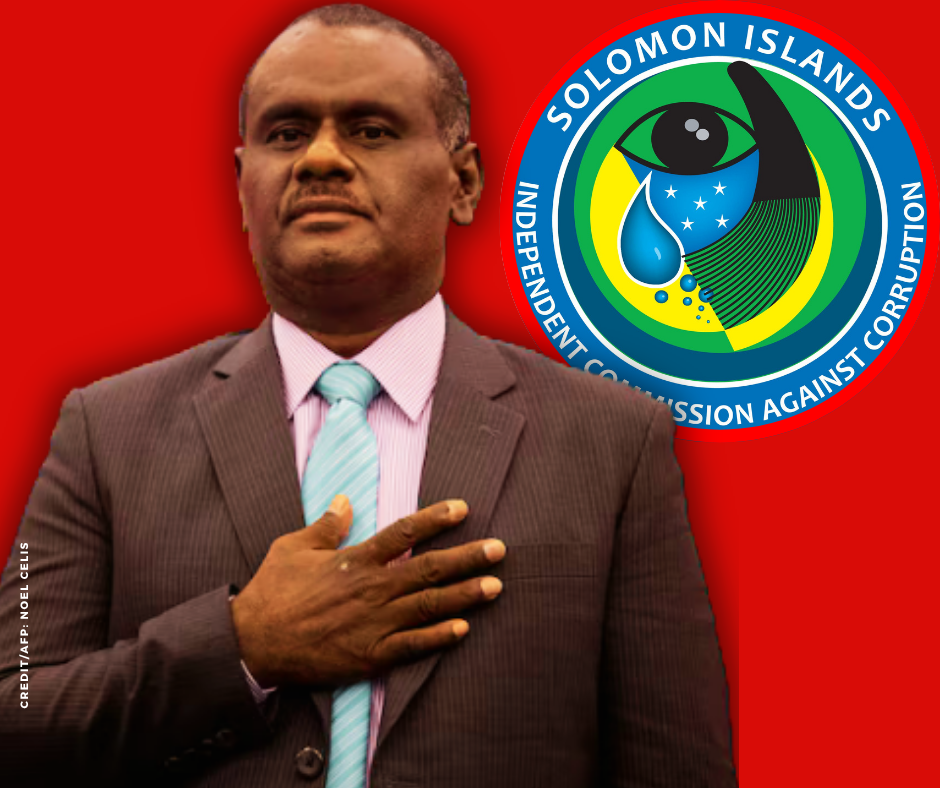
At its launch in July 2020, many viewed the Solomon Islands Independent Commission Against Corruption (SIICAC) as the “silver bullet” that could finally pin down corruption in the country.
SIICAC, it seemed, represented hope for a nation long plagued by widespread allegations of misuse of public funds, political interference, and weak accountability systems.
For the first time, Solomon Islanders felt that a truly independent body could hold even the most powerful to account.
But five years on, SIICAC is yet to prosecute a single corruption-related case.
And questions remain: has the anti-corruption body lived up to its promise, or has the dream of a corruption-free Solomon Islands begun to fade?
“SIICAC remains a weak and ineffective institution to this day,” says Ruth Liloqula, a SIICAC board member currently serving her second term.
“We are not moving anywhere due to lack of financial support from the government,” added Liloqula, who is also the head of anti-corruption watchdog Transparency Solomon Islands (TSI).
“The situation around SIICAC in terms of funding has remained the same today as it was at the beginning.”
SIICAC was established under the Anti-Corruption Act, which Parliament passed in July 2018 – two years before the Commission’s launch.
This came six years after Solomon Islands acceded to the United Nations Convention Against Corruption (UNCAC) in 2012, and followed years of public frustration and mounting pressure on successive governments to act on corruption, which many believe has become deeply entrenched in both politics and the public service.
Under the Act, SIICAC is granted extensive powers to:
-
Investigate: It can investigate suspected corruption offenses based on complaints from the public or on its own initiative. Authorised officers have the power to request information, documents, and compel attendance for oral examinations. The Director-General can also request a statement of assets from suspects and their associates.
-
Prosecute: With the consent of the Director of Public Prosecutions, SIICAC can initiate and undertake criminal proceedings for corruption offenses.
-
Prevent Corruption: The Commission is tasked with raising public awareness, reviewing legislation and public body procedures to reduce opportunities for corruption, and providing anti-corruption training and guidelines.
The passing of the Anti-Corruption Bill and the subsequent creation of SIICAC were hailed as landmark steps toward transparency and good governance.
Backed by development partners, SIICAC was envisioned as a watchdog free from political influence — one that could investigate, prosecute and prevent corruption at all levels of government.
For Solomon Islanders, SIICAC is exactly what’s needed to take the fight against corruption to the next level.
Long-time issue
Corruption is not a new issue in Solomon Islands.
The late Sir David Vunagi, former governor general and a highly respected Anglican cleric, once described corruption as “a cancerous tumour that is eating away at the fabric of life in Solomon Islands.”
“Corruption in Solomon Islands is not just about stolen money — it’s about stolen futures. It slows development, deepens inequality, and undermines democracy and independence,” he said.
Rodney Kingmele, an anti-corruption advocate and the current chair of Transparency Solomon Islands, says to live in a corrupt society is to live a less-fulfilling life.
“Corruption is a barrier to community development and to achieving the Sustainable Development Goals,” Kingmele said.
“Corruption hinders the government’s ability to deliver essential public services, particularly to the most vulnerable in communities — people with disabilities, women, children and both rural and urban populations.”
Globally, Solomon Islands was ranked 76th out of 180 countries for perceived levels of public sector corruption, according to Transparency International’s 2024 Corruption Perceptions Index (CPI).
The CPI ranks countries from 1 (least corrupt) to 180 (most corrupt). A ranking of 76 places Solomon Islands roughly in the middle — not among the cleanest countries, but not among the most corrupt either.
The 2024 CPI also gave Solomon Islands a score of 43 out of 100.
According to Transparency International, a score below 50 typically indicates widespread misuse of public funds, insufficient transparency, weak enforcement of laws, and inadequate protections for whistleblowers or journalists.
So where is SIICAC in all this?
That’s the question Solomon Islanders have asked repeatedly over the years as the country struggles to find effective ways to tackle corruption.
At its inception, SIICAC was equipped with a director-general, a handful of staff, and a board made up of esteemed Solomon Islanders, chaired by Sir Frank Kabui – former attorney-general, former High Court judge and former governor-general.
But at the end of his chairmanship in 2024, Sir Frank described SIICAC as a “tiger with no teeth”.
Waeta Ben Tabusasi, a statesman and a member of the board, was even more blunt.
“SIICAC has done absolutely nothing tangible since its establishment due to lack of financial support,” he said.
John Kouni, the founding director-general whose term has also expired, said SIICAC’s first four years were severely constrained by lack of finance, manpower and resources.
Earlier this year, a new SIICAC board was appointed, headed by James Apaniai, another former attorney-general and High Court judge.
But the funding problem persists. Apaniai, currently in private law practice, was unable to respond to questions In-Depth Solomons sent him.
However, Liloqula told In-Depth Solomons that nothing has changed.
Lack of funding remains, she said.
According to Liloqula, the Government has been providing an annual budget of about $1 million to keep SIICAC going over the past four years. The amount covers rent, salaries and other office costs.
With the funds, SIICAC has also been able to conduct some public awareness activities.
However, its core responsibility – investigating and prosecuting corruption – remains largely unattended.
So over the last five years, Solomon Islanders have been funding a body that has not lived up to its mandate.
Regional comparisons
Compared to its regional peers, SIICAC is institutionally fragile. Its major weaknesses, according to anti-corruption advocates, lie in insufficient empowerment, leadership instability, and unclear mandate execution.
In Melanesia, where corruption is a major issue, the Fiji Independent Commission Against Corruption (FICAC) appears to be the most effective compared to anti-corruption agencies in Solomon Islands, PNG and Vanuatu.
Recent published media reports in Fiji said FICAC has investigated more than 100 corruption cases, with at least 21 convictions to date.
Vanuatu does not have an anti-corruption Commission but its Ombudsman has been over the years active in investigating and prosecuting public and political figures.
PNG’s Independent Commission Against Corruption, is reportedly very ambitious and legally robust, but faces serious governance and institutional risks, according to PNG media reports.
New dawn for SIICAC
Despite SIICAC’s set-backs, all’s not lost.
When Jeremiah Manele came in as prime minister in early 2024, his new coalition, the Government for National Unity and Transformation (GNUT), made a pledge: they would review the anti-corruption policy and launch the long-overdue National Anti-Corruption Strategy (2024–2027).
One year on, Manele has delivered on that promise. And he hasn’t stopped there.
The previous week, the prime minister announced that starting next year, SIICAC’s budget will no longer come under the Office of the Prime Minister and Cabinet.
And Secretary to Cabinet Nego Sisiolo told In-Depth Solomons they have already liaised with the Ministry of Finance and Treasury on the change.
“We have already issued instructions to Finance to give SIICAC its own Budget Head as well as its own Accountable Officer so that they deal directly with Finance rather than channelling their budget requests through the Office of the Prime Minister,” Sisiolo said.
He added that the Manele Government is making strong progress in strengthening SIICAC so it can fulfil its core responsibilities.
“So far, SIICAC now has most of its deputy post-holders in office,” Sisiolo stated.
“In terms of the director-general’s position, an interview and selection panel met on September 29 and completed the shortlisting for interviews.
“The chair of the Law Reform Commission is chairing the panel. Other members are Ombudsman Fred Fakari’i and Commissioner Dr Patricia Rodie.
“We hope the panel proceeds with interviews soon. Once all due process is completed, a new director-general should be appointed by the JLSC (Judicial and Legal Service Commission) by the end of November 2025.”
This latest move has been welcomed by Liloqula and her team at TSI.
“This decision represents a bold determination by the Prime Minister and his Executive Government to address the country’s long and stagnant effort to build an independent and effective anti-corruption institution,” TSI said in a statement.
“It also addresses chronic issues that continue to stagnate the economic and social development of Solomon Islands — corruption,” it added.
“Whilst an independent budget will not address all issues needing attention in SIICAC, it is a positive step in the right direction and one much appreciated by citizens on whose advocacy SIICAC came into existence.”
TSI further calls on Prime Minister Manele to amend the Anti-Corruption Act to ensure SIICAC submits its own budget directly to Finance, and to safeguard the commission from future political manoeuvring.
For now, the country waits to see whether this new chapter for SIICAC marks the beginning of genuine change – or just another promise in the long fight against corruption.
* This story was produced with funding support from Internews
