
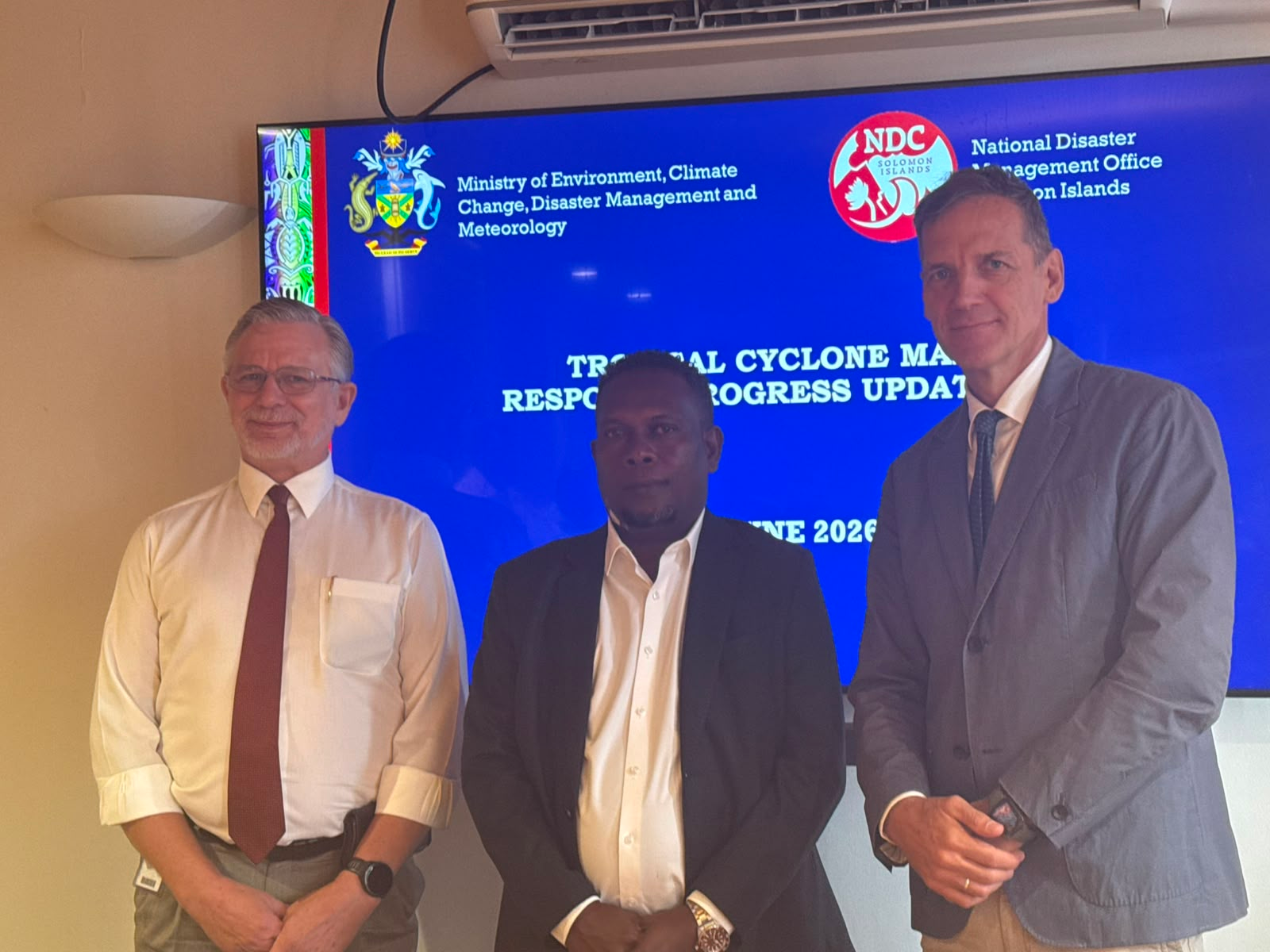
When Tropical Cyclone Maila tore through Solomon Islands in April 2026, it left a trail of destruction across Western, Choiseul, and Isabel provinces that would take years to heal.
Now, help is arriving.
The World Bank and Asian Development Bank have together released US$15 million (SBD$121 million) to support recovery efforts – money that will reopen schools, restore health services, and help thousands of families rebuild their lives.
The numbers are staggering. TC Maila reached Category 5 intensity, with winds exceeding 200 kilometers per hour.
An estimated 150,000 people were affected – that’s nearly one in five Solomon Islanders.
Across the country’s most exposed provinces, homes were flattened, 81 schools left damaged or nonoperational, and 21 health facilities wrecked.
Roads were torn up. Livelihoods were wiped out.
The agreement with ADB was signed by Minister of Finance and Treasury Gordon Darcy Lilo and ADB Country Director Anthony Gill.
The World Bank financing followed a formal request from the Government and the declaration of a State of Disaster in April.
“When disaster strikes, quick disbursing finance is needed to help Solomon Islands respond rapidly,” Gill said.
“This contingent disaster financing delivers help to Solomon Islands people at a time when they need it most,” Gill added.
Bernard Harborne, Country Representative for the World Bank in Solomon Islands and Vanuatu, echoed that message:
“In Pacific nations like Solomon Islands, disasters can quickly disrupt lives, services, and livelihoods. Having pre-arranged financing in place helps governments access resources when disasters strike and keep support moving to affected communities.”
The World Bank funding comes through Solomon Islands’ Catastrophe-Deferred Drawdown Option, approved in 2023 – an instrument that lets countries tap into pre-arranged funds quickly after a declared disaster.
The ADB contribution is from the fourth phase of the Pacific Disaster Resilience Program.
Together, the US$15 million will back the Government’s early recovery plan – a blueprint to get children back in classrooms, reopen health clinics, and help families in shattered communities begin the long road to recovery.
For the mothers in Western Province trying to find shelter for their children, the teachers in Choiseul with no classroom to return to, and the health workers in Isabel caring for patients in damaged facilities, this financing means the difference between waiting and rebuilding.
As both development partners continue working alongside the Government to strengthen disaster preparedness and long-term resilience, one thing is clear: the road ahead is long, but help has arrived.