
by Georgina Maka’a
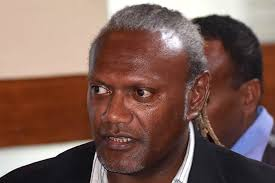
The Government acted lawfully when it terminated former Permanent Secretary Andrew Nihopara for refusing to comply with its mandatory COVID-19 vaccination policy during the State of Public Emergency (SOPE) in 2022, a High Court judge has ruled.
Nihopara, who was appointed Permanent Secretary for the Ministry of Culture and Tourism in July 2020, was terminated on 22 February 2022 for what the Government classified as “insubordination” – after he refused to take the COVID-19 vaccine despite repeated public service circulars warning of a “no jab, no job” policy.
He challenged the decision in court, arguing his termination was unlawful and unconstitutional.
But Justice Maelyn Bird dismissed Nihopara’s claim in its entirety and ordered costs against him.
The court heard that the country was under a declared State of Public Emergency from 25 March 2020, following the global COVID-19 pandemic declaration by the World Health Organization.
During that period, the Government activated the Emergency Powers Act (Solomon Islands) and enacted the Emergency Powers (COVID-19) (No. 2) Regulations 2021.
Under those regulations:
-
The Prime Minister had authority to issue directions to implement COVID-19 response measures.
-
Public servants could be terminated for failing to comply with vaccination requirements during SOPE.
Justice Bird ruled that the vaccination mandate stemmed from a Cabinet decision, transmitted through official Public Service circulars, and was lawfully implemented under emergency powers.
“The policy was a direction by the Prime Minister and transmitted through the normal channel of transmitting information to the whole public service,” she stated.
Nihopara had argued that his dismissal breached his constitutional rights to personal liberty, freedom of conscience and freedom of expression.
But the court pointed to Section 16(7) of the Constitution, which allows certain fundamental rights to be restricted during a public emergency if reasonably justifiable.
Justice Bird found that during the SOPE, emergency regulations override inconsistent laws and temporarily restrict constitutional rights where necessary.
“It was an unprecedented time in our country’s history,” the judge noted.
She concluded that the vaccination policy did not unlawfully infringe Nihopara’s rights.
A key blow to Nihopara’s case was evidence that he never applied for a personal exemption through the established medical exemption process – despite knowing how it worked.
Court evidence showed Nihopara had successfully sought a vaccination exemption for his wife, but made no such application for himself.
Justice Bird said the claimant could not ignore the formal exemption process and later claim unfairness.
“As the saying goes, you can’t have your cake and eat it too,” she stated.
Justice Bird found that refusal to comply with the Cabinet directive amounted to misconduct under Public Service Commission Regulations.
Nihopara had acknowledged in email correspondence that his refusal could be seen as insubordination.
The judge ruled that his termination under Clause 24(j) of his Agreement for Service was lawful.
The court refused all declarations sought by Nihopara, including:
-
A declaration that his termination was unlawful
-
Reinstatement or entitlement to accrued benefits
-
General damages for emotional and financial hardship
It instead ruled:
-
The termination was not unlawful
-
The claim is dismissed in its entirety
-
Costs awarded against Nihopara
The ruling reinforces the legal standing of the Government’s COVID-19 vaccination policy during the State of Public Emergency and affirms the authority of Cabinet decisions implemented through public service mechanisms.
News of this ruling came in the wake of recent public criticisms of the Government’s decision to refuse appointing lawyer Solomon Kalu to two key accountability positions.
Kalu, former chair of the Leadership Code Commission (LCC), reportedly refused to take the COVID-19 jab. He subsequently left LCC when his contract expired.
Last year, he reapplied for the LCC job and later for the director general’s position at the Solomon Islands Independent Commission Against Corruption (SIICAC).
Although the interviewing panels picked him for both roles, the Judicial and Legal Service Commission, as well as the Public Service Commission, refused appointing him due to his refusal to take the jab.
