
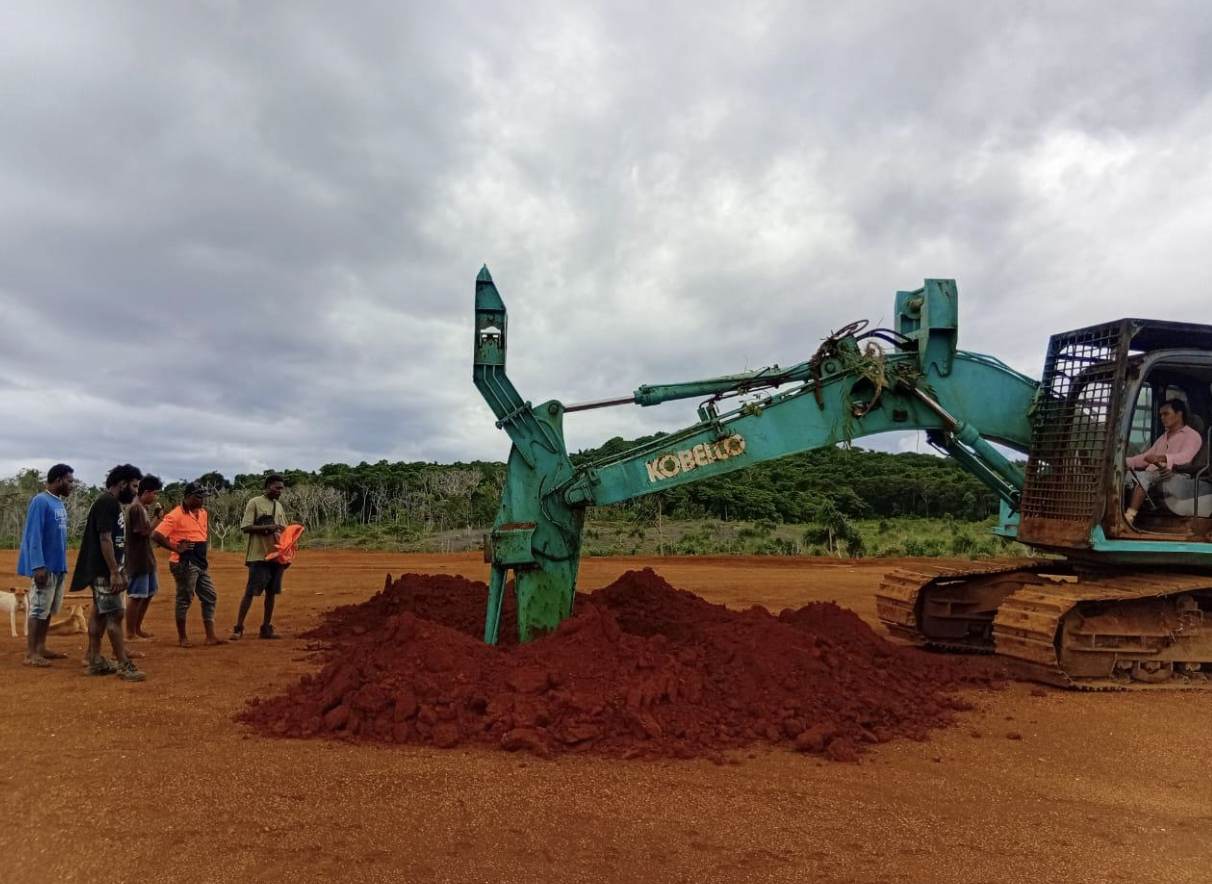
Geotechnical investigations have begun on Vanikoro Island in Temotu Province, marking the first step toward building a new greenfield airport in one of the most remote parts of the Solomon Islands.
The project forms part of the Solomon Islands Government’s National Transport Plan 2017–2036, which prioritizes improved air connectivity across the country’s outer islands.

A technical team from the Ministry of Infrastructure Development (MID), working with the Civil Aviation Authority of Solomon Islands (CAASI) under the Ministry of Communication and Aviation (MCA), has been conducting soil sampling and ground assessments to support the airport’s design phase.
Using the Dynamic Cone Penetration (DCP) method, engineers are testing soil strength and subsurface layers to ensure the site meets international standards for airport pavement stability and safety.
Currently, Temotu Province has only two operational airports—Lata and Lomlom—both serving limited routes.

The new Vanikoro Airport is expected to provide a critical link between the isolated islands of the eastern Solomons and the capital, Honiara, improving access for travelers and essential services while reducing the risks of sea travel caused by rough weather and high fuel costs.

You must be logged in to post a comment.