
By Georgina Maka’a in ANTALYA, TÜRKİYE
Solomon Islands has grabbed international headlines at the COP31 summit in Antalya, Türkiye, after becoming the first Small Island Developing State and Least Developed Country to pledge money to the Green Climate Fund’s next funding cycle.
However, the USD $400,000 commitment has sparked an immediate political storm back home in Honiara.
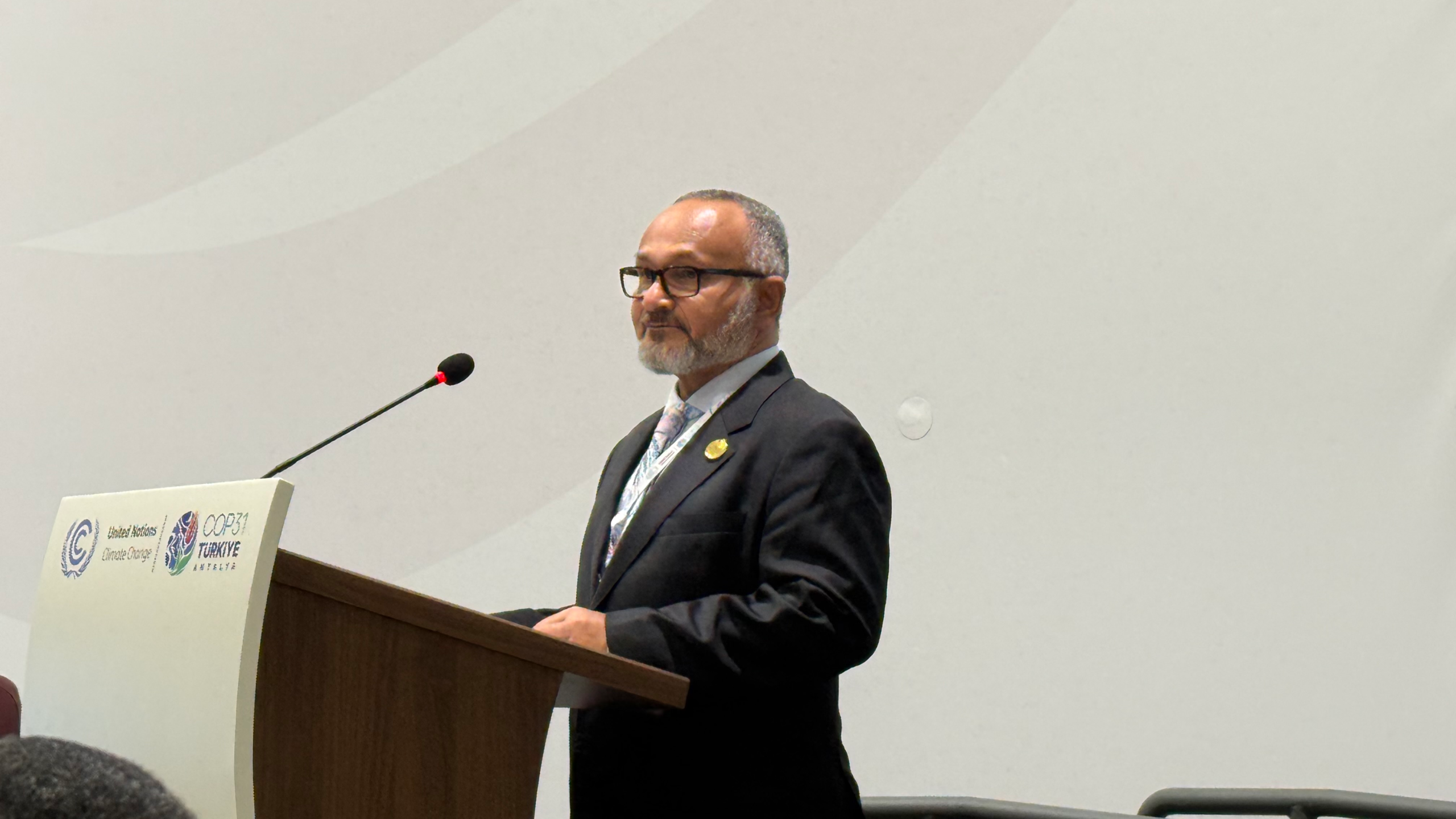
Prime Minister Matthew Wale defended the pledge as a necessary act of global leadership, stating, “Frontline island nations must set an example to push major emitting countries to scale up international climate finance.”
Speaking at a Green Climate Fund event in Antalya, Wale insisted that international climate assistance underpins the nation’s economic resilience, water, energy, and human security, citing major developments like the Tina River Hydropower scheme and the SOLKAS community program.
The pledge drew sharp criticism from Opposition Leader Manasseh Sogavare, who countered that “climate justice begins at home.”
Sogavare questioned sending scarce national revenue overseas while crucial domestic initiatives, including the Solomon Islands National Adaptation Plan, remain severely underfunded.
“Our vulnerable communities need adaptation financing, protection, and economic resilience now,” Sogavare said, pointing to high-risk areas like Langalanga, Ontong Java, Sikaiana, and the Reef Islands that face immediate threats from sea-level rise and coastal erosion.
He also raised concerns over existing debt burdens, including a USD $70 million concessional loan tied to the Tina River project.
While the country has secured over USD $120 million in climate funding approvals, local capacity constraints and administrative delays often hold back funds from reaching affected rural communities.
Addressing these bottlenecks, Climate Change Minister Wayne Ghemu and local officials at COP31 called on multilateral bodies to streamline accreditation, prioritize grant funding over loans, and apply the Multidimensional Vulnerability Index to reflect the real needs of small island nations.
As talks continue in Antalya, the government faces a tough test: balancing high-level diplomacy abroad with concrete action and accountability for communities on the ground.
