
By Georgina Maka’a
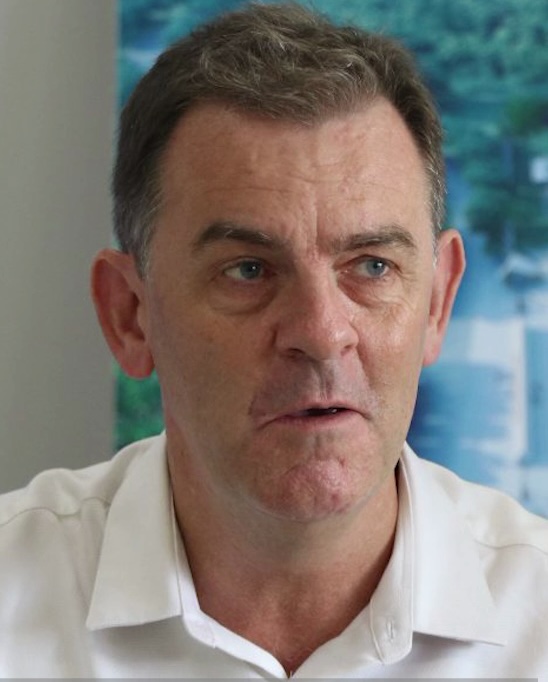
Former lands commissioner Alan McNeil has welcomed the High Court ruling that found his November 2025 suspension illegal.
“I welcome the High Court ruling and I feel vindicated,” McNeil, who resigned earlier this year, told In-depth Solomons.
“It was a long wait, but I am satisfied justice has been served in the court ordering that my suspension was invalid, unlawful and in breach of the Public Service Regulations,” he added.
High Court Judge Justice Augustine Aulanga made his ruling on the case on 29 July 2026.
Justice Aulanga ruled that the Permanent Secretary of the Ministry of Public Service, Luke Cheka, acted ultra vires – beyond his legal powers – when he abruptly suspended McNeil on 13 November 2025.
According to court findings, the Permanent Secretary violated mandatory disciplinary procedures by punishing McNeil before formally charging him or giving him an opportunity to defend himself.
The High Court also found that the Public Service Commission (PSC) breached its constitutional duty.
When McNeil appealed his suspension the day after receiving it, the PSC failed to formally consider his appeal, verbally telling him that the Permanent Secretary had “followed procedure” and instructing him to “do as told by [his] Minister”.
Justice Aulanga rejected the argument that McNeil’s subsequent reinstatement two weeks later rendered the case moot.
An Australian planner married to a Solomon Islander, McNeil brought decades of technical expertise to the Solomon Islands public sector.
Prior to taking up senior roles in national government, he worked as a planning adviser to the Guadalcanal Provincial Government, held technical adviser roles with the Pacific Community (SPC), and operated as an urban planning and land survey consultant across the region.
Since assuming the office of Commissioner of Lands, McNeil earned widespread public praise for taking a firm stand against deep-seated corruption, fraudulent land allocations, and illegal land deals within the Ministry of Lands, Housing and Survey.
His uncompromising stance on land governance frequently placed him at odds with powerful commercial interests and political figures.
However, his willingness to enforce land laws transparently made him one of the most respected public officials in the country.
Justice Aulanga noted in his judgment that the significance of the case extended far beyond McNeil’s individual situation, as it established crucial legal boundaries for how public officers across Solomon Islands are treated by executive authorities.
