
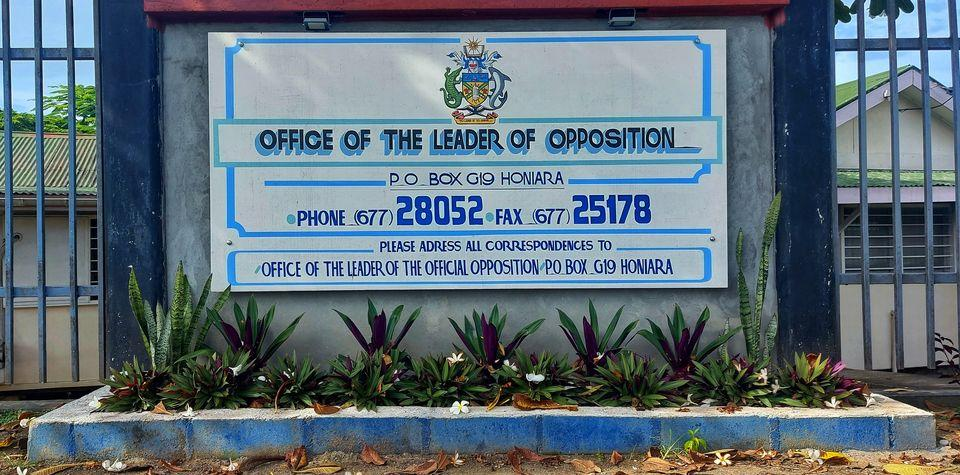
The Opposition has called on the government to release the full cost of its proposed fee-free education policy and show the country can sustain the commitment without undermining other priorities.
After the initial public debate over what “free education” means, the Opposition said the next question must be the real cost. There is a major difference between removing tuition fees in selected government day schools and taking responsibility for a wider package covering boarding, food, utilities, dormitories, operating costs, and support across different school categories.
“The country deserves honesty on the price tag,” the Opposition said. “Those are different policies with very different budget implications.”
Previous analysis has estimated the policy at around SBD 1.3 billion annually — a substantial recurring commitment against a national budget of SBD 4 to 5 billion.
“If the government is serious, it must publish the numbers and explain how it intends to fund this year after year,” the statement said.
“A policy of this scale cannot be carried by slogans. It must be supported by credible budget projections, revenue measures, and a clear explanation of what other spending will be affected.”
The Opposition warned that unless the policy is tightly defined and properly costed, the country risks crowding out healthcare, infrastructure, productive sectors, jobs, and law and order.
“Every dollar committed to one sector is a dollar not available somewhere else. That is why fiscal space matters,” the Opposition said.
The Opposition noted that the Education Regulations 2024 already provide a structured legal framework for school fees, including regulated caps, hardship schemes, instalment arrangements, and fee remission mechanisms.
The proper starting point is to strengthen enforcement of the current system, improve support for vulnerable families, and invest more in classrooms, teacher housing, grants, and school quality before expanding into a broad universal promise.
“The first task of government should be to prove it can enforce the existing framework properly before asking the country to absorb a much larger financial obligation,” the statement said.
The Opposition further cautioned that any education policy funded heavily through external support would expose the country to long-term vulnerability if donor priorities change or financing declines.
“A responsible government must distinguish between start-up support and long-term sustainability. If this policy depends on outside support in its early years, the public must be told what happens when that support is reduced, delayed, or withdrawn,” the Opposition said.
The Opposition Group said it remains supportive of affordable education and genuine reform, but stressed the nation must proceed on the basis of realism, transparency, and sustainability.
“We all want our children to have access to education. But large national commitments must be measured against economic reality. Government must first define the policy, then cost it honestly, and then prove that Solomon Islands can afford it without weakening the services and investments on which the country depends.”
