
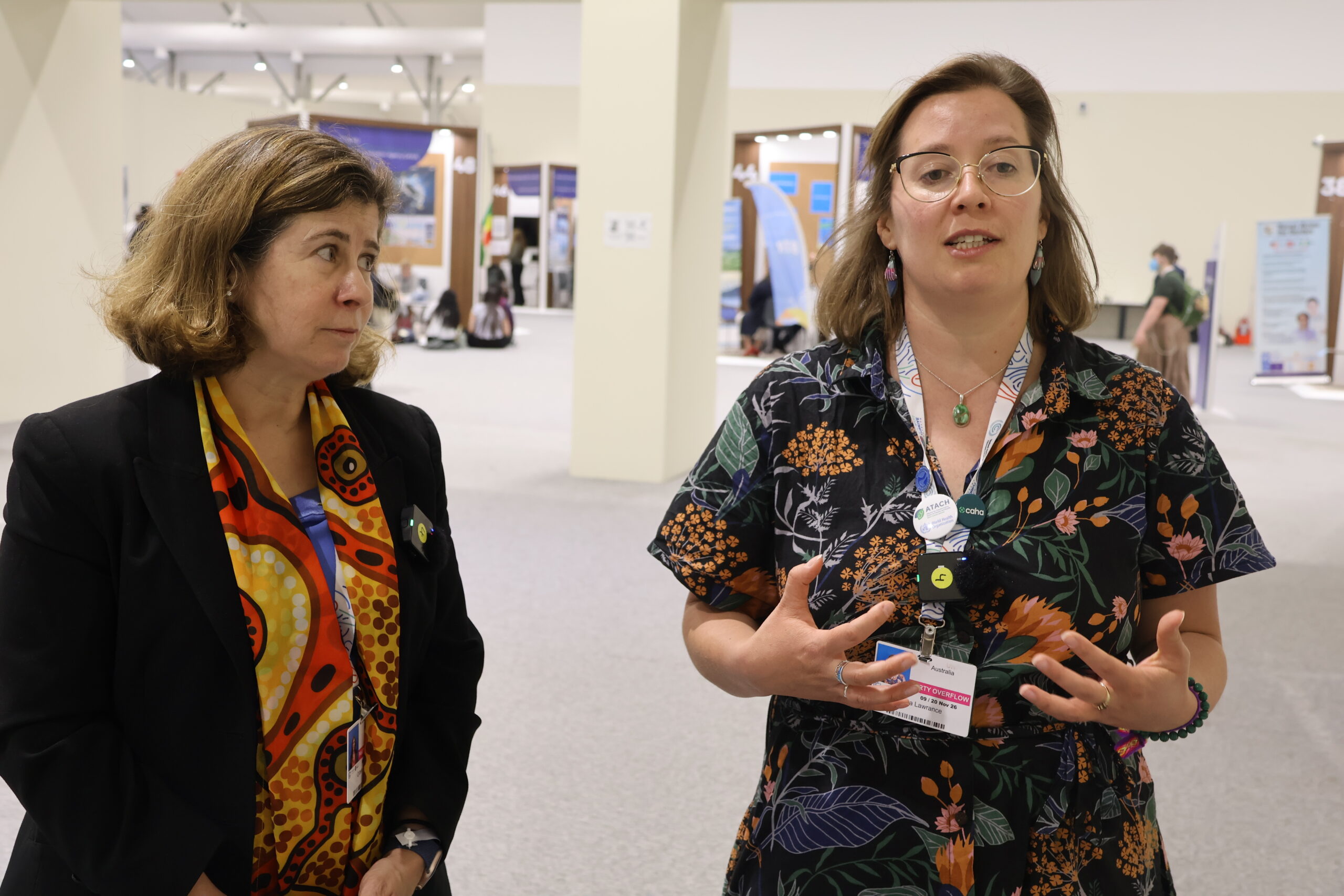
by Charley Piringi in Antalya, Turkiye
As rising seas threaten homes, sacred grounds, and burial sites across the Pacific, experts warn that mental health cannot be left behind in climate planning.
Pacific governments must care for people’s emotional and cultural wellbeing before, during, and after disasters, letting local communities guide the support they need.

Child psychiatrist Dr. Cybele Dey told In-Depth Solomons that distress over losing ancestral land and heritage is not a personal weakness.
“It is actually an appropriate, proportionate response for people to find this really distressing and difficult,” she said.
For Pacific families, leaving home severs deep connections to land, traditional practices, and resting places of ancestors.
Dr. Emma Lawrance, lead at Climate Cares and Connecting Climate Minds, stressed that losing this connection harms health and warned against imposing outside solutions.
Research and care must be “led by the communities and with the communities for the communities,” she said. “That principle should shape government responses.”

Experts say mental health must be built into national adaptation plans, disaster prep, and climate talks—not treated as an afterthought.
Plans must offer practical help for displaced families while strengthening local cultural practices and community groups already supporting people.
Extreme heat also poses immediate risks. Dr. Lawrance noted that people living with mental health conditions are especially vulnerable during heatwaves.
Dr. Dey added that unusually hot weather links directly to increased distress and hospital visits among children and young people.
To prepare, island governments should equip health clinics with solar power, adjust work and school hours during hot spells, and document climate mental health impacts to secure loss-and-damage funding.
As Dr. Lawrance added, “people are very connected to land,” meaning human health cannot be separated from environmental health.

Climate policies must protect not just infrastructure, but also the culture and community systems that keep Pacific people healthy and resilient.
This story was produced as part of the COP31 Climate Change Media Partnership, a journalism fellowship organized by Internews’ Earth Journalism Network and the Stanley Center for Peace and Security.
