
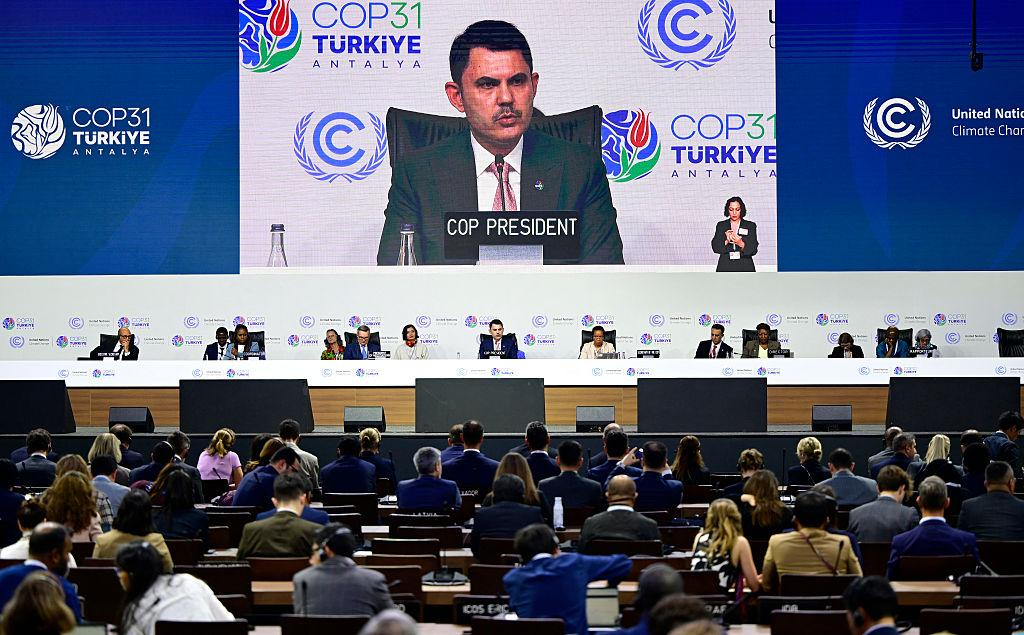
Island nations leave Antalya without the climate commitments they came to fight for, warning that the world’s failure to act is putting their survival at risk.
By Charley Piringi | Antalya, Türkiye
The Pacific came to COP31 with a simple message: keep 1.5°C alive, stop expanding fossil fuel dependence and deliver the money needed to protect communities already living with the consequences of climate change.
It left Antalya without the agreement it had fought for.
After nearly two days of record-breaking overtime, COP31 failed on Sunday, with countries unable to agree on a final cover decision. The proposed Antalya Pact was rejected after fossil fuel-producing nations resisted stronger language on transitioning away from coal, oil and gas.
The breakdown exposed once again the deep divide between countries demanding urgent climate action and those unwilling to accept stronger commitments on the world’s dependence on fossil fuels.
For Pacific Island nations, the consequences are not theoretical.
Rising seas are eroding coastlines. Saltwater is threatening freshwater supplies and food gardens. Stronger storms are damaging homes, infrastructure and livelihoods. Communities are being forced to confront difficult questions about their future, while the international community continues to negotiate over the language needed to respond.
The failure to reach agreement leaves critical questions unresolved, including the future of the 1.5°C temperature limit, climate finance, ocean protection and support for vulnerable island communities.
It also raises serious questions about the credibility of a global climate process that still struggles to agree on action while those least responsible for the crisis already feel its impacts.
Pacific frustration boils over.
The collapse was particularly frustrating for Pacific leaders, who had worked to ensure their priorities were understood before negotiations began.
Fiji and Tuvalu had hosted Pre-COP engagements weeks earlier, giving international representatives the opportunity to hear directly from Pacific communities about the urgency of the climate crisis.
But those conversations did not translate into the outcome island nations wanted.
COP31 Negotiations President Chris Bowen described the failure to secure agreement as “very disappointing,” while maintaining that the transition away from fossil fuels remained “unstoppable” and “irreversible.”
He said climate action would continue, whether inside or outside the formal negotiating process.
For Pacific leaders, however, the concern is how much more time their communities will be expected to wait.
Tuvalu Prime Minister Feleti Teo delivered one of the clearest messages of the closing proceedings, challenging wealthy nations to move beyond words of solidarity and deliver the financial support they have repeatedly promised.
“Calling our people agents of change gives no one the right to ask them to carry more. They did not cause this crisis,” Teo said.
“Give me something to tell them.”
It was a direct challenge to countries that have praised Pacific leadership on climate change but continue to fall short of delivering the resources vulnerable nations need.
Marshall Islands Ambassador Albon Ishoda also expressed deep disappointment over the failure to secure backing for the Pacific Resilience Facility, a regional initiative intended to strengthen climate resilience.
For the Marshall Islands and other low-lying atoll nations, the absence of meaningful support is not simply a funding issue. It affects their ability to protect communities, infrastructure and the very foundations of their national existence.
Vanuatu: Consensus must not come at the expense of survival
Vanuatu’s delegation was equally critical of the proposed outcome.
Speaking during the closing plenary, Vanuatu Director of Energy Mathew Tasale said his country had arrived at COP31 seeking a reliable, science-based and legally grounded response to the climate emergency.
Instead, he said, the final text failed to reflect the seriousness of the challenge facing vulnerable countries.
Tasale raised particular concern over the removal of recognition of the International Court of Justice advisory opinion on the obligations of states in respect of climate change.

For Vanuatu, the opinion represents an important clarification of international law and reinforces the questions of accountability, human rights and state responsibility.
He also rejected any attempt to weaken the 1.5°C goal through language that normalises temperature overshoot without establishing a credible pathway to return to the limit as rapidly as possible.
For Pacific nations, he said, 1.5°C is not a negotiating ambition.
It is survival.
Tasale was also critical of the failure to secure meaningful language on transitioning away from fossil fuels and fossil fuel subsidies.
He said such a transition must be supported by adequate finance, technology transfer and capacity-building to ensure it is just and inclusive, particularly for vulnerable communities.
He warned that the growing emphasis on carbon capture, utilization, and storage must not become a way of legitimising continued fossil fuel dependence or delaying emissions reductions at their source.
The message from Vanuatu was that the world cannot claim to be addressing climate change while avoiding the principal source of the problem.
Tasale also called for substantially increased, predictable, and accessible grant-based adaptation finance, stronger support for the Adaptation Fund and simpler access to funding for vulnerable countries.
Communities already experiencing the devastating impacts of climate change cannot be expected to wait for another round of negotiations before receiving the support they need.
Vanuatu remains committed to multilateralism and international law, Tasale said, but consensus must never come at the expense of people’s survival, sovereignty and the future of generations to come.
Fiji: The Pacific will not give up
Fiji’s Environment Minister Lynda Tabuya acknowledged the difficulties of bringing more than 190 parties together but made it clear that the failure to reach agreement was a collective responsibility.
She thanked Bowen for his leadership and efforts throughout the negotiations but said the Pacific would continue fighting for the issues that had failed to make it into the outcome.
“The Pacific will continue to fight. Our survival demands nothing less,” Tabuya said.

She reminded delegates that Fiji had hosted the Pre-COP meeting in Nadi six weeks earlier, where representatives had heard directly from Pacific children, communities and islanders.
The expectation was that those conversations would help deliver a credible response to the challenge of 1.5°C overshoot in Antalya.
Tabuya said the proposed text had its shortcomings but contained important elements for Pacific countries, particularly on temperature overshoot, climate finance, and the ocean.
“For island parties, 1.5 is the limit of our survival. Access to finance decides whether we adapt at all, and the ocean is our home,” she said.
Fiji regretted that these issues could not be carried forward, but Tabuya said they would not be abandoned.
She also highlighted the importance of bringing the ocean-climate relationship into the centre of global climate discussions.
For Pacific people, the ocean is much more than a geographical feature. It is central to their identity, culture, livelihoods, food security and connection to one another.
“The ocean-climate nexus is undeniable,” Tabuya said.
“There is no climate action without ocean action.”
That message remains particularly important for a region where rising sea levels, ocean warming, acidification, and coastal erosion are placing increasing pressure on marine ecosystems and the communities that depend on them.
Tuvalu: The transition must be fair.
Tuvalu’s Minister of Climate Change, Dr Maina Talia, also stressed that transitioning away from fossil fuels must be a cooperative process supported by countries and institutions with the resources to make it possible.
Talia said the transition must be just and orderly, with governments and other enabling partners coming together to meet their obligations.
Pacific nations cannot do it alone.

His comments reinforced the region’s longstanding argument that vulnerable countries should not be expected to finance a global energy transition without meaningful international support.
The responsibility must be shared, with wealthier countries providing the finance, technology, and capacity-building needed to ensure no nation or community is left behind.
The Pacific’s fight continues beyond COP31.
With the Antalya negotiations ending without an agreed cover decision, Pacific nations now face the task of carrying their demands into the next phase of international climate discussions.
Regional leaders are expected to continue pursuing alternative avenues, including bilateral partnerships, regional financing arrangements and legal pathways to defend their countries’ rights and futures.

The lack of agreement on the Pacific Resilience Facility is also likely to strengthen calls for funding arrangements that are more accessible and responsive to the realities of small island developing states.
But the broader question remains: how many more climate summits must pass before the world’s most vulnerable countries see the commitments they have been promised translated into action?
For Pacific communities, the consequences of delay are already visible.
They are watching coastlines disappear, freshwater resources come under pressure, and traditional ways of life face growing uncertainty.
Their governments are not asking the world to solve the climate crisis overnight. They are demanding that countries responsible for the greatest share of historical emissions recognize their obligations and act accordingly.
The Pacific came to Antalya asking the world to keep 1.5°C alive, commit to a genuine transition away from fossil fuels and deliver the finance needed to protect vulnerable communities.
It leaves without the agreement it wanted.
But the region’s position has not changed.
The Pacific will continue to demand accountability, defend international law and fight for the right of its people to remain on their islands.
For Pacific nations, this is not simply another diplomatic disagreement.
It is about land, identity, sovereignty and the future of generations who have every right to inherit the islands their ancestors called home.
The world may have failed to agree in Antalya.
The Pacific cannot afford to fail.
