
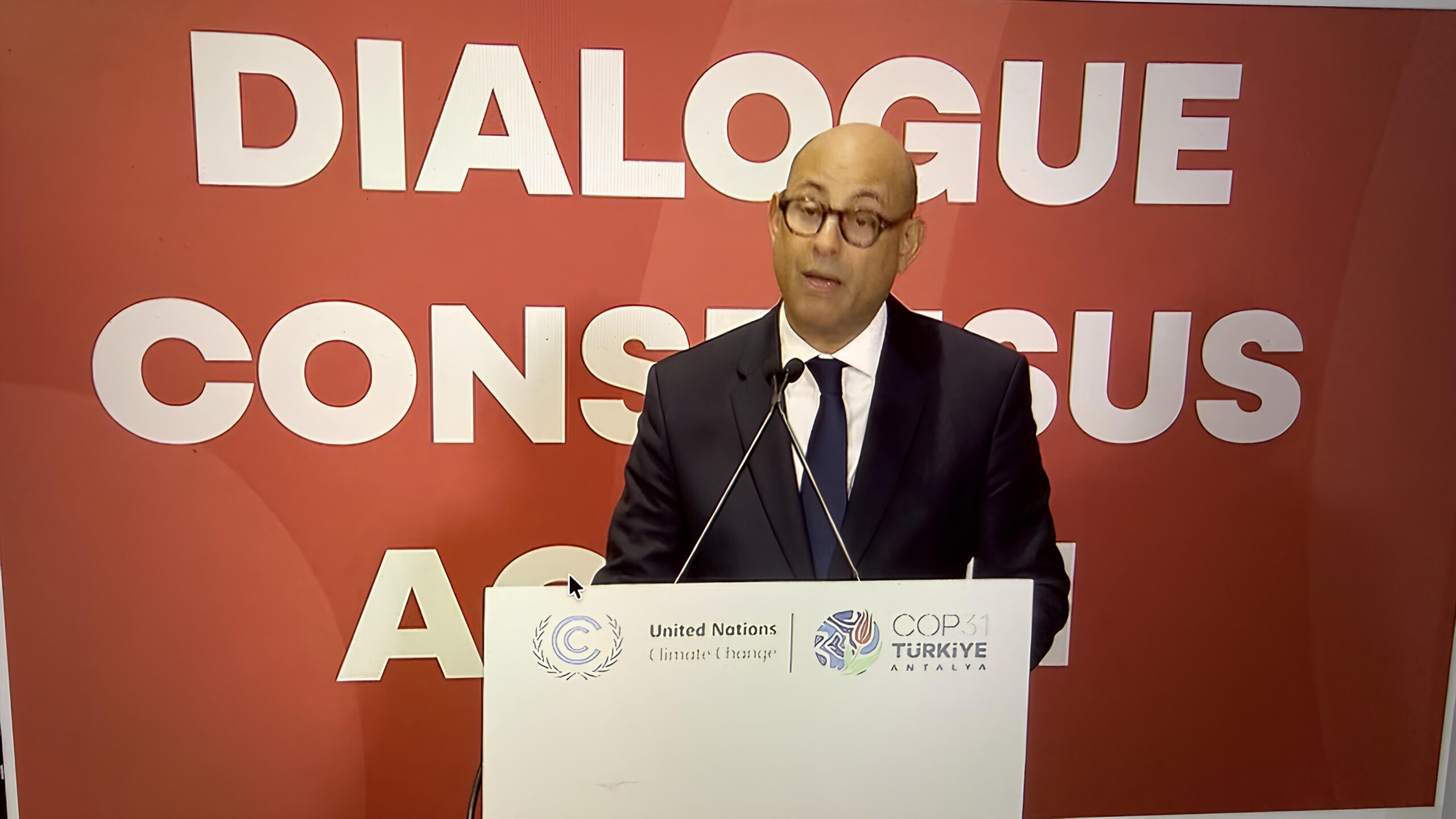
By Georgina Maka’a
UN climate chief Simon Stiell has acknowledged COP31 failed to deliver on several key negotiating decisions, warning that the international process cannot keep repeating the same shortfall as the world drifts toward 1.5°C overshoot.
Addressing the closing plenary on Sunday, 22 November 2026, Stiell said he shared the deep disappointment of many.
“COP31 has been unable to agree on issues related to both the presidency’s led decisions,” he said.
“The world cannot afford a repeat,” he told delegates, as the conference wrapped against a backdrop of worsening climate impacts and fossil fuel costs driving inflation across economies.
The failure to close those gaps will land hardest in the Pacific, where low-lying island states are already contending with sea-level rise, coastal erosion, and increasingly severe weather. Overshoot of 1.5°C above pre-industrial levels now, by Stiell’s own account, approaching is the threshold scientists warn would amplify exactly those risks.
Stiell did point to progress, saying key negotiating decisions had been made, including on a just transition. “Fairness and inclusion in the climate fight is essential,” he said.
He also stressed that the COP process runs on two tracks and that the Action Agenda had produced “real progress and concrete results.”
The summit’s headline outcome, Stiell said, was on electrification, with countries representing around half the global economy committing to 35% electrification by 2035, “or sooner.”
“This means the electrification surge signaled here at COP31 is expected to slash planet-heating pollution and fossil fuel costs,” he said, describing it as a market signal sent from Antalya.
For fuel-importing Pacific economies, any global shift away from fossil fuels carries direct consequences for energy costs and security, though the commitment remains an aggregate of national pledges rather than a Pacific-specific target.
Stiell conceded that overshoot is now “inevitable” but insisted the scale of the challenge did not diminish the value of incremental gains.
“Every fraction of a degree of heating avoided makes a huge difference,” he said.
