
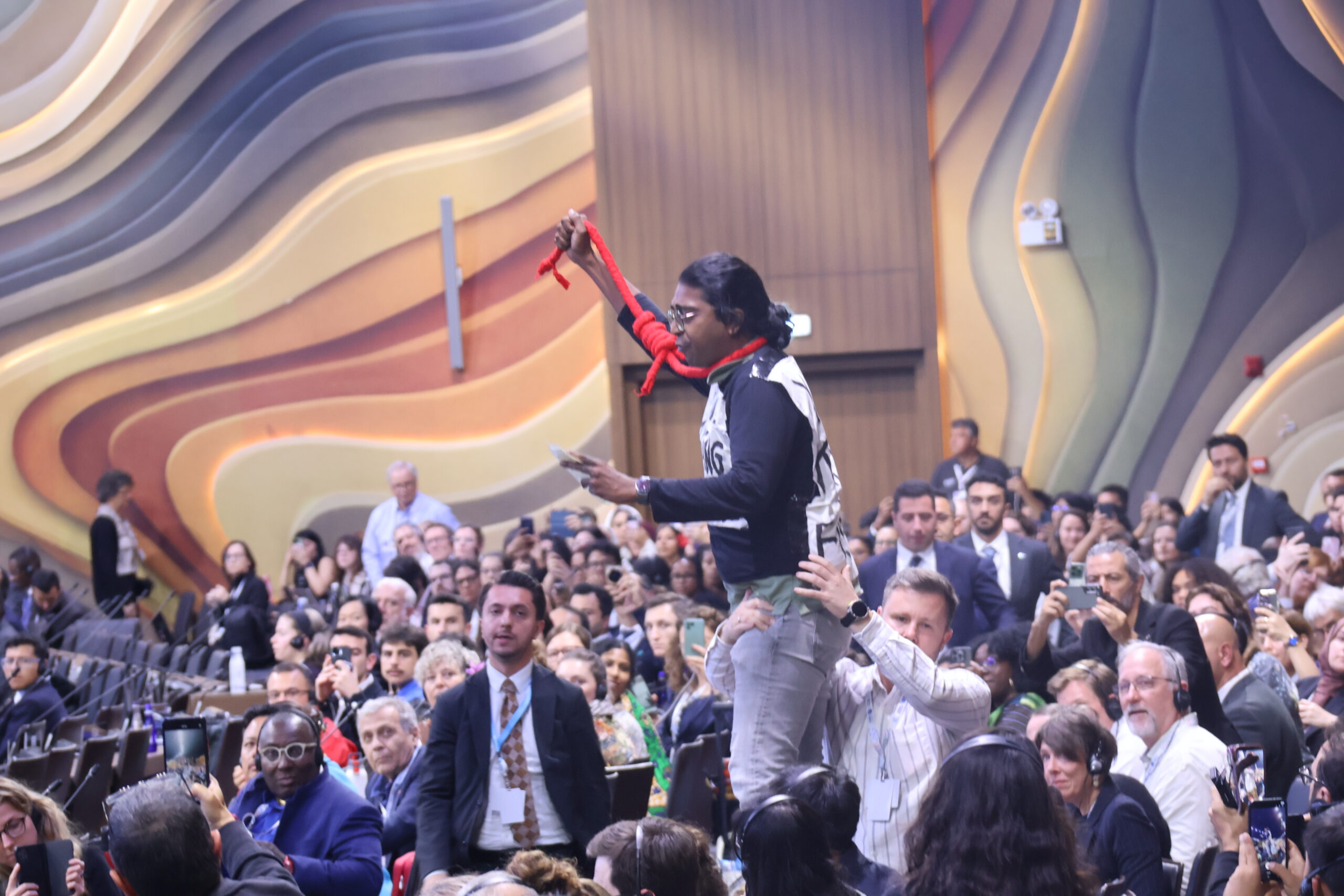
Photo essay by Charley Piringi in Antalya, Turkiye
As COP31 in Antalya officially passes its scheduled deadline, negotiations have dragged on through the weekend, with delegates from nearly 200 nations attempting to salvage a consensus.
While summit leadership pushes for an “Antalya Consensus,” discussions remain stalled on key issues: fossil fuel phase-outs and climate finance.
Delegates from vulnerable nations gathered with visible concern as talks extended beyond the scheduled conclusion. Plenary sessions continue into the late hours tonight, with negotiations and the plenary expected to resume early tomorrow.
With the final text delayed and heavily contested, frustration mounted over the gap between global ambition and actual commitment.

For delegates representing Pacific Island nations, expectations remain cautious as they await the release of the updated text.
Key demands for urgent emissions mitigation and robust financing mechanism updates have faced omissions and dilution in recent draft texts, raising concerns among frontline island nations.
Highlighting the priorities of small island developing states, Vanuatu’s Minister of Environment outlined key expectations for the final agreement:
“We want to see a clear transition away from fossil fuels. We are concerned by over-reliance on carbon capture technology as a substitute for direct emission reductions. We demand explicit recognition of the 1.5°C threshold and immediate action to address overshooting targets. Furthermore, we require recognition of the ICJ advisory opinion and dedicated financing for loss and damage.”

Civil society observers expressed heartbreak and outrage over the summit’s trajectory.
Denise Cauchi of Climate Action Network Australia criticized the current direction of the draft text:
“The draft cover decision falls far short of what is required. Failed! In its current form, it prioritizes short-term commercial interests over meaningful climate action and vulnerable communities.”
Italian climate activist Francessca Figini commented on the ongoing negotiations.
“I feel immense sorrow knowing fellow human beings in small island states and vulnerable communities are bearing the brunt of climate-induced disasters, while major state leadership acts with indifference. It is a profound moral failure.”

Civil society also focused on energy exporters. Gavan McFadzean of the Australian Conservation Foundation stressed shifting trade toward renewable energy.
“As a major global exporter of coal and gas, Australia must collaborate with key regional trading partners—including China, South Korea, and Japan—to shift toward clean energy infrastructure and sustainable trade networks.”

As negotiations for a concensus in Antalya continue through the night, discussions remain active across multiple working groups as the draft agreement remains disputed by many disappointed nations including the EU and African nations, as well as small Islands states.
A revised draft of the final summit agreement is expected to be presented to head delegates once the next plenary session is competed and all agreed to the terms in the final decision text.
The final text of the COP31 presidency decision is expected again tomorrow.

But for Philip Sustainer Clause, a well known figure at the COP31 venue, who has been advocating for climate change and sustainable future for the children, said this year’s COP31 is a serious one and a need for the children’s sustainable future.
“I think this is a critical mission right now to hear the children’s voices. Because you know we’re at COP 31 here, we don’t have to traumatize children and make them afraid of the future, or they need to be adequately cared for. Children need to be sure about their future security. If any Right decision has to be made, its ha to be right now here at the COP31.”

This story was produced as part of the COP31 Climate Change Media Partnership, a journalism fellowship organized by Internews’ Earth Journalism Network and the Stanley Center for Peace and Security.
