
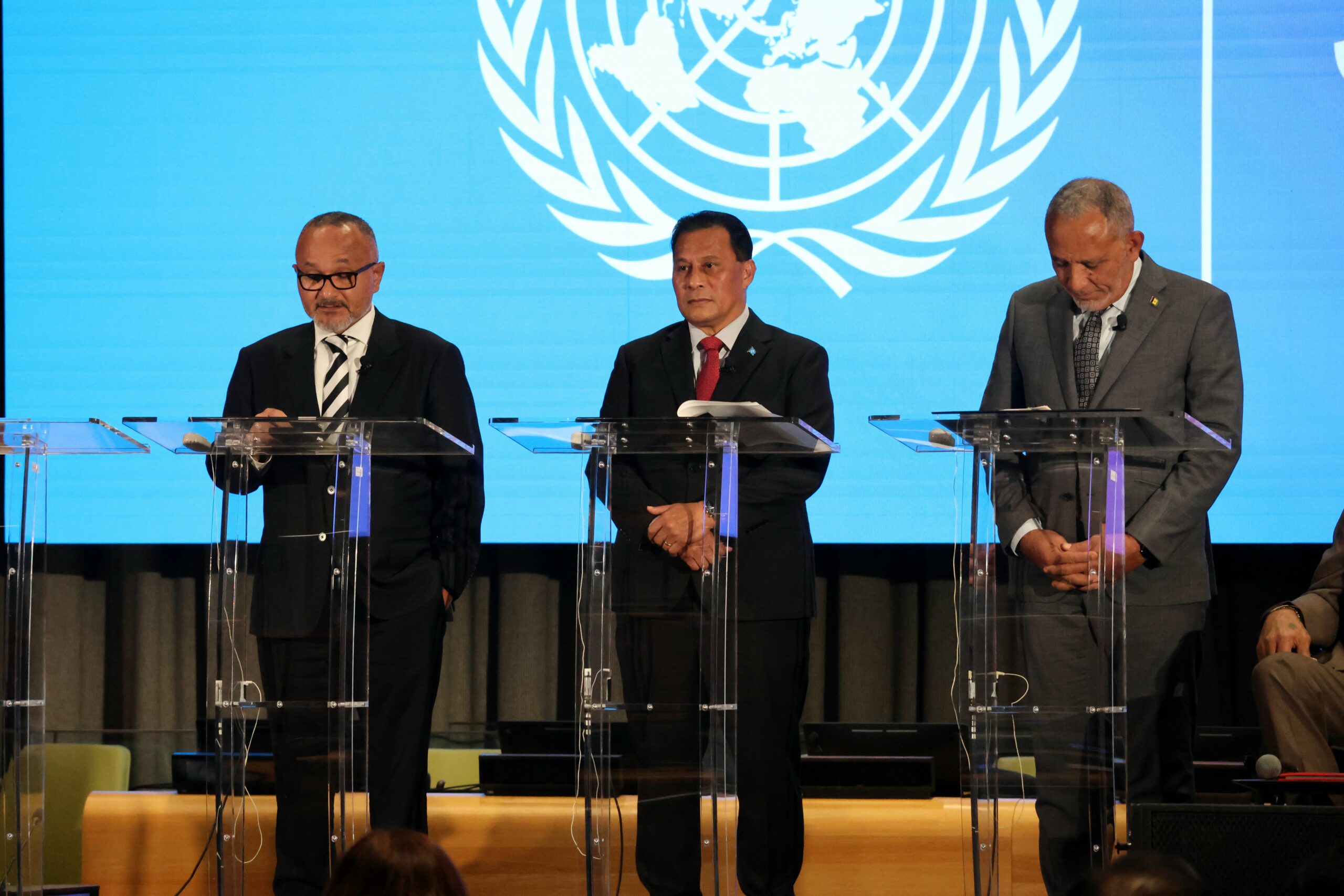
Prime Minister Matthew Wale says climate commitments must move beyond promises and translate into tangible support for climate-vulnerable countries.
Wale made the call for grant-based, predictable and accessible finance at the UN Secretary-General’s Climate Action Summit on ‘Just Transition’ at the Trusteeship Council in New York.
Solomon Islands contributes less than 0.0015 per cent of global greenhouse gas emissions, but its communities are at the forefront of experiencing harsh impacts of rising seas, king tides, saltwater intrusion, cyclones, droughts and extreme rainfall.
“Solomon Islands did not cause this crisis,” he said, “yet we bear its consequences every day.”
Wale said vulnerable countries face difficult choices between climate action and investing in key development priorities, including education, health, food and water security, and infrastructure.
He called for three changes to the global climate finance system.
“Climate finance must be grant-based, predictable and accessible, aligned with national priorities and without adding to the debt burden of vulnerable countries,” he said.
Wale also called on major emitters to take greater responsibility through deep emissions cuts, technology transfer and increased finance, consistent with equity and historical responsibility.
Despite its negligible emissions, he said Solomon Islands is taking action through NDC 3.0, targeting up to 34 per cent emissions reductions through existing, additional and forest-based measures.
He said the country is also investing in community relocation, early warning systems, resilient water and infrastructure, and climate-smart food systems, fisheries and marine ecosystems.
Wale said the issue is essentially about matching international commitments with action that communities can see and experience.
“The time for promises is over. Commitments must become finance, and ambition must become resilience on the ground,” Wale added
