
by Ednal Palmer
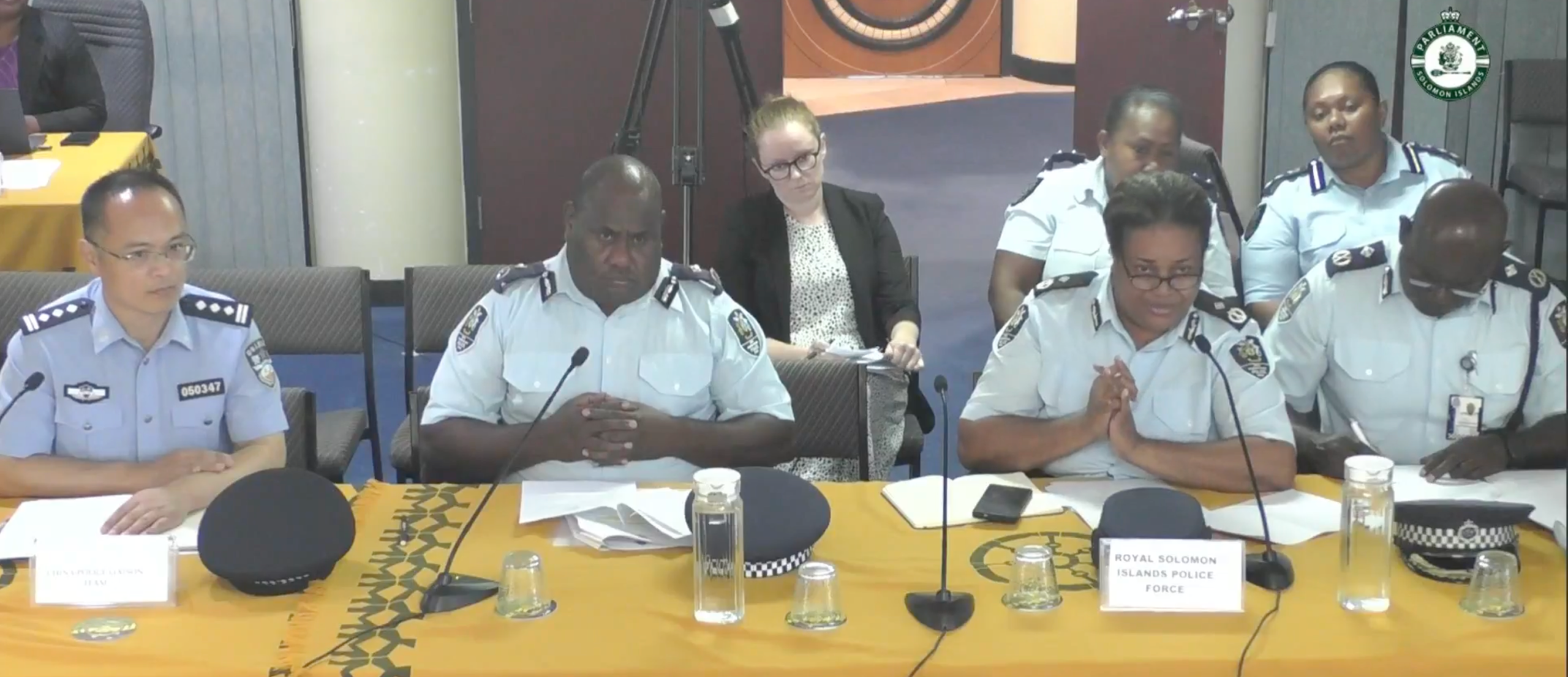
The Royal Solomon Islands Police Force (RSIPF) has thrown its support behind tougher penalties proposed under amendments to the Dangerous Drugs Bill, warning that transnational drug crime is rising in the region while existing laws are no longer fit for purpose.
Acting Police Commissioner Mathias Lenialu told a parliamentary committee that harsher penalties are necessary to deter serious drug trafficking, noting that many regional partners already impose heavy sentences for the worst drug-related offences.
“Transnational crime is a growing concern in our region, and our current legislation is outdated,” Lenialu said.
“We are aware of the dangerous impacts, and we are determined to safeguard our communities.”

Need for Stronger Police Powers
While supporting tougher penalties, Lenialu stressed that enforcement will be a challenge without granting police adequate investigative powers.
He said it is not enough to simply increase sentences if offenders cannot be detected and arrested.
Among the gaps identified are the lack of offences covering possession of precursor chemicals and equipment used to manufacture drugs, as well as limited powers to investigate organised drug networks through covert operations.
“If we cannot catch the offenders, they cannot be punished,” he said, adding that enhanced powers have already enabled some successful drug busts and would strengthen cooperation with international partners.
Financial and Capacity Pressures
The RSIPF also cautioned that imposing severe penalties will come at a high cost to the Solomon Islands Government. Under the proposed amendments, penalties of up to SBD 15 million would place cases beyond the jurisdiction of magistrates’ courts, requiring High Court hearings.
This would mean additional costs for provincial police and correctional services, which may have to detain suspects and convicted offenders for extended periods while awaiting High Court circuits to the provinces.
“Police and correctional services will incur additional costs in accommodating convicts,” Lenialu said, warning that resources must be increased to match the expected rise in drug cases before the courts.
Call for Graduated Penalties and Rehabilitation
Despite supporting strong penalties for serious offences such as manufacturing, production, supply, and distribution, the RSIPF urged lawmakers to preserve opportunities for rehabilitation, particularly for first-time and minor offenders.
Lenialu suggested clearer guidance to courts on which offences should attract the harshest penalties, including a system that categorises offences based on the quantity of drugs involved.
“The possibility of rehabilitation of minor offences by first-time offenders should be preserved,” he said.
China Signals Support
A representative of the China Liaison Team told the committee that China supports the establishment of a strong legal framework to combat transnational drug trafficking.
The Government of China is ready to deepen cooperation with Solomon Islands, including assistance with capacity building, law enforcement cooperation, and broader drug control governance, in line with international norms and China’s anti-drug policy.
Data Gaps Highlighted
Committee member Mathew Wale raised concerns about the lack of reliable data on the scale of drug trafficking affecting the country. He referred to a case last year in which a foreign national was arrested but could not be charged.
Police confirmed that the case exposed a legislative gap, based on advice from prosecutors.
Wale also questioned how much drugs are actually reaching Solomon Islands shores, noting that even the Ministry of Health lacks a clear picture of the problem.
In response, police said they do have some data based on reports received through their networks, but acknowledged that the true scale of the issue remains unclear.

Education Seen as Critical
Lenialu concluded by emphasising the need for a strong public education campaign, particularly targeting young people, to warn about the dangers of drug use.
“We acknowledge that there will be first-time offenders to start with,” he said.
“Education must go hand in hand with enforcement if we are to protect our communities.”

You must be logged in to post a comment.