
𝘉𝘺 an Observer
The Solomon Islands Government’s signing of the Ship Rider Agreement with the United States has ignited intense debate. The Leader of the Opposition has accused the government of “selling Solomon Islands sovereignty.”
The Leader of the Independent Group has demanded that the Agreement be tabled in parliament. Many others have joined the discussion, including two Solomon Islands academics, Prof. Transform Aqorau and Dr. Joseph Foukona. There are diverse and competing views.
𝗦𝗼𝘃𝗲𝗿𝗲𝗶𝗴𝗻𝘁𝘆
The “sovereignty on sale” argument has already been addressed by Prof. Aqorau, Dr. Foukona, and others. I will not repeat their arguments, except to highlight the regional frameworks they identified, which demonstrate Pacific Island Countries (PICs), including Solomon Islands, proactively exercising sovereignty over their ocean territories. These include the Niue Treaty on Cooperation on Fisheries Surveillance and Law Enforcement in the South Pacific Region (commonly known as the Niue Treaty) (1992), which both scholars mentioned.
Although the US has not ratified the United Nations Convention on the Law of the Sea (UNCLOS), it generally considers many of its provisions to reflect customary international law and therefore acts in accordance with them. This is illustrated by the US’ recognition of, and participation in, several Pacific regional ocean governance arrangements, particularly those relating to fisheries. These arrangements demonstrate US recognition of PIC’s sovereign rights over their Exclusive Economic Zone (EEZ).
𝗥𝗲𝗴𝗶𝗼𝗻𝗮𝗹 𝗙𝗿𝗮𝗺𝗲𝘄𝗼𝗿𝗸𝘀
A classic example is the US-South Pacific Tuna Treaty (1987). Under this arrangement, the US currently pays approximately US$600 million for a 10-year period ($60 million annually) for its purse seine vessels to fish within PIC’s EEZ.
Although US$600 million may not seem substantial, it is significant when compared with the declining number of US fishing vessels operating in the Pacific. There are currently only thirteen US purse seine vessels operating in the region. This represents a considerable decline from the 41 to 43 purse seine vessels operating in the region in 1990, shortly after the Treaty entered into force in 1988.
Regardless of the fleet’s size, the Treaty demonstrates that the US recognises PICs’ sovereign control over their EEZs and willing to pay for access. As Aqorau has argued in one of his academic publications, the Treaty also provides an important avenue for diplomacy between the US and PICs.
The Treaty emerged following a tumultuous period during which US fishing vessels operated throughout the Pacific with little regulation. Some may recall the 1984 𝘑𝘦𝘢𝘯𝘦𝘵𝘵𝘦 𝘋𝘪𝘢𝘯𝘢 incident involving Solomon Islands and the US. That is, however, a story for another time.
The United States also recognizes and adheres to regional fisheries management frameworks established by the Parties to the Nauru Agreement (PNA), particularly its Vessel Day Scheme (VDS). The activities of U.S. fishing vessels within the EEZs of PNA member countries are governed not only by the South Pacific Tuna Treaty but also by the specific management measures adopted by the PNA, including the VDS.
These cases demonstrate recognition of the PICs’ sovereign rights over their EEZs and the tuna resources within them. They also highlight the proactive leadership of Pacific Island countries in establishing regional fisheries management frameworks and requiring distant-water fishing nations to comply with them. Successive Solomon Islands governments have actively participated in and benefited from these arrangements.
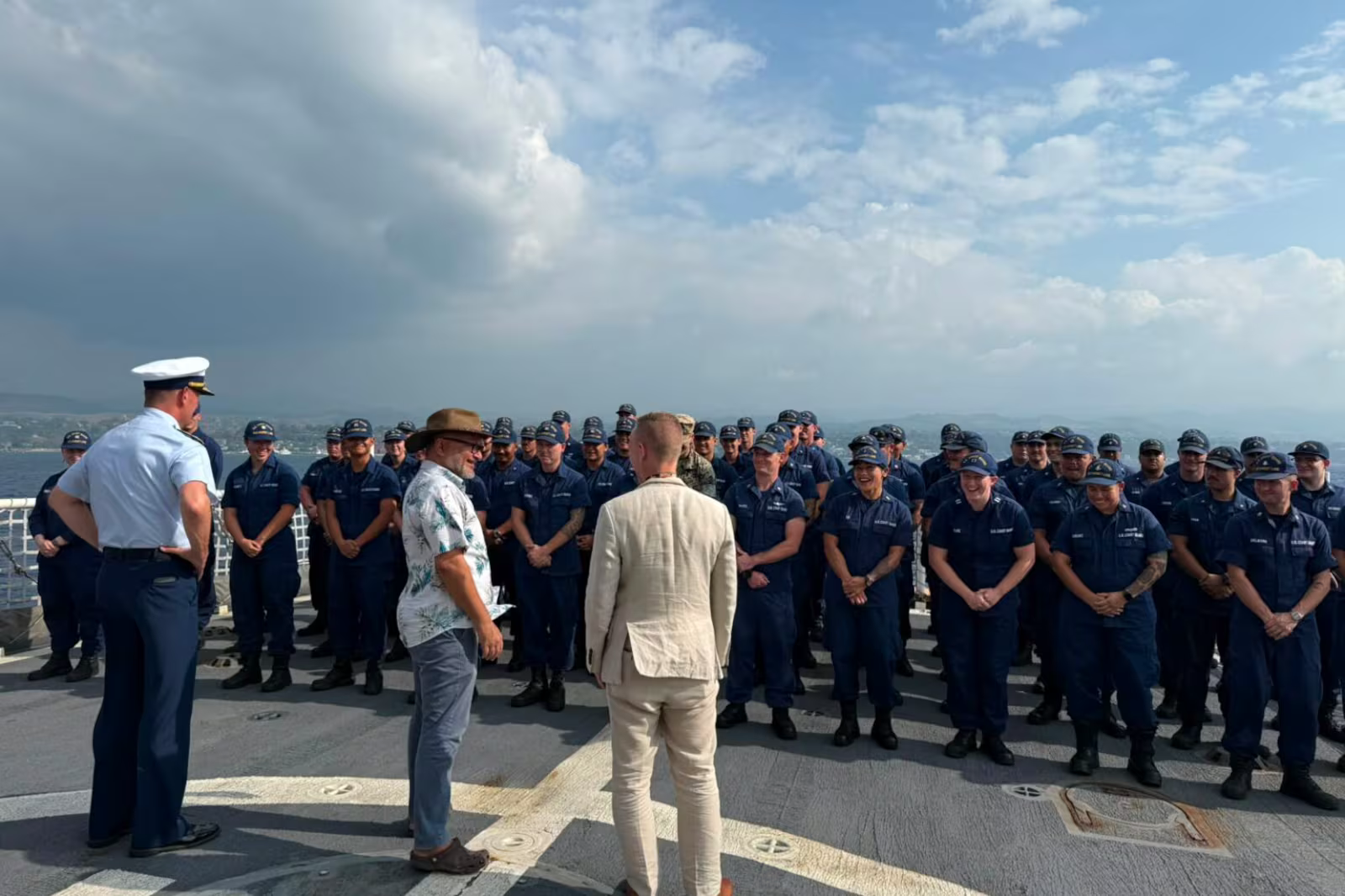
The challenge, as Prof. Aqorau has highlighted, lies in surveillance and enforcement. PICs have therefore established partnerships with countries possessing greater resources and enforcement capacity. The Ship Rider Agreement is one example of such cooperation. Besides Solomon Islands, twelve other PICs have similar agreements with the US.
Some may argue that these examples involve commercial fishing vessels, whereas the Ship Rider Agreement grants access to the US Coast Guard—a branch of the US Armed Forces with ships, aircraft, and other military assets—to operate within Solomon Islands EEZ.
That is a reasonable concern, and I understand why people may be worried.
𝗨𝗦 𝗠𝗶𝗹𝗶𝘁𝗮𝗿𝘆 𝗣𝗿𝗲𝘀𝗲𝗻𝗰𝗲
The reality, however, is that countries like the US already possess significant intelligence capabilities relating to Solomon Islands, even without the Coast Guard vessels operating within its EEZ. The same can be said of China.
If Australian Secret Intelligence Services (ASIS) could plant listening devices in Timor-Leste’s Cabinet room in 2004, it is not unreasonable to assume that both the US and China are already monitoring Solomon Islands’ political elites today.
The known US military presence in the region includes the Pacific Command (PACOM) in Hawaiʻi; Guam, where the US military controls about 27 percent of the island; the US Army Garrison in Kwajalein in the Marshall Islands, which also hosts the Ronald Reagan Ballistic Missile Defense Test Site; the Tactical Multi-Mission Over-the-Horizon Radar (TACMOR) station in Palau, where the US military presence is currently expanding; the joint Australia–US satellite tracking and signals intelligence base at Pine Gap, located 18 km southwest of Alice Springs, Australia; and the bilateral arrangements between Australia and the US that provide for the rotation of US forces and the stationing of nuclear-capable B-52 bombers in Darwin, Australia’s Northern Territory.
This illustrates that the US already has a substantial military presence in the region. Furthermore, its plans for a dispersed military presence do not necessarily include the Solomon Islands.
Consequently, the presence of the US Coast Guard under the Ship Rider Agreement does not necessarily add significantly to the US’s strategic presence in the region beyond what it already maintains. If anything, it enhances the Solomon Islands’ capacity to conduct surveillance and enforce its laws within its EEZ. In other words, the arrangement benefits the Solomon Islands more than the US. However, it is fair to say that Washington sees no downside to having the US Coast Guard partner with another country.
𝗗𝗲𝗲𝗽-𝗦𝗲𝗮 𝗠𝗶𝗻𝗶𝗻𝗴
There is, however, one area where Solomon Islands should exercise particular caution in its dealings with the US: 𝗱𝗲𝗲𝗽-𝘀𝗲𝗮 𝗺𝗶𝗻𝗶𝗻𝗴.
Although the US played a major role in negotiating UNCLOS, one of the principal reasons why it never ratified the Convention is its opposition to the regime governing deep seabed mining, particularly the International Seabed Authority’s control over mining permits and royalties in areas beyond national jurisdiction.
The current US administration has adopted an increasingly aggressive approach to securing alternative sources of critical minerals. With China controlling approximately 60 percent of the global production and up to 90 percent of refining and processing capacity, the deep sea is the next frontier in the search for strategic minerals.
The US federal government’s recent announcement to lease 31 million acres of the Outer Continental Shelf around American Samoa for deep-sea mining, beginning in November this year, illustrates this trend. The International Seabed Authority (ISA) allocates prospecting and mining rights in designated international waters, such as the Clarion–Clipperton Zone, but these allocations do not provide the United States with the level of access it seeks. Washington is therefore looking to exploit resources within its own territorial waters—including those surrounding Guam, the Commonwealth of the Northern Mariana Islands (CNMI), and American Samoa—as well as by gaining access to the territorial waters of Pacific island countries.
In the Pacific, Washington has been courting countries such as the Cook Islands and Nauru to secure prospecting and mining access to their territorial waters. Although Tonga’s Prime Minister, Lord Fakafānua, recently stated that Tonga would not allow deep-sea mining within its territorial waters, it should be noted that Tonga Offshore Mining Limited (TOML) holds a 15-year exploration contract covering 74,000 square kilometres in international waters in partnership with the Canadian company The Metals Company.
Whatever agreements the Matthew Wale-led government has with the US, it must not allow Washington to pressure it into permitting deep-sea mining. The risk, perhaps unfounded, is that in its rush to deliver something substantive, the Wale-led government is pressured in projects that are detrimental in the long-term. At the June 2025 United Nations Ocean Conference in Nice, France, then Prime Minister Jeremiah Manele announced a moratorium on deep-sea prospecting and mining in national waters. This moratorium should be strengthened.
𝗖𝗼𝗻𝗰𝗹𝘂𝘀𝗶𝗼𝗻
The sovereignty of Solomon Islands, together with the wellbeing of its people and environment, is best protected by preventing deep-sea mining. That is a far more significant issue than the Ship Rider Agreement.
I therefore suggest that we lay the Ship Rider Agreement to rest and instead focus our attention on areas where Solomon Islands are far more vulnerable to external influence, whether from the US, China, Australia, or other powers.
