
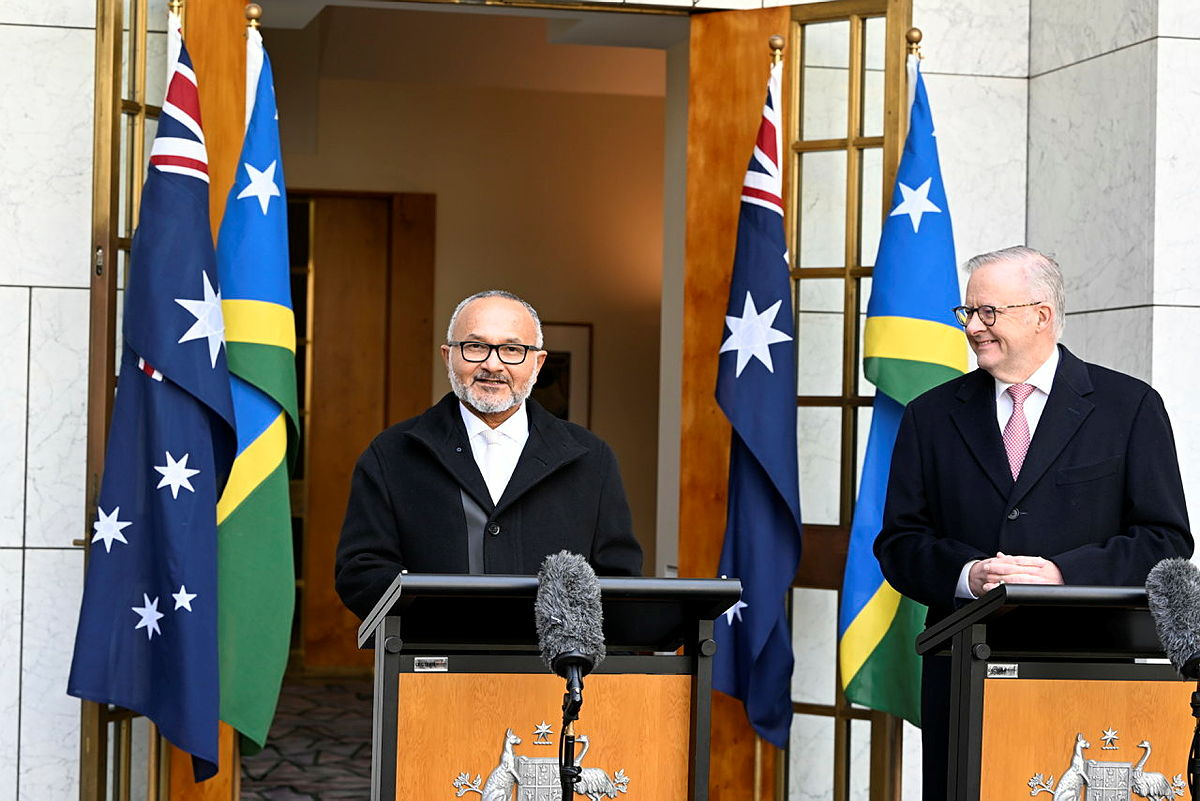
Solomon Islands Prime Minister Matthew Wale and Australian Prime Minister Anthony Albanese have officially declared a “new era” of cooperation, announcing plans for a comprehensive bilateral treaty alongside a major multi-million-dollar aid package.
Speaking at a joint press conference in Canberra, the two leaders emphasized a renewed partnership built on mutual trust, respect, and open dialogue.
To cement their long-term vision, Wale and Albanese agreed to immediately commence negotiations on a comprehensive bilateral treaty. Foreign Ministers from both nations have been tasked with spearheading the development of the agreement, with instructions to conclude the treaty as expeditiously as possible.
In addition to the treaty, the leaders unveiled a series of tangible initiatives aimed at addressing the Solomon Islands’ most pressing development priorities:
Disaster and Economic Relief: Australia will deliver a SBD$200 million (AUD$35 million) funding package to assist the Solomon Islands in its recovery from Tropical Cyclone Maila and to help mitigate the ongoing impacts of global energy shocks.
Education Boost: In support of the Solomon Islands Government’s strong focus on human capital, Australia pledged to double its training and vocational scholarships, reaching 1,500 by 2027. Furthermore, Australia will work alongside other partners to support the Solomon Islands’ ultimate goal of providing free education for the next generation.
Increased Visa Allocation: Opportunities for Solomon Islanders to live and work in Australia will expand, with the Pacific Engagement Visa allocation increasing to 300 in the upcoming program year.
Security and Law Enforcement: The leaders reaffirmed their commitment to strengthening the Royal Solomon Islands Police Force (RSIPF). Upgrades include the planned completion of a new police academy in Honiara by 2028, while the broader policing partnership will continue into its next phase under the RSIPF–Australia Policing Partnership Program.
Both the Prime Ministers affirmed the endurance of the bilateral relationship, expressing optimism that this deepened engagement will elevate regional cooperation to a transformational new level.
