
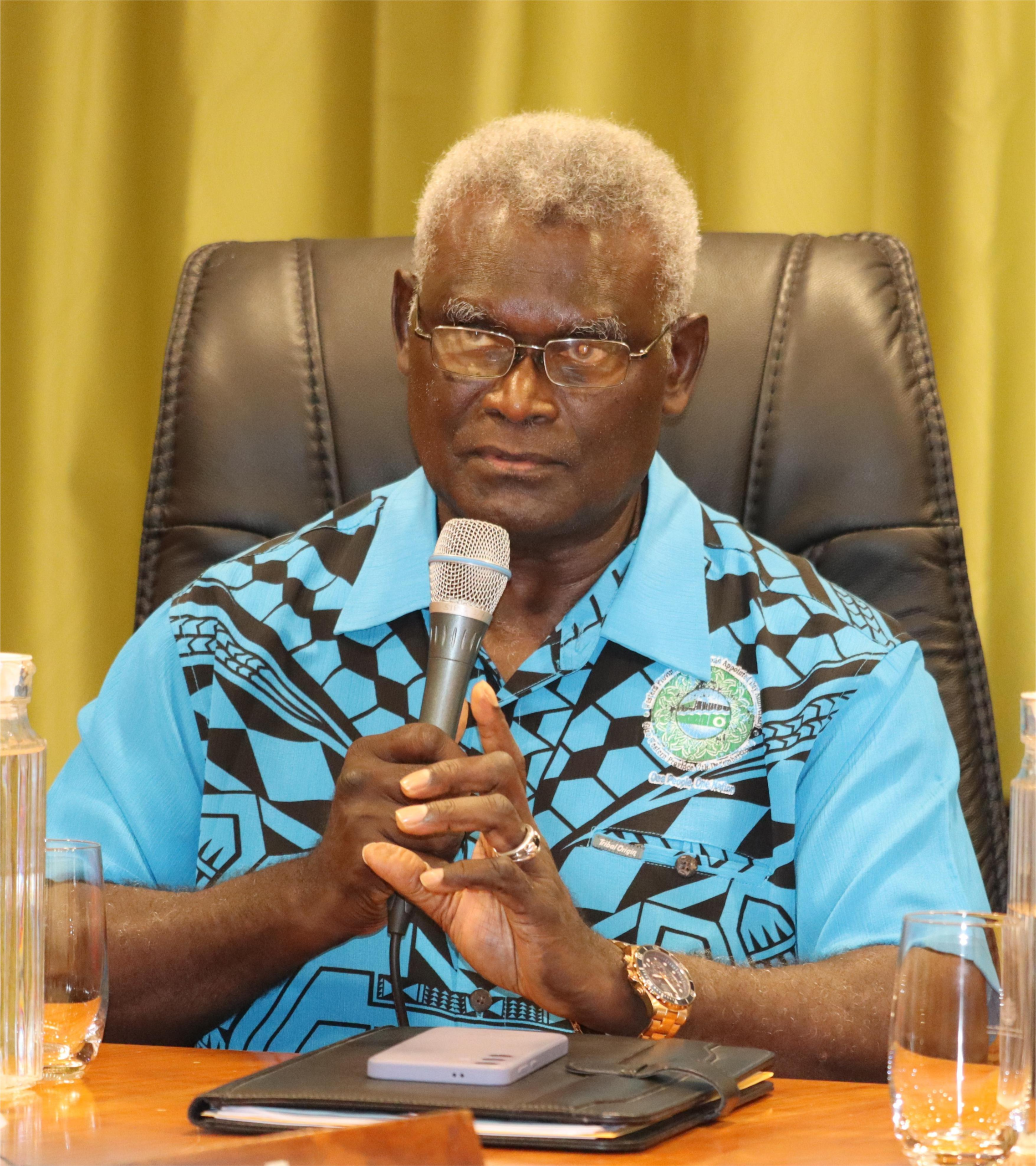
Leader of the Official Opposition, Hon. Manasseh Sogavare, has cautioned that any fee-free education policy must be matched by serious investment in school quality, teacher support, infrastructure, and implementation capacity, warning that a rushed approach could leave Solomon Islands with larger enrolments but weaker outcomes.
Sogavare said the national debate must move beyond slogans and focus on whether the education system is ready to absorb increased numbers without compromising quality.
“It is one thing to promise free education. It is another thing to deliver quality education,” he said.
“If classrooms become overcrowded, teachers are overstretched, grants are delayed, and learning materials are inadequate, then families will quickly discover that the removal of fees alone is not enough.”
He said Solomon Islands is under strong demographic pressure, with approximately 46 births recorded every day—more than 16,000 additional children entering the education system each year.
“That means the country is effectively adding the equivalent of a new classroom of children every 24 hours,” he said.
“Any serious government must explain not only how it will remove fees but also how it will fund the additional classrooms, teachers, dormitories, learning materials, sanitation, water supply, and school management needed to support a growing student population.”
Hon. Sogavare said that international experience shows fee-free policies can lead to sudden increases in enrolment. Still, without parallel investment in system capacity, they can lead to overcrowding, declining standards, teacher shortages, and weaker learning outcomes.
“Parents do not simply want a cheaper education. They want a good education,” he said.
“They want schools that function properly, qualified teachers, safe classrooms, reliable grants, and a learning environment that prepares young Solomon Islanders for life and work.”
The opposition leader said this is particularly important for rural and remote communities, where shortages in infrastructure, teacher housing and learning materials are already acute. He called for more investment in classrooms, teacher housing, school facilities, learning resources, and practical systems to support students effectively.
Hon. Sogavare also warned against any reform model that weakens the partnership involving government, churches, communities and parents.
“Education has always been a partnership involving families, churches, communities and the state,” he said.
“Parents must continue to play an active role in their children’s education. That shared ownership helps strengthen discipline, accountability and long-term support for our schools.”
He said the current legal framework already places reasonable limits on school fees, prohibits extra levies for enrolment and assessment, and requires hardship arrangements for families genuinely struggling.
“The law already provides tools to protect families while maintaining the operations of schools,” he said.
“The first responsibility of government should be to enforce those protections properly, strengthen hardship support where needed, and improve the quality of our education system before moving to a broader national promise.”
The Parliamentary Opposition Group said it remains committed to affordable and accessible education for all Solomon Islands children but stressed that access and quality must advance together.
“We all want our children in school,” Hon. Sogavare concluded.
“But it is not enough to get children through the gate. We must ensure that once they are there, they receive education of real quality, real relevance and real value for their future.”
