
by Georgina Maka’a
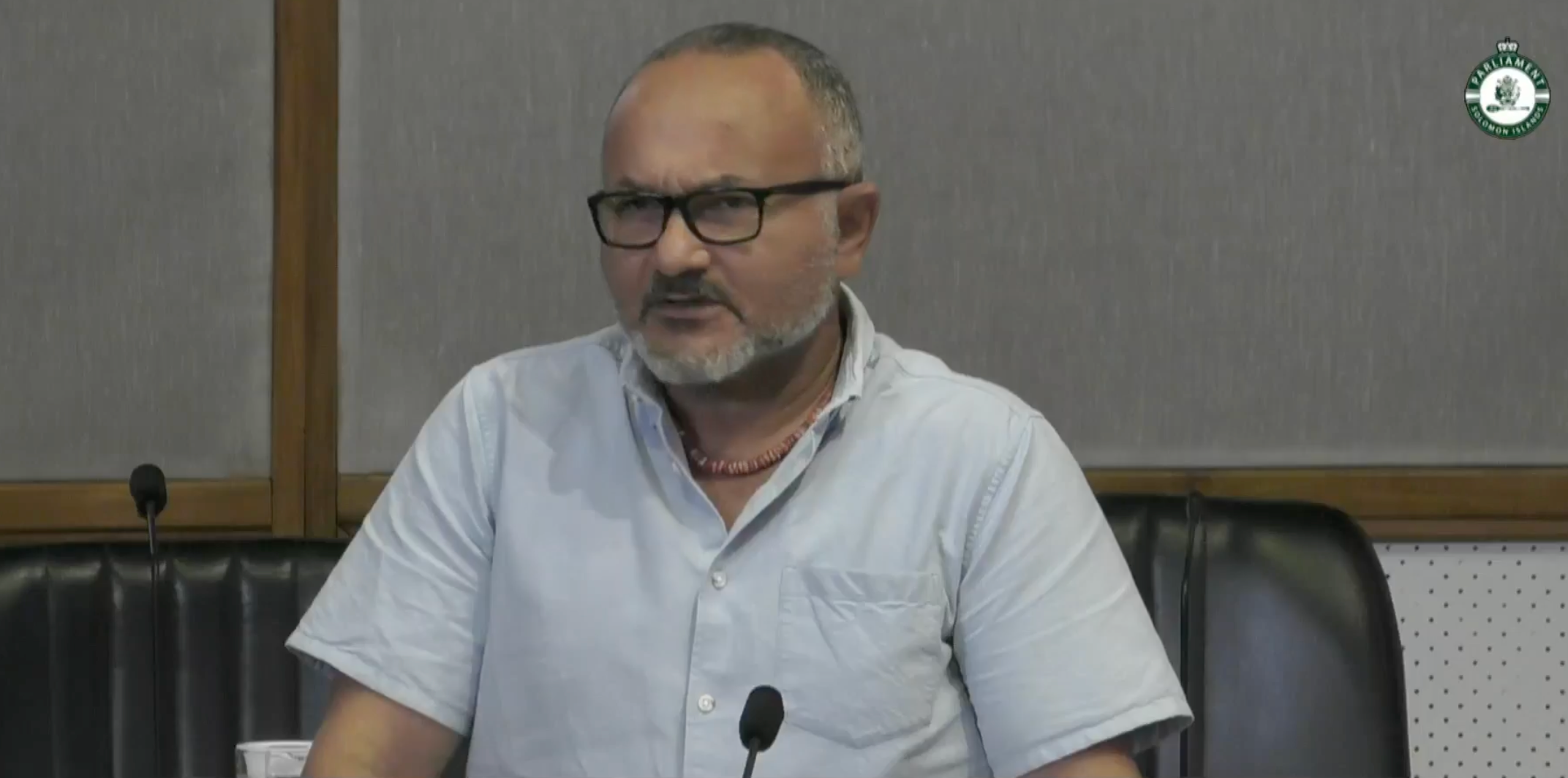
Opposition Leader Matthew Wale has criticised the Government for National Unity and Transformation (GNUT) for what he described as “a lack of productivity in Parliament”, warning that political instability, poor ministerial discipline and competing vested interests were undermining national governance.
Contributing to the adjournment sine die motion in Parliament this morning, Wale said the government’s legislative output had fallen well short of the priorities outlined in the Speech from the Throne.
“This was the first full year of GNUT and I had high hopes that Parliament would be kept on its toes by the load of legislative work to be transacted. This was not the case,” Wale stated.
While acknowledging Prime Minister Jeremiah Manele’s claim that political instability had affected productivity, Wale said the responsibility to address that instability lay squarely with GNUT.
He also pointed to what he described as “exceptionally high” levels of overseas travel by ministers as another contributing factor.
“I was told that overseas travel by some ministers was without the information, let alone the consent of the Prime Minister. If true, this is just terrible and wrong,” Wale said.
He added that his office had received reports of ministers failing to attend their offices, leaving Permanent Secretaries without political direction and slowing policy work across ministries.
“The people of Solomon Islands expect you to put your foot down and impose discipline on ministers,” Wale told the Prime Minister, while welcoming Manele’s indication that 2026 would be a busier legislative year.
Manele last week told Parliament that political instability driven by vested interests had disrupted government work, but said his administration remained focused on the national interest and restoring stability.
He indicated that 2026 would see a more active legislative program as reforms advance.
Wale, however, said instability had become a recurring feature of Solomon Islands politics and warned it was being normalised.
He pointed out that it had become “custom” for successive prime ministers to complain about political unrest, warning that the situation had been normalised.
“GNUT is not stable, we all know that,” he said, arguing that the government was fractured by factions sponsored by competing vested interests.
He described this as “state capture”, where decision-making was driven by personal and external interests rather than the national interest.
“When you know what the right thing to do in the national interest is, but you make a different choice, then you know the government is held captive to other interests,” Wale said, warning that such dynamics erode economic confidence and national sovereignty.
Wale stressed that the problem was not unique to the current administration but reflected deeper structural weaknesses in Solomon Islands’ political system.
He called for urgent reforms, including constitutional, political party, electoral and anti-corruption reforms, to dismantle what he described as the “enabling environment” that fuels instability.
“The Solomon Islands government must work for the people of Solomon Islands, not be captured by a few to serve a few,” Wale said.
Debate on the sine die motion continues in Parliament.
