
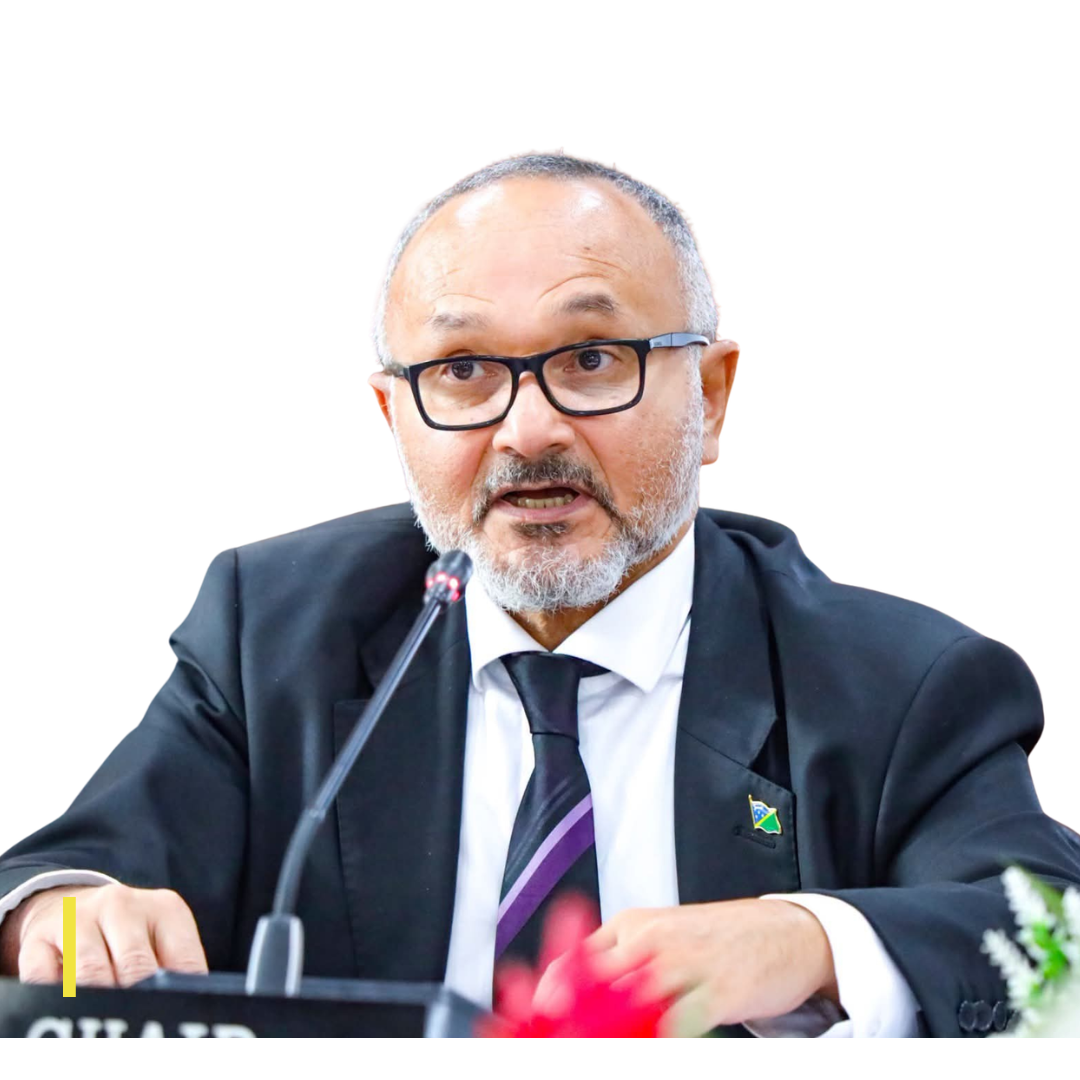
Prime Minister Matthew Wale has strongly condemned China’s ballistic missile test over the Pacific, declaring it was “not the act of a friend” and warning that Pacific nations do not want major powers turning the region into a military testing ground.
Speaking in Honiara alongside Australian Prime Minister Anthony Albanese, Wale said Solomon Islands had formally protested to China over the launch, becoming the first Pacific leader to publicly criticise the missile test in his capacity as Chair of the Pacific Islands Forum (PIF).
“China is a good friend of Solomon Islands, but this is not something a friend does. This is not good in our region,” Wale said.
“As Chair of the Pacific Islands Forum, I registered my strong protest with the Chinese Ambassador yesterday. Solomon Islands has also lodged a formal diplomatic protest.
“We don’t want to see any country – China, America or anyone else – testing intercontinental ballistic missiles in the Pacific. Be our friend, but don’t threaten us.”
China test-fired a nuclear-capable ballistic missile from a submarine on Tuesday.
ABC Pacific reported that the missile flew over several Pacific Island countries before landing in waters near Tuvalu’s Exclusive Economic Zone (EEZ).
Beijing described the launch as a routine military exercise, but Australia, New Zealand and several Pacific leaders condemned the test.
Prime Minister Albanese described the missile launch as “destabilising” and said Australia had already raised its concerns directly with Beijing.
“We have made clear our concerns to China in both Beijing and Canberra, and I am making those concerns clear here in Honiara,” Albanese said.
“We don’t want to see any action that undermines the peace, security and stability of the Pacific.”
He also criticised China for providing only a few hours’ notice of the launch, saying international practice normally requires around 48 hours’ warning.
Papua New Guinea Prime Minister James Marape also urged all military powers to respect the Pacific’s longstanding opposition to weapons testing.
“Our region has lived through war, nuclear testing and military activities imposed upon us by larger powers. We do not want history repeated,” Marape said.
“We want our waters to be free from nuclear testing and from the testing of harmful weapons and military arsenals of every kind.”
ABC Pacific reported that according to defence officials, the missile – armed with a dummy warhead – travelled over the Exclusive Economic Zones of several Pacific Island countries before splashing down near Tuvalu, about 1,000 kilometres north-east of Solomon Islands.
Australia’s Defence Minister Richard Marles said the launch demonstrated China’s growing long-range military capability and described it as “very concerning and deeply destabilising.”
“This is a long-range missile that China itself says is nuclear-capable and was launched from a submarine,” Marles said.
“What we are trying to build is a peaceful Pacific, and this undermines that objective.”
The United States also condemned the launch, accusing China of accelerating its nuclear weapons programme at a time when the international community is working to prevent nuclear proliferation.
The missile test has heightened regional concern over growing strategic competition in the Pacific, with Pacific leaders increasingly insisting that regional security must be determined by Pacific nations rather than external powers.
As Chair of the Pacific Islands Forum, Wale’s unusually direct criticism signals growing frustration among Pacific leaders over military activities that they say threaten the region’s long-held vision of an “Ocean of Peace.”
With reporting from ABC Pacific and other news sources
