
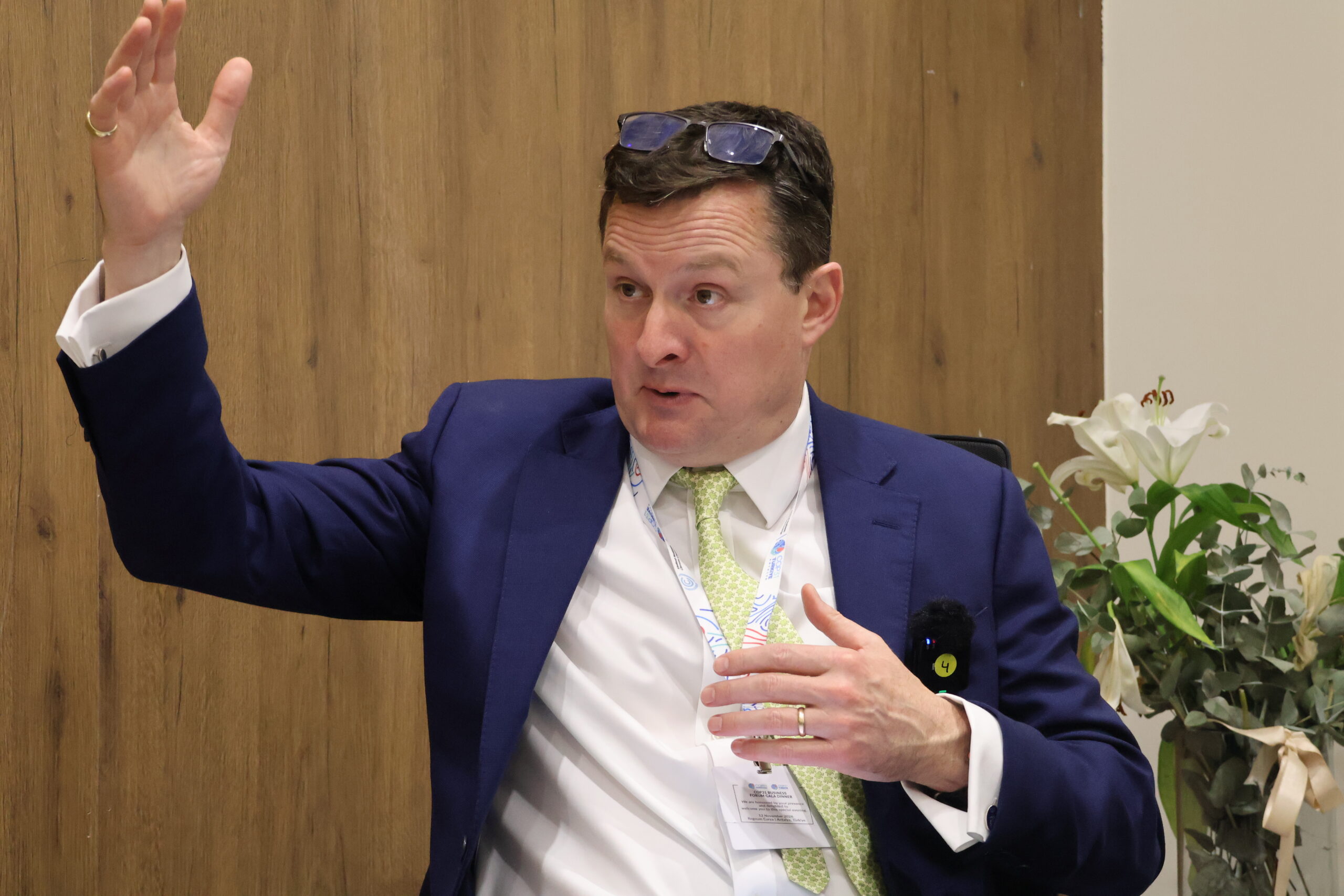
by Charley Piringi in Antalya, Turkey
Small island nations struggling with climate disasters and tight budgets now have access to cheaper loans and customized financial safety nets, according to the World Bank Group.
Speaking to CCMP Fellows at COP31, Global Director for Climate at the World Bank Group, James Julius Fergusson, outlined how concessional funding through the International Development Association (IDA) allows small island states to obtain capital at costs significantly lower than commercial market rates.
Recognizing the severe impact of cyclones, droughts, and economic shocks, the World Bank has developed a comprehensive disaster risk toolkit to help vulnerable nations maintain critical liquidity during emergencies.
“Recognizing the severe impact of cyclones, droughts, and economic shocks, the World Bank has developed a disaster risk toolkit to help vulnerable nations maintain liquidity during emergencies.”
He added, options include “climate-resilient debt clauses, which allow countries to pause interest and principal repayments for a couple of years following a major event, as well as contingent credit lines and catastrophe bonds that shift financial risk to global capital markets.”
In addition, “To make these funds easier to reach, international institutions are streamlining application processes.”
“It’s hard for small countries with limited government resources and capacity to engage with multiple agencies and banks to access the capital,” said James.
To address this challenge, multilateral development banks are adopting mutual reliance arrangements, enabling small nations to collaborate with a single lead institution, such as the World Bank, while gaining access to funds from partner organizations like the Asian Development Bank.
Beyond national-level financing, support is also directly reaching local communities.
“By combining low-cost funding, simplified access, and crisis-ready toolkits, the World Bank aims to strengthen both national economies and grassroots resilience across the Pacific.”
This story was produced as part of the COP31 Climate Change Media Partnership, a journalism fellowship organized by Internews’ Earth Journalism Network and the Stanley Center for Peace and Security.
