
by Ednal Palmer
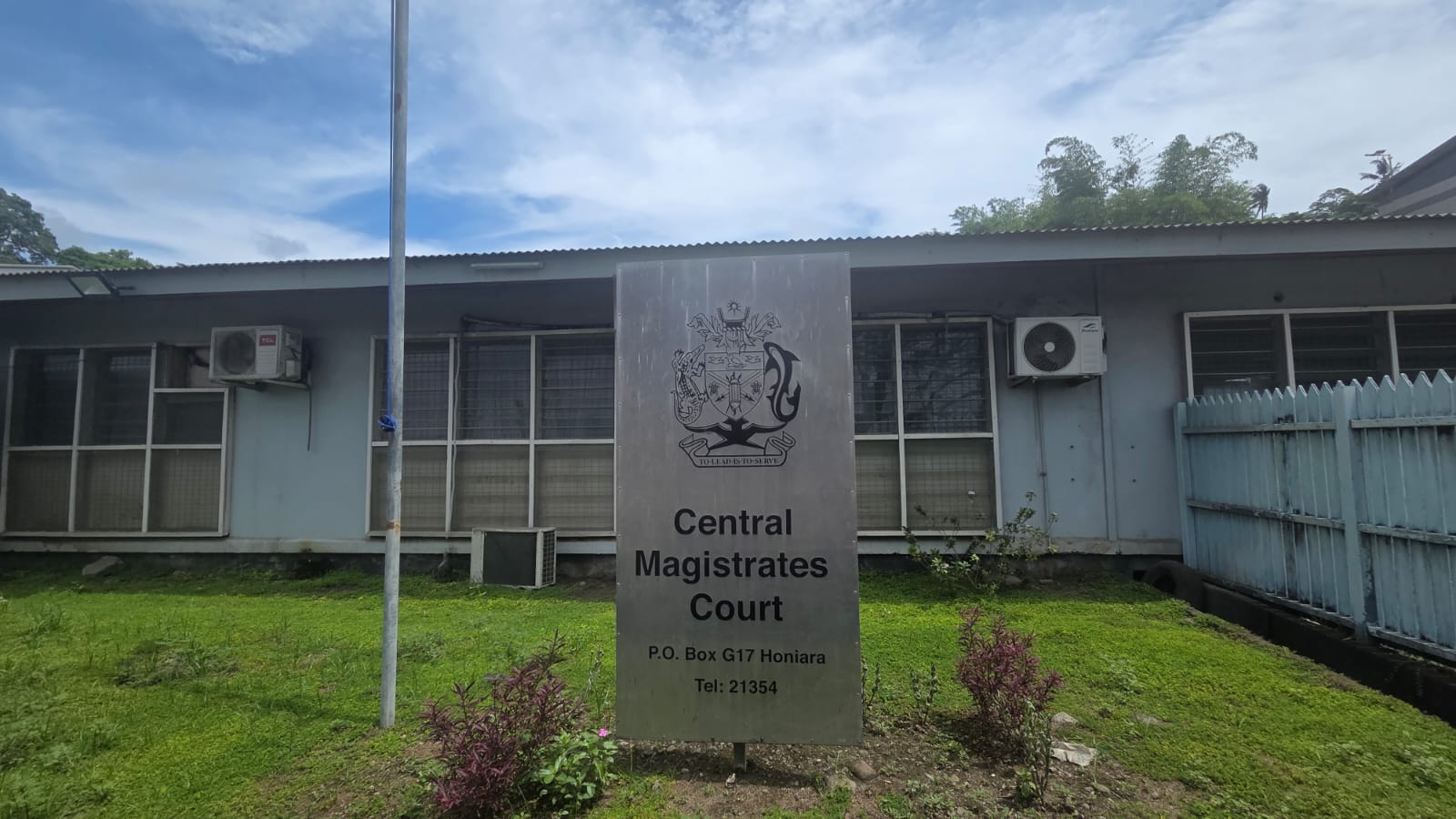
Moffat Konofilia is scheduled to be sentenced by the Magistrates’ Court tomorrow, September 16, following his conviction over his involvement in the November 2021 riots in Honiara.
Konofilia was convicted of unlawful assembly but acquitted of the more serious charge of sedition.
His sentencing comes after a case that has dragged on for several years, including his re-arrest in 2025 after he allegedly failed to attend court proceedings. The matter eventually proceeded to trial this year.
At his most recent appearance, Konofilia sought a further delay to allow him to secure legal representation.
However, the magistrate indicated that the matter should no longer be delayed and moved towards sentencing.
Konofilia, an outspoken figure known for his involvement in football and public advocacy, could now face sentencing against the backdrop of renewed scrutiny of the political circumstances surrounding the 2021 unrest.
Alleged PoliticalConnections
Although Konofilia is the only person before the court, fresh claims are raising questions about the wider political circumstances surrounding the November 2021 unrest.
Sources familiar with the matter told In-depth Solomons a meeting was held today at Cowboys Grill involving individuals discussing whether further legal action could be pursued against political figures allegedly connected to the events that led to the unrest.
Those claims have not been independently verified, and it remains unclear whether any new case will actually be filed or who, if anyone, would ultimately be charged.
Among the political figures reportedly being discussed is current Prime Minister Matthew Wale. But any allegation of criminal involvement would require independent evidence and must be tested through due legal process.
A Deeper Political Confrontation
The November 2021 unrest cannot be viewed entirely in isolation from the political tensions that had been building between the national government, then led by Prime Minister Manasseh Sogavare, and the Malaita Provincial Government under the late Premier Daniel Suidani.
Relations had deteriorated significantly following the national government’s decision in 2019 to switch Solomon Islands’ diplomatic recognition from Taiwan to the People’s Republic of China.
The decision faced strong opposition from the Malaita Provincial Government, which maintained its relationship with Taiwan.
The disagreement subsequently contributed to the development of the Auki Communiqué, which included calls for greater autonomy and self-determination for Malaita. The document became a major point of contention between the provincial and national governments.
Against that background, political tensions intensified and the Malaita 4 Democracy (M4D) movement emerged as a prominent political force opposing aspects of the national government’s policies.
The November 2021 Unrest
The protests that erupted in Honiara in November 2021 initially centred on demands directed at the Sogavare government but later escalated into widespread violence, including the destruction and looting of property.
The events resulted in significant damage in parts of Honiara and prompted the deployment of regional security forces.
For the then Sogavare government and its supporters, the unrest represented more than a conventional protest.
It was viewed as an unlawful attempt to remove an elected government, with allegations that political actors had mobilised people against the administration.
For M4D supporters and sections of the Malaitan community, however, the protests were rooted in longstanding political grievances, including opposition to the switch from Taiwan to China, perceptions of Malaita’s political marginalisation and concerns over the treatment of the Suidani-led provincial government.
More Than a Riot
The November 2021 crisis was therefore not simply a spontaneous outbreak of violence. It emerged from a much deeper political, constitutional and geopolitical confrontation that had been developing for several years.
The unrest reflected a convergence of factors – the national government’s relationship with China, the Taiwan issue, tensions between the national and Malaita governments, economic hardship, local grievances, parliamentary instability and competing political networks.
Five years on, Konofilia’s sentencing could therefore become another point of focus in the continuing debate over what happened in November 2021, who was responsible, and whether the full political story behind the unrest has ever been adequately examined.
If claims of further legal action against political figures materialise, any new proceedings would need to establish their allegations through evidence and the courts, rather than political assertion.
For now, the immediate focus remains on Konofilia, who will likely know his fate tomorrow.