
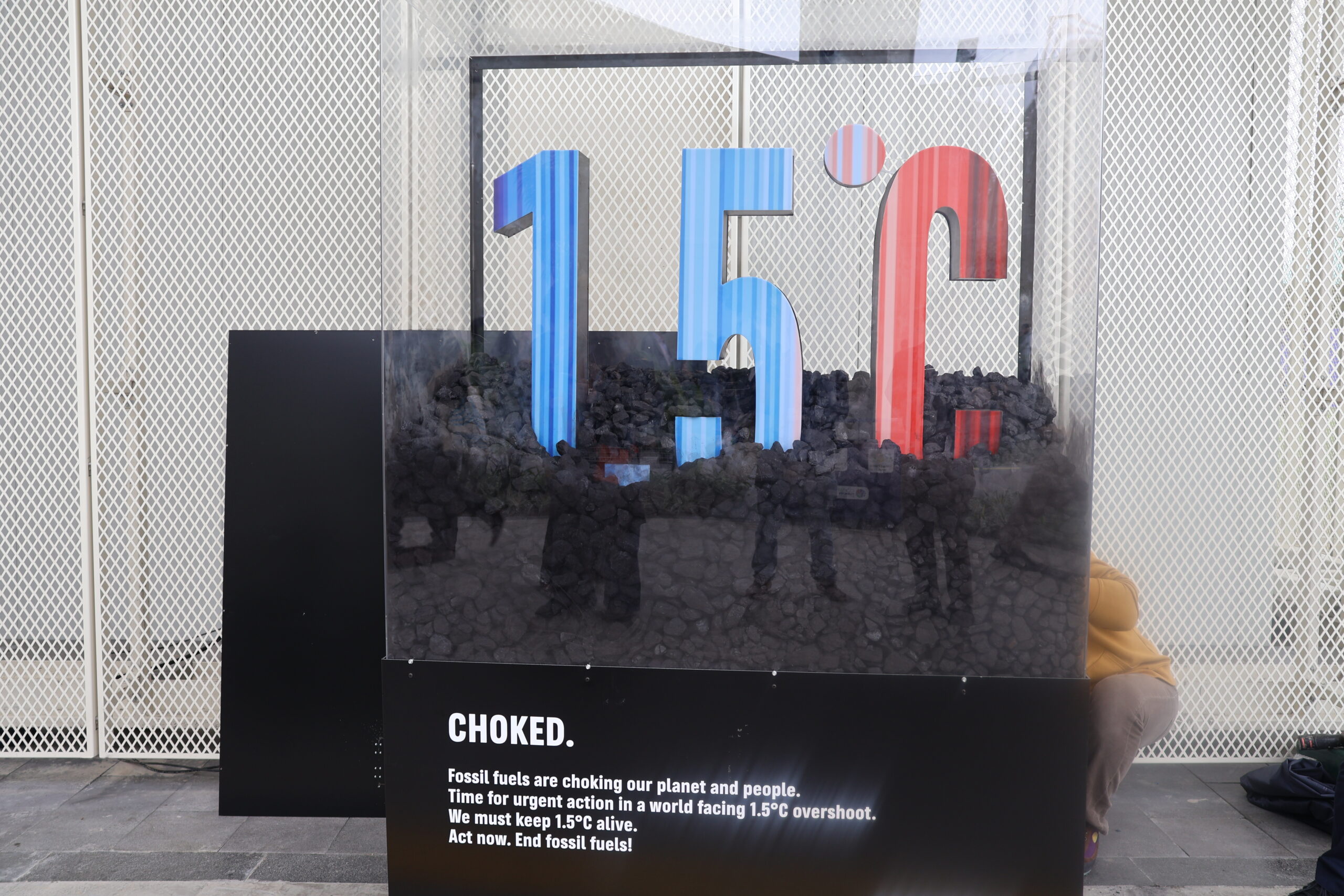
by Charley Piringi in Antalya, Turkiye
The second draft of the main COP31 Presidency cover decision text was released today, drawing mixed reactions, especially from Pacific leaders and small island nations.
Pacific nations reach a critical crossroads as the world admits it will miss the Paris Agreement’s 1.5°C global warming threshold.
Speaking to international media at COP31 in Antalya, COP31 President Chris Bowen said the severe vulnerabilities facing Pacific communities.
“COP 31 to be the first COP to acknowledge that the world will not meet the covenant laid out in Paris 11 years ago to hold the world to 1.5 degrees away. But we are determined that COP 31 is not remembered for that, but is remembered as the COP which decides clearly and strongly that that is not acceptable.”
Although climate change affects every country, small island developing states in the Pacific face an existential threat to their physical territories and economic survival.
“Every country, every community, every person will suffer from climate change, but there are countries and communities whose very existence is at stake,” Bowen said, calling for urgent international action.
Addressing the missed 1.5°C goal, the draft prioritizes ocean conservation to protect marine ecosystems vital for climate regulation and island resilience. Warming ocean waters directly threaten the economies, food security, and territory of small island nations.
Across the Pacific, communities and governments shared a common call: “Cut emissions, and pay for climate justice.”
At the COP31 venue hallways, and compound, climate change activists are chanting:
“Enough is enough! What do we what now? Renewable energy.”

As intense negotiations continue ahead of the final text release, critics raised sharp concerns over how the draft addresses the 1.5-degree goal.
Jasper Inventor, head of the Greenpeace delegation at COP31, called parts of the proposal “profoundly unacceptable.”
“Yes, it recognises the looming 1.5°C overshoot but it leaves open the question of how do we keep 1.5°C alive. While the text outlines a ‘35 x 35’ electrification goal, it leaves too open how that will be achieved and accelerate the transition away from fossil fuels.”
He added: “This text dangerously adds the option of a carbon capture and storage target to the mix, but the UNFCCC process has never had such a target and anything that provides a way for the fossil fuel industry to keep polluting the climate would be a profound backwards step at a time when climate impacts are rapidly worsening.”
Adding “This text dangerously adds the option of a carbon capture and storage target to the mix, but the UNFCCC process has never had such a target and anything that provides a way for the fossil fuel industry to keep polluting the climate would be a profound backwards step at a time when climate impacts are rapidly worsening.”
“On finance, the text kicks crucial decisions on adaptation on how to deliver the tripling commitment down the road. Developing countries and communities need predictable funding, with a clear baseline, delivery milestones and accountability today,” Jasper added.
Pooja Dave, Adaptation Lead at Climate Action Network International, urged negotiators to refocus in the final hours of the summit.
“The Presidency’s gamble on the Cover Decision has left the Global Goal on Adaptation without finance. This shows how the Cover Decision undermines the multilateral process and the space for negotiated agreement and outcomes.”
He added: “We came here demanding tripling of adaptation finance and progressing towards a more needs-based adaptation finance approach in the Global Goal on Adaptation; however, the latest iteration of the text on the GGA has no strong mention of tripling, and says ‘placeholder for adaptation tripling language from cover decision.”
“Adaptation finance is about people’s very survival: the tripling of adaptation finance needs to survive COP31 for their sake.”
However, President Bowen made a bold stand.
“We are proposing to COP31 parties that strong language at the outset of the cover decision that we stand committed to multilateralism and resolve to be united in pursuits to implement the convention and importantly to achieve that covenant of 1.5 degrees of warming and no more.”
The final draft of the presidency-led decision for the negotiations will be released tomorrow.
This story was produced as part of the COP31 Climate Change Media Partnership, a journalism fellowship organized by Internews’ Earth Journalism Network and the Stanley Center for Peace and Security.
